
The right holistic facial practitioner isn’t necessarily the one with the most compelling directory profile. A listing can help you search, but “holistic esthetician” isn’t a legally protected or defined title in Australia. It also doesn’t tell you exactly what someone has studied or how they work. If you’re using a holistic esthetician directory Australia search to find local options, look beyond the label.
Comparing listings can be difficult when location, training, availability and treatment details aren’t easy to assess side by side. Holistic facial work can also differ from a conventional facial. Some practitioners incorporate facial sculpting or somatic bodywork, for example. The right fit depends on what you’re looking for, not simply on the word “holistic.”
This guide explains how to build a shortlist, assess practitioner profiles and prepare useful questions before booking. You’ll also learn how to compare directories, including the Face Up directory for practitioners certified in its specific method. Check current Australian listings and details, then use a practical framework to weigh training, approach, location and transparency.
Key Takeaways
- Use a holistic esthetician directory Australia search as a starting point, then confirm details directly with practitioners before deciding.
- Compare profiles by method, training, session information and location, rather than relying on service labels alone.
- Search by city, suburb and state or territory. Try related terms such as “facialist” or “beauty therapist” to broaden your shortlist.
- Ask what a practitioner’s method-specific certification covers and how it relates to their other education and experience.
- Consider the Face Up directory if you’re looking for providers certified in its particular method, and check current listings and contact details.
What a holistic esthetician directory Australia search can and cannot tell you
A holistic esthetician directory Australia search can help you find practitioners by location, approach or service. Treat the results as a starting shortlist, not proof that a practitioner is right for you or currently taking bookings. Listings vary in detail and can change, so confirm key points directly before deciding.
You may see practitioners described as aestheticians, facialists, beauty therapists or simply practitioners. These terms can reflect different training backgrounds or ways of presenting services. “Holistic” describes an approach to care, not one uniform treatment protocol or a single standard qualification in Australia. A useful listing gives you enough detail to investigate what the practitioner actually does instead of asking you to rely on a title.
What does holistic facial care mean in a directory listing?
A listing might mention facial sculpting, buccal massage or somatic bodywork. These terms refer to different techniques, and practitioners may combine them in different ways. Ask what a session involves, which areas it focuses on and what training supports the method. For general background on care for skin, see Professional skin care. A directory’s use of “holistic” doesn’t establish a recognised credential or guarantee a particular approach.
Read service descriptions closely. One provider may focus on hands-on facial techniques, while another may include broader bodywork. The same label can describe different session structures, so look for clear explanations rather than assuming two listings offer equivalent treatments.
What information should a directory provide?
Start with the basics: the practitioner’s identity, city or service area, relevant training and a plain-language description of treatments. Look for contact or booking details and information about availability. If a listing is brief, ask questions rather than ruling the practitioner out immediately.
- Training: What qualification or course have they completed, and who provided it?
- Method: What techniques are included, and what happens during a session?
- Practical details: Where are appointments held, how do you enquire, and are current openings confirmed?
A directory can help you compare options, but it can’t establish every relevant credential or confirm that a service suits your needs. Verify qualifications and treatment details with the practitioner, and check any professional or local requirements relevant to the services offered. Confirm coverage and listing information directly, especially if a particular city or suburb matters to your search.
Understand practitioner methods and training before comparing Australian listings
Two profiles can use the same service label and still describe different experiences. “Facial sculpting,” for example, is a broad term. One practitioner may describe a sequence of hands-on facial techniques, while another may use it for a different method or session structure. Read the treatment description, then ask what the session includes if anything is unclear. A holistic esthetician directory Australia search is most useful when it helps you compare the actual method, not just the wording of a listing.
How facial sculpting, buccal massage and somatic bodywork differ
Facial sculpting can refer to varied techniques, so the name alone won’t tell you how a practitioner works. Buccal massage involves work inside the cheek. Ask whether it’s included, how it’s carried out and what training the practitioner has for that technique. Somatic bodywork describes an approach centred on body awareness, but practitioners may use the term for different methods. Ask for a clear explanation of the session rather than assuming a shared protocol or a particular result.
Some methods combine approaches. The Face Up Method, for instance, focuses on facial sculpting and somatic bodywork. Its certification relates to training in that specific method. It doesn’t, by itself, establish every other qualification, credential or area of experience a practitioner may have.
How to interpret training and certification claims
Look for the name of the training provider, the course or method studied, and what the certificate represents. If a profile says “certified,” ask which organisation issued the certification and what it covers. A method-specific certificate can help you understand a practitioner’s training in that approach, but it isn’t proof of all professional qualifications. Assess it separately from their other education, experience and credentials relevant to the services they offer.
When a listing leaves gaps, ask direct, neutral questions: “What training prepared you for this technique?” and “What does a session involve?” Clear answers help you assess fit without relying on titles or promised outcomes. For a closer look at Face Up’s method-specific training, read the facial sculpting certification guide.
Requirements can also depend on location and the services provided. If you’re considering a provider in New South Wales, use NSW Health’s guidance to verify the details relevant to beauty treatments there. Check the appropriate local authority for other jurisdictions. To explore a method-specific option, you can also visit the Face Up Method and practitioner directory, then confirm the practitioner’s training and listing details directly.
Compare holistic estheticians in Australia using clear, consistent criteria
A side-by-side comparison makes differences between profiles easier to see. Create a simple table for each practitioner and record their stated method, training, location, session details and contact or booking options. Add a note about what matters to you, such as a particular technique, a nearby in-person appointment or a clear explanation of what a session involves.
Use the same criteria for every listing. This helps you assess transparency and relevance without treating a directory’s order, profile polish or certification badge as a quality ranking. A listing is a discovery tool, not a guarantee of suitability or results.
Which profile details help you assess fit?
Look for service descriptions that name techniques and explain the session format, alongside details of training and relevant experience. Check whether the practitioner sets clear boundaries around the service, and confirm their location, consultation format and current booking process. For context on formal education, training.gov.au outlines SHB40121 Certificate IV in Beauty Therapy as a nationally recognised qualification. Record what each profile states and mark anything you need to verify.
- Method: Which techniques are described, and do they match what you want to explore?
- Training: Is the course provider and scope of training clear?
- Practical fit: Is the location workable, and can you understand how to enquire or book?
- Transparency: Does the profile explain what the service includes and its boundaries?
What questions can reveal whether the approach suits you?
Before booking, ask what the practitioner’s training covers, how they adapt a session to your preferences and what you can expect during it. You can also ask about preparation, comfort considerations and any aftercare guidance they provide. If an answer is vague, clarify the details before deciding. For general reading on specialized facial techniques, you can consult professional skincare resources and educational materials. This information is not a substitute for discussing your circumstances with a suitable professional.
Choose based on the fit between your goals and the practitioner’s stated approach, not on an assumed outcome. Someone seeking a specific hands-on method may prioritise clear technique details, while another person may care more about session structure or location. If a Face Up-certified method interests you, the Face Up practitioner directory is one place to explore. Confirm the current listing and details directly.
Search across Australian cities and verify the details before booking
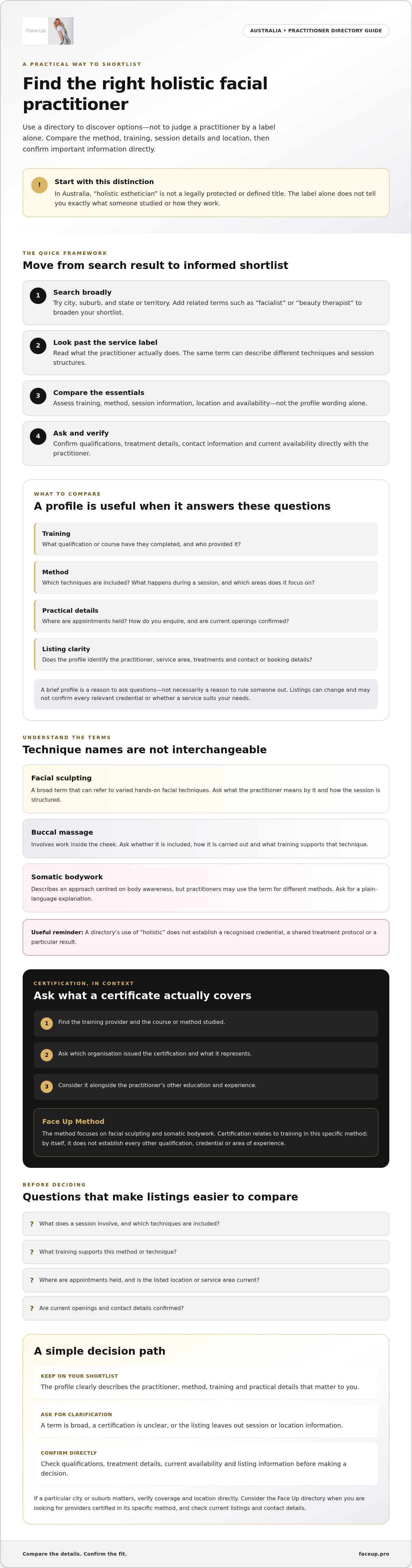
Directory results can vary by location, and a listing in one city doesn’t mean a practitioner serves elsewhere. Use this four-step process to focus your search, build a shortlist and confirm the details that matter before you enquire.
- Choose a location. Search your city or suburb first. If you find few suitable profiles, widen the area or try nearby suburbs. Add the state or territory to make results more specific.
- Try alternate terms. Search for “aesthetician,” “facialist,” “beauty therapist” and “facial sculpting practitioner” as well as “holistic esthetician.” Practitioners may describe similar services differently, so varied terms can surface profiles a single search misses.
- Shortlist by fit. Note each practitioner’s stated method, training, location and session information. Keep profiles that appear relevant to your preferences, and mark details that need clarification.
- Contact providers directly. Confirm the practitioner is active and accepting enquiries. Check current availability, service area, session format and contact or booking process.
How to narrow a holistic practitioner search by location
Start close to home, then widen the search deliberately. A listing may show a city without clarifying whether appointments are in person, available elsewhere or offered in another format. Check whether it specifies an in-person session, remote consultation or another arrangement. If the format isn’t clear, ask directly. Don’t assume a directory covers every Australian city or that a practitioner travels beyond the location shown.
What to confirm directly before making an appointment
Use your shortlist to ask concise questions: Is the listed service currently available? What method and techniques does the session involve? What training supports that work? What should you expect, and are there any suitability considerations to discuss beforehand? Clear answers help you assess practical fit without treating a profile as a guarantee.
Titles, registration and permitted scope can depend on the practitioner’s profession, location and services. If these factors matter to your choice, verify applicable requirements with the appropriate authority rather than assuming one rule applies across Australia. The Face Up directory is another discovery option for practitioners certified in its specific method, but confirm current Australian coverage, location details and provider availability before relying on a listing. Explore the Face Up directory as one part of your search, then contact any practitioner you’re considering to verify their current details.
Explore the Face Up directory for certified-method practitioners
If you’re interested in a particular approach rather than searching only by broad labels, the Face Up directory offers a way to find practitioners certified in the Face Up Method. Face Up is a global holistic beauty and wellness platform, and its method combines facial sculpting and somatic bodywork. The directory focuses on providers associated with this specific method, making it one option to consider alongside general practitioner directories.
What the Face Up Method directory can help you explore
At the time of review in September 2026, Face Up listed certified providers in Brisbane, Perth, Sydney and Melbourne. Listings and coverage can change, so check the directory for the city you’re interested in rather than assuming a provider is available nearby. A listing doesn’t promise that every practitioner offers identical services, session formats or availability.
Certification refers to training in the Face Up Method. It can help you identify practitioners who have studied that approach, but it doesn’t replace other education or professional credentials, and it can’t determine whether a particular provider is right for you. Read each profile on its own terms. Pay attention to how the practitioner describes their services and whether those details align with your priorities.
How to take the next step with confidence
Before booking, check the provider’s location and current contact or booking information. If anything important is missing, ask directly. You might ask what their Face Up Method training covers, what a session involves, how they adapt the approach to your preferences and whether there are suitability considerations to discuss. Their answers can help you decide whether to continue the conversation.
Use the directory as a focused discovery tool, not a ranking or guarantee of fit. Compare the listing with your preferred treatment approach and practical needs, then confirm the details with the practitioner. A clear profile can help you form a shortlist, while a direct enquiry establishes what the individual provider currently offers.
If you’d like to explore this method-specific option, Explore Face Up and check the directory for current Australian listings and practitioner details.
Make your shortlist with confidence
A holistic esthetician directory Australia search is most useful when it leads to a considered shortlist, not a decision based on a title alone. Compare each practitioner’s stated method, training, session details and location. Then contact them to confirm current availability and ask questions that will help you judge personal fit.
Keep certification in context. It can show training in a particular method, but it doesn’t guarantee that a practitioner’s approach suits your preferences or replace other relevant credentials. Clear profiles and direct answers make it easier to choose your next step with care.
Face Up offers a practitioner certification programme and a directory designed to help clients find certified Face Up providers in local cities. Check current Australian listings and contact details directly before relying on them. Explore Face Up’s directory for current practitioner listings if you’d like to look for providers associated with its method.
Frequently Asked Questions
How do I find a holistic esthetician in Australia?
Start with your city or suburb, then search related terms such as “facialist,” “beauty therapist,” “aesthetician” and “facial sculpting practitioner.” A holistic esthetician directory Australia search can help you create a shortlist, but compare the methods, training, location and session details in each profile. Contact promising practitioners directly to confirm they’re active, accepting enquiries and offering a session that fits your needs.
What is the difference between an esthetician and a holistic esthetician?
“Holistic” generally describes a practitioner’s approach, not a separate standard qualification. An esthetician, facialist or beauty therapist may focus on facial or skin services, while a practitioner using “holistic” may describe a broader approach or particular techniques. In Australia, “holistic esthetician” isn’t a legally protected or defined title. Look beyond the label and ask about the practitioner’s formal education, additional training and specific treatment approach.
How can I check whether a holistic facial practitioner is qualified?
Ask which organisation provided their training, what the course covered and whether they hold relevant formal qualifications. Australian beauty therapy qualifications include the Certificate III in Beauty Services, Certificate IV in Beauty Therapy and Diploma of Beauty Therapy. Also ask about training in the specific method you’re considering. A certificate in one method describes that training; it doesn’t prove every professional credential or establish whether the practitioner is the right fit for you.
Are holistic esthetician services regulated in Australia?
There’s no single national licence for holistic estheticians or beauty therapists in Australia, and the “holistic esthetician” title isn’t legally defined. Requirements depend on location and the services offered, so check relevant state, territory and local rules. Treatments involving skin penetration can have stricter requirements, including local council premises registration. Ask the practitioner which requirements apply to their service, and verify details with the appropriate authority.
What should I ask before booking a holistic facial treatment?
Ask what techniques the session includes, what training the practitioner has in those methods and what to expect during the appointment. Confirm the session format, location, current availability and booking process. You can also ask about preparation, comfort considerations, aftercare guidance and whether there are suitability questions to discuss first. Clear, direct answers help you decide whether the practitioner’s approach and practical details suit your preferences.
Can I find Face Up certified practitioners in Australia?
Face Up has a directory for finding practitioners certified in its proprietary Face Up Method, which combines facial sculpting and somatic bodywork. As of September 2026, its website listed providers in Brisbane, Perth, Sydney and Melbourne. Check the directory for current Australian coverage, provider details and availability, as listings can change. Face Up certification relates to training in its method, not a guarantee of individual suitability or other professional credentials.
Is facial sculpting the same as buccal massage or somatic bodywork?
No. Facial sculpting is a broad label for hands-on techniques, and practitioners may use it differently. Buccal massage refers to work involving the inside of the cheek. Somatic bodywork describes an approach centred on body awareness, with methods that can vary by practitioner. A session may combine techniques, but the terms aren’t interchangeable. Ask which methods are included, how the practitioner was trained and what the session involves.


