

What if the most useful facial sculpting app isn’t the one promising a dramatic transformation, but the one that helps you return to a simple practice? Search results can mix guided facial exercises with software that reshapes digital models, so start by checking what the app is designed to do. For daily self-care, an app can provide structure and guidance, but it can’t guarantee a particular change in your appearance.
Choosing a routine can feel just as uncertain as choosing an app. A subscription may include a library of practices, but the useful questions are practical: Is the guidance clear? Can you find a practice that fits your interests and schedule? Face Up App provides ongoing access to self-practice rituals, including facial exercises and somatic practices, so you can explore the Face Up approach at home.
This guide explains what a facial sculpting app can offer, how guided app practice compares with other ways to learn facial techniques, and what to consider before subscribing. You’ll also find a practical way to begin a consistent routine, with realistic expectations and room to adapt the practice to your needs.
Key Takeaways
- Distinguish apps for guided facial self-practice from software that sculpts digital models or edits photos.
- Choose a facial sculpting app for clear guidance and a routine you can sustain, not a promise of dramatic changes.
- Compare app subscriptions, one-off courses, physical tools, and in-person sessions by format, ongoing guidance, and practitioner involvement.
- Before subscribing, clarify your intentions, review the practice style, and read the current terms in the sign-up flow.
- Explore how Face Up App’s daily rituals, facial exercises, and somatic practices could fit into your self-practice.
What Is a Facial Sculpting App? Separate Wellness Practice from 3D Sculpting
A search for facial sculpting software can lead to two very different kinds of tools. Some help artists shape digital objects on a screen; others guide people through facial exercises or self-care rituals. Check the app’s description and examples of its content before downloading, so you can tell whether it supports personal practice or digital modelling.
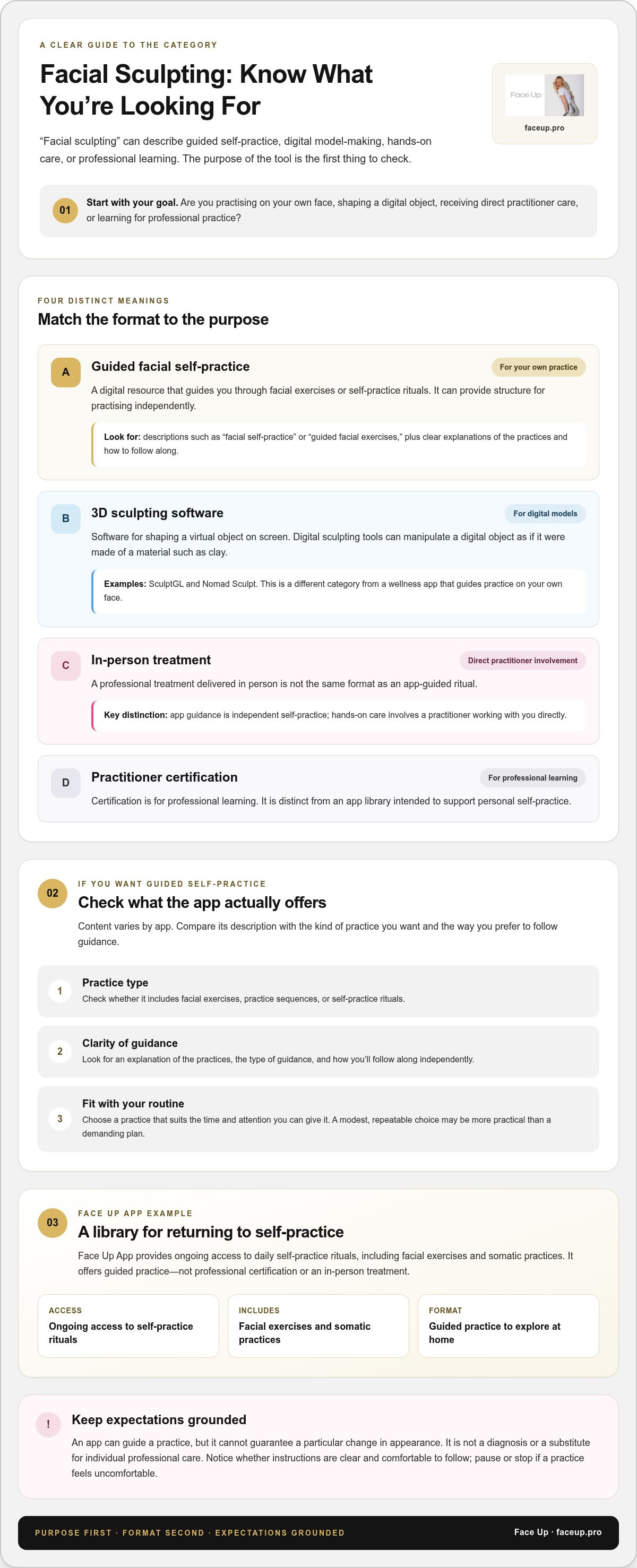
A facial sculpting app is a digital resource that guides users through facial exercises or self-practice rituals. It offers a way to follow a practice independently, often with structured guidance. That differs from a professional treatment delivered in person. It is also distinct from practitioner certification, which is for professional learning.
Facial sculpting app or 3D sculpting software?
Look at what the app asks you to do. A wellness-focused app centres on your own face and guided practice. Digital sculpting software, by contrast, is for manipulating a virtual object. Digital sculpting, also known as sculpt modeling or 3D sculpting, is the use of software that offers tools to push, pull, smooth, grab, pinch or otherwise manipulate a digital object as if it were made of a real-life substance such as clay.
SculptGL and Nomad Sculpt are examples of the separate 3D-software meaning. If your goal is to follow facial exercises or rituals, look for terms such as “facial self-practice” or “guided facial exercises” in the description. If you want to create or shape a digital model, 3D sculpting tools are the relevant category.
What can a wellness-focused facial app contain?
Content varies by app, so don’t assume every option uses the same approach. A wellness-focused app may offer guided facial exercises, practice sequences, or self-practice rituals. Compare the description with what you want to do: check whether it explains the practices, the type of guidance, and how you’ll follow along independently.
Face Up App provides ongoing access to daily self-practice rituals, with a library that includes facial exercises and somatic practices. It offers guided practice, rather than professional certification or an in-person treatment. A library can make it easier to return to a practice, but consistency is a routine choice, not a promise of a particular appearance or health outcome.
Keep expectations grounded. An app can guide a practice, but it shouldn’t be treated as a diagnosis or a substitute for individual professional care. Be cautious of descriptions that promise guaranteed or dramatic changes. Instead, focus on what the app actually provides: the type of guidance, the practices included, and whether the format suits the way you want to practise.
How Guided Facial Sculpting App Practice Can Fit into a Routine
Guidance can make independent practice easier to begin because it gives you a clear next step instead of leaving you to assemble a routine from scattered instructions. A facial sculpting app can prompt you to pause, follow a sequence, and give the practice a regular place in your day. The value is having a structure to return to, not expecting every session to produce a visible change.
Choose a moment that already exists in your schedule, such as a quiet pause in the morning or part of an evening wind-down. Then choose a practice that fits the time and attention you can give it. If the routine feels demanding to fit in, it may be harder to return to. A modest, repeatable choice is often more practical than an ambitious plan you struggle to maintain.
What a guided ritual may help you organise
A guided session can take some of the guesswork out of getting started. Rather than deciding what to do each time, you can follow the available guidance and connect the practice to a familiar part of your day. Face Up App provides ongoing access to self-practice rituals, including facial exercises and somatic practices. Explore the library and choose a practice that matches your interests and routine.
Keep the habit flexible. You might connect practice with an existing cue, such as finishing another part of your morning routine, rather than relying on a strict schedule. Notice whether the instructions are clear and the practice feels comfortable to follow. Consistency means returning when it fits, not treating a missed day as failure or a reason to push harder.
Self-practice, professional care, and informed expectations
App guidance supports independent self-practice; professional hands-on care involves a practitioner working with you directly. The formats are distinct, and one shouldn’t be mistaken for the other. A guided ritual lets you practise on your own, while an in-person session offers direct practitioner involvement. Neither format guarantees a particular result.
Pay attention to your comfort as you follow any guidance. Pause or stop if a movement or practice feels uncomfortable, and don’t force yourself to continue to complete a sequence. If you have questions about a concern or symptom, an app isn’t a diagnostic tool; seek appropriate professional guidance for your situation.
For broader context on the jaw and facial area, the TMJ massage therapy guide discusses the subject without turning an app routine into an individual assessment. If you’re looking for a structured way to explore self-practice, you can also learn about Face Up’s guided self-practice rituals. Keep expectations grounded and let comfort and fit guide how the routine becomes part of your day.
Compare Facial Sculpting Apps, Courses, Tools, and In-Person Sessions
Choosing a format depends on how you prefer to learn and practise. A subscription app can suit someone who wants ongoing access to guided material; a course may offer a more focused learning experience. Physical tools and practitioner-led sessions involve different kinds of interaction. Compare what each format provides with the support and flexibility you want, rather than assuming one is right for everyone.
| Format | Typical structure | Ongoing guidance | Independent practice | Practitioner involvement |
|---|---|---|---|---|
| App subscription | Digital self-practice guidance | May provide continued access to practices | High | Not typically hands-on |
| Digital course | Material organised around a subject or method | Depends on the course format | High | Varies by format |
| Physical tool | A tool used during self-practice | Not inherent to the tool | High | None during independent use |
| In-person session | Practitioner-led, face-to-face care | Guidance occurs within the session | Lower during the session | Direct |
Subscription app or one-off digital course?
An app subscription and a course offer different learning structures. An app may provide ongoing access to a library of rituals, while a course is generally organised around a particular subject. Face Up offers the Face Up App Subscription and the Jaw Release Course. These are distinct ways to engage with Face Up’s work. To choose between them, decide whether you want a range of self-practice material or a more focused topic.
App guidance or a physical jaw tool?
A guided app provides digital instruction to follow independently. A physical tool is an object used during self-practice, so it doesn’t inherently provide the same kind of instruction or ongoing guidance. Neither format should be treated as a guaranteed solution for discomfort. For a focused overview of how tools differ, see this TMJ massage tool comparison.
Use the comparison to identify what matters most to you: continued access to guidance, a defined course subject, a physical aid, or direct practitioner involvement. If you’d like a digital format with ongoing access to daily self-practice rituals, you can explore Face Up’s app rituals. Think of the format as support for your preferred practice, not a promise of a particular result.
How to Start a Facial Sculpting App Subscription
A subscription is easier to assess when you know what you want from the practice and what you’re agreeing to. Start by focusing on the guidance, then choose a routine that fits your actual schedule. Once you’ve tried the format, consider whether it works for you. You don’t need to begin with ambitious expectations or a rigid daily plan.
To start, clarify your intention, review the app’s practice style, choose a manageable routine, and assess whether it fits before committing to a subscription.
- Clarify what you want to explore. You might be interested in guided facial exercises, somatic self-practice, or having a structured ritual to follow. Treat these as personal preferences, not promised outcomes. A clear intention helps you decide whether the app’s focus is relevant.
- Review the practice style. Read the app description and available information about its content. Consider whether the language, approach, and types of guidance match how you prefer to learn and practise independently.
- Choose a routine you can repeat. Look for a practice that fits naturally into your schedule. A realistic rhythm gives you a fair chance to see whether you enjoy returning to it, without making consistency feel like a test.
- Assess the fit. As you use the app, notice whether the guidance remains clear and the routine feels workable. Judge the experience by its relevance and usability, rather than expecting a particular appearance or health result.
Choose a practice intention and a realistic rhythm
Your intention can be simple: perhaps you want to explore facial exercise or include somatic self-practice in a regular pause. Face Up App offers daily self-practice rituals, including facial exercises and somatic practices, giving you material to explore. Choose a rhythm that works with your existing commitments, and adapt it as you learn what feels sustainable.
A routine should support your day, not compete with it. If you keep postponing practice because the plan feels too demanding, simplify the rhythm rather than treating that as a failure. The aim is to explore a format that suits you, not to follow a schedule in pursuit of a guaranteed change.
Review the app and subscription before joining
Before committing, check whether the practice library and guidance style align with what you’re looking for. Read the current subscription terms shown in the sign-up flow, including applicable billing details, so you understand the commitment before proceeding. Don’t rely on assumptions about price, billing, trials, or cancellation; use the terms presented there.
After using the app, take stock of the experience: Is the guidance useful to you? Does the routine fit your schedule? Does the content match your interests? Your answers can help you decide whether the subscription continues to suit your needs.
If you’re ready to explore guided daily self-practice, discover Face Up App rituals and consider how they might fit into your routine.
Explore the Face Up App for Guided Facial Self-Practice
If you’re looking for a facial sculpting app to support regular self-practice, Face Up offers a guided option grounded in facial exercises and somatic practices. Founded by Olga Newman, Face Up is a holistic beauty and wellness platform focused on facial sculpting and somatic bodywork. The app is designed for personal practice, distinct from professional certification or an in-person treatment.
What the Face Up App is designed to offer
The Face Up App Subscription provides ongoing access to daily self-practice rituals and a library of facial exercises and somatic practices. This gives you material to explore as part of a guided routine, rather than requiring you to create every practice from scratch. The aim is to support a structured way to engage with self-practice, not to promise a particular change in appearance or health.
That distinction matters. An app provides guidance for you to follow independently; it doesn’t replace practitioner involvement or professional learning. Face Up Method Certification serves a different purpose from app-based practice, as does a Face Up Sculpting Treatment delivered in person. Each format is a distinct way to engage with the Face Up approach.
Daily rituals may appeal if you value having a practice library to return to and prefer exploring at your own pace. The facial and somatic content offers different avenues for self-practice, so consider which kinds of guidance interest you and whether you want a repeatable routine. The app’s value is in the practices it provides and how they fit your preferences, not in a guaranteed outcome.
Decide whether this guided approach suits you
A guided app may suit you if you want structure for independent practice and ongoing access to a range of rituals. If your priority is direct, hands-on practitioner involvement or professional training, those are different formats, not better or worse versions of the same experience.
Before choosing, return to your own priorities: Do you want facial exercises, somatic practices, or both? Would a library of rituals help you practise regularly? Does self-guidance suit the way you prefer to learn? Keep expectations realistic. An app can provide a framework for practice, but it can’t guarantee appearance, therapeutic, or health results.
If the format and content match your interests, review the subscription terms in the sign-up flow and decide whether they suit you. You can explore the Face Up App as a next step toward informed, guided facial self-practice.
Choose a Practice You’re Ready to Explore
Before choosing a facial sculpting app, decide what a useful first step would look like for you. It might mean making space for a mindful pause, trying a new form of self-practice, or finding guidance you enjoy following. Let that intention shape your choice, rather than pressure to achieve a specific result.
As you explore, give yourself permission to adjust. A good fit should feel understandable and compatible with your life, not like another obligation. Notice what interests you, what feels comfortable, and whether you want to continue. There’s no need to turn self-care into a test of discipline.
If you’re ready to take that next step, explore Face Up’s guided app rituals and decide whether they feel right for your practice. Begin thoughtfully, stay open to what suits you, and let a steady, personal choice be enough.
Frequently Asked Questions
Is a facial sculpting app the same as a 3D sculpting app?
No. A facial wellness app guides self-practice, while a 3D sculpting app is used to create or edit digital models. The word “sculpting” can describe either category, so check the app’s stated purpose and content before signing up. Look for references to facial exercises or rituals if you want wellness guidance, and digital modelling tools if you want to shape objects on screen.
Can a facial sculpting app replace an in-person treatment?
No, they’re different formats. An app offers guidance you follow independently, while an in-person session involves a practitioner working directly with you. Consider whether you want self-guided practice or direct practitioner involvement. An app isn’t a way to diagnose or treat a medical condition, and it can’t guarantee a particular appearance or therapeutic outcome. If you have a health concern, seek appropriate professional advice.
How much does a facial sculpting app subscription cost?
Prices and subscription terms vary by app, so check the current sign-up details for the option you’re considering. Look at the amount charged, billing frequency, renewal terms, and any conditions before you commit. For Face Up, use the terms shown in its sign-up flow rather than assuming a price or arrangement. You can also consider whether you expect to use the available practice library often enough to suit your needs.
What should I look for in a facial sculpting app?
Start by confirming that the app is for facial self-practice, not digital model-making. Then check whether its descriptions clearly explain the guidance and practice content. Choose an app that fits your interests and preferred way of learning, whether you want a particular kind of exercise or broader rituals. Treat guaranteed transformation claims cautiously; decide based on useful guidance and practical fit, not promised results.
Do I need experience to start a facial sculpting app?
You can begin by choosing a clearly explained practice and following its instructions at a comfortable pace. An app is not professional training, and independent guidance isn’t a substitute for individual care. If a movement feels uncomfortable, pause rather than pushing through it. If you have a health concern or aren’t sure whether a practice is suitable for you, seek appropriate professional advice.
Can I use a facial sculpting app alongside a physical massage tool?
They’re different formats: an app provides digital guidance, while a physical tool is used directly on the body. Whether to combine them depends on the instructions for the particular practice and tool, so don’t assume using both will improve results. If you’re comparing tools for jaw-focused self-practice, consider their intended use and guidance before deciding. Choose a format that feels appropriate for your preferences and comfort.


