

Facial massage may leave skin looking refreshed, but it has not been established as a reliable way to increase collagen or reverse signs of ageing. The proposed link between facial massage for collagen production and firmer skin is plausible, but early findings on massage and appearance do not prove lasting changes in collagen.
It is understandable to hope that hands-on treatment could soften visible lines or create a more lifted look. Massage may affect circulation and facial tension, while age-related changes in collagen and facial structure have more complex causes. This distinction matters when deciding what results to expect.
This guide explains what research suggests about massage and signs of ageing, what tools such as gua sha may contribute, and how proposed collagen benefits compare with professional facial sculpting. You will also learn what a practitioner can address through hands-on work, and where massage has limits, so you can weigh your options with realistic expectations.
Key Takeaways
- Understand how collagen supports skin firmness and why massage’s proposed effects on collagen need to be viewed separately from short-term changes in appearance.
- Learn what gua sha and other massage tools may contribute, and why the tool alone doesn’t establish lasting results.
- See how professional facial massage differs from at-home techniques, including the role of tailored pressure and hands-on assessment.
- Explore when Face Up Sculpting Treatment may be a suitable next step for facial tension and sculpting goals.
Can face massages reduce the signs of aging?
Facial massage can temporarily affect blood flow, tension and the appearance of skin, but that does not establish lasting changes in collagen. Evidence for visible effects is limited, and proposed collagen benefits need careful interpretation.
Collagen and Skin Firmness
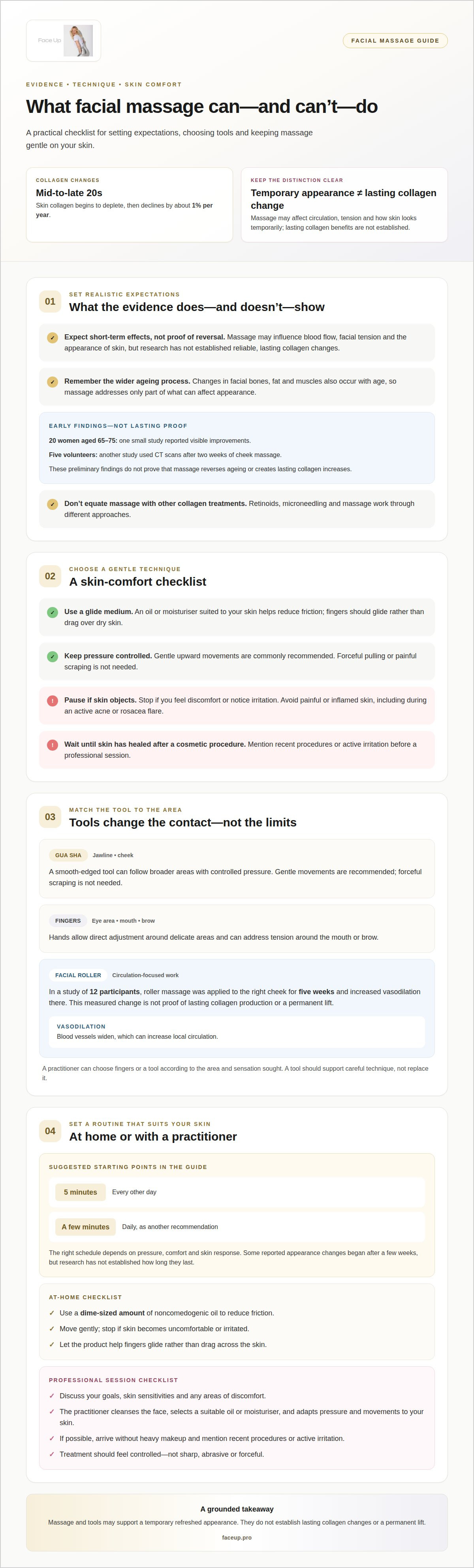
Collagen is a structural protein that helps skin maintain firmness and elasticity. Skin collagen begins to deplete in the mid-to-late 20s, and levels decline by about 1% per year. These changes can affect how skin looks and feels, while facial bones, fat, and muscles also remodel with age. For readers, that means massage addresses only part of a wider process.
Evidence on Massage and Skin Aging
Small studies report changes in facial appearance, but they don’t establish that massage reverses aging. One study included 20 women aged 65-75 and reported visible improvements; another used CT scans to assess five volunteers after two weeks of cheek massage. These findings are preliminary, not proof of lasting collagen increases. Massage also isn’t interchangeable with retinoids, microneedling, or other collagen treatments, which work through different approaches.
Pressure and skin condition matter: stop if you feel discomfort or notice irritation. Avoid massaging painful or inflamed skin, including during an active acne or rosacea flare, and wait until skin has healed after a cosmetic procedure.
Research on Skin Proteins
Fibroblasts produce collagen, and laboratory research suggests mechanical stimulation can affect their activity. One study reported the best results for collagen and related proteins at around 75 Hz, but that finding doesn’t show that ordinary facial massage produces the same effect in people. Facial massage for collagen production remains a proposed benefit, not an established treatment outcome. Professionals select an oil or moisturizer suited to the skin to reduce friction; product choice can affect treatment cost, which depends on the case and is given after a quote request.
Massage Frequency and Duration
A suggested starting routine is five minutes every other day; another recommendation is a few minutes daily. The right schedule depends on pressure, comfort, and skin response, so a professional can tailor the session. Some reported appearance changes began after a few weeks, but research doesn’t establish how long they last. A 15- to 20-minute stroll can support fluid movement, while sunscreen, water, and a healthy diet support skin health.
Gua sha and other tools used in professional facial massage
In professional facial massage, gua sha is a smooth-edged tool that glides across the skin with controlled pressure. Its shape lets a practitioner follow areas such as the jawline and cheek, while fingers can address tension around the mouth or brow. Gentle upward movements are recommended; forceful scraping is not needed to create a sense of movement. The tool changes how the practitioner contacts the skin, not the basic limits of massage.
Facial rollers offer another approach. A study involving 12 participants applied roller massage to the right cheek for five weeks and found increased vasodilation there. Vasodilation means blood vessels widen, which can increase local circulation. That result describes a measured change in the massaged cheek, not proof of lasting collagen production or a permanent lift. It helps explain why a roller may be used for circulation-focused work, while keeping expectations grounded.
During a session, the practitioner chooses fingers or a tool according to the area and the sensation sought. For example, fingers allow direct adjustment around the delicate eye area, while a gua sha edge can follow the broader cheek. The practitioner uses a suitable glide medium to reduce friction and adapts pressure to the skin’s response. Treatment should feel controlled rather than sharp or abrasive, and a tool should never replace careful technique.
Tools may support a temporary refreshed appearance by encouraging circulation and moving fluid, but they don’t independently establish stronger skin proteins. Oxygen and nutrients carried through blood flow support normal skin function; that mechanism doesn’t prove a tool can promote new collagen in the face. If you’re considering hands-on care, explore professional facial massage approaches alongside what a tool-based session can realistically offer.
Professional versus at-home massage
Professional facial massage provides guided, hands-on technique; at-home massage relies on your own pressure and movements. The difference matters because gentle contact and a suitable glide medium help limit unnecessary friction.
Before a professional session, the practitioner discusses your goals, skin sensitivities and any areas of discomfort. They cleanse the face, choose an oil or moisturiser suited to your skin, then use fingers or a tool with controlled pressure. For example, they may adjust their touch around the eyes and use broader movements across the cheeks. Mention recent cosmetic procedures or active irritation so the treatment can be adapted.
Preparation is straightforward: if possible, arrive without heavy makeup and share relevant skin concerns before the massage begins. The practitioner manages product selection and technique, including the pressure used. Effective treatment should not require forceful pulling or painful scraping.
For at-home massage, a page’s guidance recommends a dime-sized amount of noncomedogenic oil to reduce friction while gently moving the skin. That differs from professional care, where the practitioner selects the product and controls the movements. Either way, the product should help fingers glide rather than drag across dry skin. Stop if the skin feels uncomfortable or becomes irritated.
Gentle upward movements are commonly recommended for facial massage, but direction alone does not establish collagen benefits. A professional can tailor the technique to different facial areas and adjust pressure as the skin responds. At-home massage may be simpler, but it requires restraint: pressing harder does not make the technique more effective. Neither approach should be treated as a substitute for treatments that target collagen through other methods.
Before a professional appointment, share clear information about your skin, goals and recent treatments. The practitioner can use that context to choose suitable products and movements. If you feel discomfort during the session, say so promptly; the pressure can be adjusted or the massage stopped.
Proposed collagen production benefits of facial massage
The proposed link between facial massage and collagen centres on fibroblasts, the cells that produce collagen. Mechanical stimulation may influence these cells, but laboratory findings do not establish that finger pressure increases collagen in a person’s face. A temporary change in circulation or muscle tension can affect appearance without showing that new collagen has formed or wrinkles have decreased.
Gua sha and jade rollers have no proven collagen-boosting effect simply because they contact the skin. A roller study found increased vasodilation in massaged cheeks, but vasodilation measures changes in blood vessels, not collagen levels. A tool can help deliver a consistent gliding movement; it cannot show whether deeper layers have produced more structural protein. When assessing collagen claims, ask what outcome was measured, not which tool was used.
Facial muscles and connective tissue also influence how the skin sits. Relaxing muscle tension may change how the face looks or feels, but claims that massage reshapes deeper layers need stronger evidence. There is no scientific evidence that facial fascial massage changes facial shape or tissues. Excessive stretching may strain connective tissue, and forceful manipulation could disturb collagen structure rather than support it. Gentle technique is more sensible than aggressive pressure.
For a grounded takeaway, treat facial massage as hands-on care that may support circulation and relaxation, not as a proven collagen treatment. The proposed mechanism involving fibroblasts is a research idea, not proof that massage replaces treatments designed to target collagen. If you want professional guidance focused on facial tension and sculpting, explore a professional facial sculpting approach and discuss the goals you want the session to address.
Face Up
Face Up offers a professional facial sculpting approach for people seeking hands-on care for facial tension and appearance. The Face Up Sculpting Treatment focuses on releasing deep muscular and emotional tension in the face and neck, as part of a natural rejuvenation approach without invasive procedures.
This approach may suit you if you want a practitioner to work with facial muscles and tension while keeping expectations about collagen realistic. Facial massage is not established as a reliable way to increase collagen or reverse signs of ageing. Face Up focuses on sculpting and tension release, rather than promising changes in collagen.
To explore whether this approach suits your goals, get in touch with Face Up.
Choose the Next Step That Fits Your Goals
Choose your next step based on what you want from facial care: a focused session, a regular personal practice or deeper professional learning. Facial massage for collagen production remains a proposed benefit, so consider the method for its broader approach to facial tension and sculpting, not as a guaranteed way to change collagen.
Face Up offers options for these interests, including Face Up Sculpting Treatment, Face Up App Subscription, Jaw Release Course and Face Up Method Certification. Each serves a different purpose, from hands-on care to self-practice and practitioner education. Choose the option that fits your needs, bearing in mind that each offers a different experience.
If you’d like to discuss professional facial massage and your goals, contact Face Up about facial massage. A considered next step can help you approach facial care with clarity and confidence.
Frequently Asked Questions
Is professional facial massage better scheduled in the morning or at night?
Neither morning nor night has been established as better for collagen-related results. Choose a time that suits your schedule and leaves you comfortable afterwards. For example, a morning appointment may fit before daytime plans, while an evening session may suit a quieter routine. If you have an event, avoid booking an unfamiliar treatment immediately beforehand, so you have time to see how your skin responds.
How do facial massages stimulate collagen?
Facial massage is proposed to influence collagen-producing fibroblasts through mechanical stimulation, but increased collagen in human facial skin has not been established. A temporary flush after massage reflects changes such as increased circulation, not proof of new collagen. This distinction helps set realistic expectations: consider facial massage for relaxation or a refreshed look, rather than as a proven way to rebuild skin structure.
What about fascia?
Fascia is collagen-containing connective tissue that surrounds muscles, bones and organs. Facial massage may work over areas where fascia and muscles lie beneath the skin, but that does not mean a practitioner can reshape facial tissues by manipulating fascia. There is no scientific evidence that facial fascial massage changes facial shape or tissues. Treat claims about “breaking up” facial fascia or sculpting bone structure with care.
What types of facial massage are used to support skin firmness or collagen?
Professional sessions may involve hands-on facial sculpting, gua sha or a roller, depending on the practitioner’s approach and the area being treated. These methods differ in contact and movement, but none has been established as superior for increasing facial collagen. For example, a practitioner might use fingers around a smaller area and a smooth tool across the cheek, while explaining the treatment’s purpose.
What oils or moisturizers are suitable for facial massage, and how much do they cost?
Use an oil or moisturizer suited to your skin to reduce friction; at home, the guidance recommends a dime-sized amount of noncomedogenic oil. Professional product costs depend on the case and are provided after a quote request.


