

What if the sallow tone and persistent tightness you see in the mirror aren't just signs of aging, but a physical manifestation of your nervous system stuck in "survival mode"? Your face is a living map of your emotional history. When you carry the weight of professional and personal obligations, it often settles into the deep tissues of your jaw and brow, creating a chronic sense of heaviness. You've likely tried various topical treatments to fix that dullness, yet the physical tension and feeling of being disconnected from your own body remain. It's a common struggle for those navigating high-pressure environments, where the toll of stress eventually becomes impossible to ignore.
We believe that true radiance requires more than a surface-level solution. By integrating face massage for stressed skin with somatic release, you can finally address the root cause of a tired appearance. This guide introduces you to the Face Up Method™, a proprietary approach designed to bridge the gap between beauty and emotional well-being. You'll learn how to release deep-seated tension for an instant glow and a lifted appearance. We'll also preview the journey toward reduced physical discomfort and a restored sense of mental calm through our specialized somatic techniques.
Key Takeaways
- Understand the biological link between cortisol levels and the degradation of your skin's collagen and elastin.
- Master foundational techniques for face massage for stressed skin to release emotional tension held in the deep muscular layers.
- Learn how the proprietary Face Up Method™ differs from traditional massage by targeting intra-oral and deep somatic structures.
- Discover how to create a five-minute daily ritual that stacks somatic release with your existing skincare routine.
- Identify the professional pathway to mastering these techniques through our global certification program for practitioners.
The Biology of Stress: Why Your Skin Reflects Your Nervous System
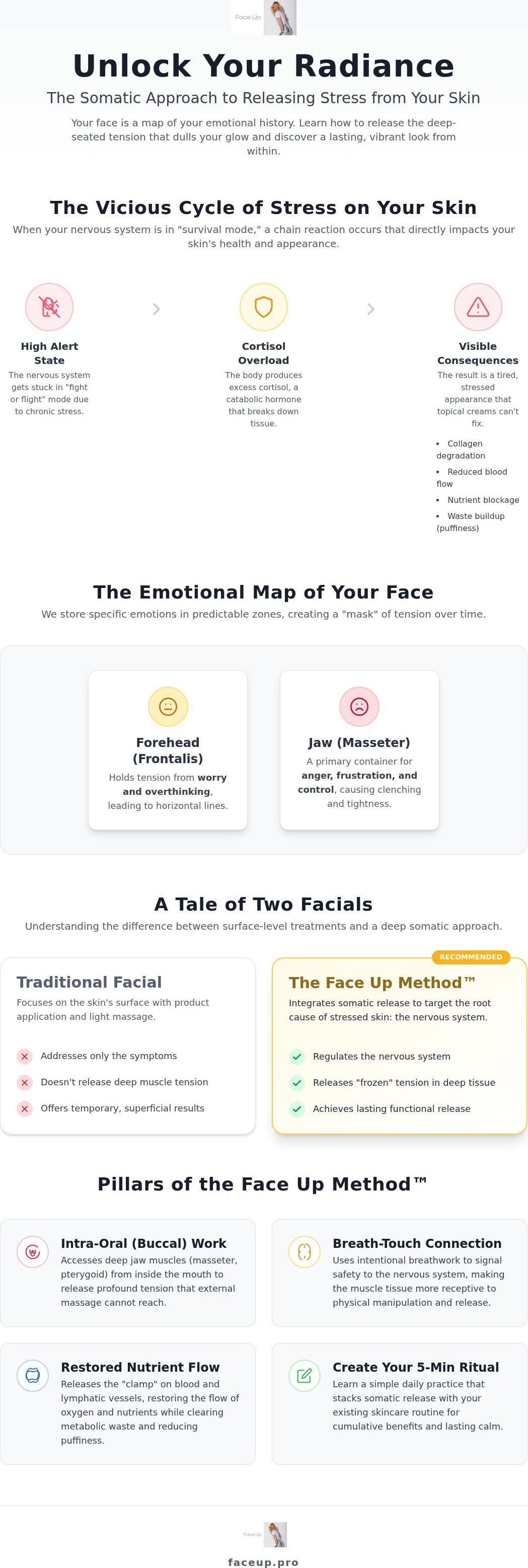
Your skin is more than just a protective barrier; it's a sophisticated mirror of your internal state. When the nervous system remains in a state of high alert, the body produces a steady stream of cortisol. This hormone is catabolic, meaning it actively breaks down the protein structures that keep your face looking firm. Specifically, cortisol degrades collagen and elastin fibers, leading to a loss of structural integrity. This process is often accompanied by vasoconstriction, where blood flow is diverted away from the skin to support vital organs during a perceived crisis. This is why your complexion looks sallow or grey when you're overwhelmed. This fascinating intersection of mind and body is explored in the field of Psychodermatology, which highlights how chronic emotional strain disrupts physical skin health.
Beyond the chemical changes, stress creates a physical "mask" of tension. We hold this primarily in the frontalis muscle of the forehead and the masseter muscles of the jaw. This chronic contraction doesn't just feel uncomfortable; it changes the way your face reflects light and holds its shape. Implementing face massage for stressed skin provides a direct signal to the parasympathetic nervous system. By physically manipulating the tissue, you tell the brain it's safe to exit the "fight or flight" mode, allowing the facial muscles to finally soften and repair.
How Chronic Tension Blocks Nutrient Flow
Imagine your facial muscles as a series of pipes. Chronic tension acts like a clamp on these pipes, restricting the flow of nutrient-rich blood and slowing down the lymphatic system. When the lymphatic system stagnates, metabolic waste builds up, leading to puffiness and congestion. You might find that even the most expensive topical creams fail to deliver results. This is because they can't penetrate "frozen" or hypertonic facial tissue effectively. Somatic facial release serves as the essential catalyst for restoring cellular oxygenation and deep tissue vitality.
The Emotional Anatomy of the Face
We store specific emotions in predictable zones. Worry and overthinking often manifest as horizontal lines in the frontalis. Anger, frustration, or the need for control frequently settle in the masseter muscles of the jaw. Over time, the fascia, the connective tissue surrounding your muscles, begins to "set" in these positions. It holds the emotional stress long after the initial event has passed. Our Face Up philosophy emphasizes the necessity of releasing this stored tension before attempting any aesthetic sculpting. Effective face massage for stressed skin must address these emotional imprints to achieve a truly lasting glow.
Somatic Facial Sculpting vs. Traditional Face Massage
Traditional facial treatments often stop at the surface, focusing on the application of products or light effleurage. While these methods feel pleasant, they don't address the deep-seated tension that characterizes a stressed visage. Effective face massage for stressed skin requires a somatic approach that acknowledges the intricate Brain-Skin Connection. This scientific link demonstrates that emotional distress can trigger inflammatory responses in the skin, making superficial rubbing insufficient for long-term results. When we treat the face as a disconnected surface, we miss the opportunity to regulate the nervous system at its source.
The Face Up Method™ moves beyond aesthetic surface work to target the intra-oral and deep muscular layers. Our goal isn't just a temporary glow; it's the restoration of functional facial movement. When your muscles are hyper-tense, they lose their ability to move fluidly, which contributes to a stiff, aged appearance. By integrating a "breath-touch" connection, we guide the nervous system into a state of receptivity. This ensures that the physical manipulation of tissue actually "takes," resulting in a face that looks and feels profoundly different. It's a shift from merely looking better to functioning with greater ease.
The Power of Intra-Oral (Buccal) Work
The jaw is the body's primary container for unresolved stress. If you find yourself clenching during the day or grinding at night, you're likely holding immense pressure in the masseter and pterygoid muscles. Traditional massage cannot reach these areas effectively from the outside. By utilizing intra-oral techniques, we can access these deep tissue layers to release "frozen" tension. This type of tmj massage therapy often leads to total body relaxation, as the jaw is neurologically linked to the hips and pelvic floor. Working inside the mouth creates a visible change in skin contour, softening the lower face and defining the jawline. This deep tissue work is essential for those who feel their stress has become physically "stuck."
Fascial Release and Skin Resilience
Fascia is the connective tissue that wraps around every muscle fiber. When stress is chronic, this fascia becomes sticky and dehydrated, forming adhesions that manifest as deep expression lines. Our signature "Lift and Release" move is designed to gently pull the fascia away from the underlying bone, breaking these adhesions and encouraging fresh blood flow. This targeted stimulation helps build skin density and resilience without the need for invasive procedures. If you're ready to start your own practice, exploring the tutorials in our Face Up App is an excellent first step toward mastering these somatic rituals for long-term skin health.
5 Essential Techniques for Face Massage for Stressed Skin
Transitioning from the theory of somatic release to physical practice allows you to reclaim your sense of calm and vitality. Before you begin your face massage for stressed skin, select a high-quality facial oil that provides enough glide to prevent dragging the tissue. Setting a somatic intention is equally vital. Take a moment to breathe and mentally state your goal, such as "I am releasing the weight of today's obligations." This simple shift in focus transforms a beauty routine into a powerful nervous system reset.
- Step 1: The Frontalis Sweep. Place your knuckles just above your eyebrows. Sweep them upward toward the hairline with firm, steady pressure. This move specifically targets the "worry lines" where we store cognitive overload.
- Step 2: The Orbital Release. Use your ring fingers to trace gentle circles around the eye sockets. Start at the inner corners, move over the brow bone, and sweep under the eyes to brighten a tired appearance.
- Step 3: Zygomatic Sculpting. Hook your index fingers under your cheekbones near the nose. Slowly slide them outward toward the ears to encourage mid-face lifting and lymphatic drainage.
- Step 4: The Masseter Melt. Locate the hinge of your jaw. Apply deep, circular pressure with your fingertips while keeping your mouth slightly open. This provides immediate relief for chronic clenching.
- Step 5: Neck and Platysma Drainage. Use flat palms to sweep down the sides of your neck toward the collarbone. This final step is essential for clearing metabolic waste and reducing puffiness.
Optimizing Your Technique for Maximum Glow
Precision in your application determines the efficacy of the ritual. For the jaw and forehead, you can use firmer pressure to reach the deeper muscular layers. However, the skin around the eyes requires a feather-light touch to avoid irritation. Always ensure your movements follow a directional flow toward the lymph nodes located near the ears and collarbone. Scientific research has shown that facial massage reduced anxiety and improved mood in clinical settings, proving its value beyond simple aesthetics. If you find your hands tiring, using a tmj massage tool can help you achieve a deeper release without strain.
Common Mistakes to Avoid
The most frequent error in DIY massage is pulling the skin downward. Gravity is already a constant force; your movements should always be upward and outward to support the face's natural structure. You should also avoid over-stimulating areas that are currently inflamed or experiencing active breakouts, as this can exacerbate "angry" skin conditions. Remember that consistency beats intensity for somatic results. A gentle, daily five-minute practice is far more effective for your nervous system than an aggressive, hour-long session once a month.
Creating Your Daily 5-Minute Somatic Ritual
A successful ritual thrives on integration rather than interruption. You don't need to dedicate an hour to see results; five minutes of focused face massage for stressed skin is enough to shift your nervous system. The most effective way to maintain this habit is through "habit stacking." Perform your techniques while applying your serum or facial oil. This turns a standard grooming step into a profound somatic experience that bridges the gap between beauty and emotional health. By making this a non-negotiable part of your skincare, you ensure that your face receives the deep care it needs to resist the effects of chronic stress.
The Morning Awakening Ritual
Your morning practice should focus on invigoration and lymphatic drainage. After hours of physical stillness, the face often retains fluid, leading to puffiness around the eyes and jawline. Use light, rhythmic strokes to move this stagnation toward your lymph nodes. If you're a busy professional, try the 60-second "Glow Hack": ten brisk sweeps from the nose to the ears. This quick stimulation increases blood flow and provides an instant brightness that lasts through your morning meetings. It's about waking up the skin and setting a proactive tone for the day ahead.
The Evening Decompression Ritual
Tracking your progress involves more than just looking at fine lines. You'll start to notice changes in the mirror within the first seven days. Look for a more defined jawline and a reduction in that tell-tale sallow tone. More importantly, pay attention to how you feel internally. A successful practice results in less physical tension and a greater sense of mental clarity. To stay consistent with your new routine, you can follow the guided daily rituals available through the Face Up App Subscription.
Mastering the Method: Professional Somatic Training
The beauty and wellness industry is undergoing a significant transformation. Professionals are moving away from purely topical or invasive solutions in favor of methods that respect the body's natural intelligence. Mastering face massage for stressed skin through a somatic lens allows practitioners to offer results that go beyond the surface. By addressing the nervous system directly, you provide a level of relief that standard facials simply cannot match. This shift is a direct response to a global increase in stress-related skin concerns that require a more profound, integrated approach to healing and rejuvenation.
Integrating the Face Up Method™ into an existing aesthetic practice provides a distinct competitive advantage. It allows you to offer a proprietary experience that bridges the gap between manual therapy and high-end beauty. The facial sculpting certification path is designed for those who want to master these complex techniques and offer them to a discerning clientele. This training provides the tools to release deep emotional tension and restore facial vitality through structured, non-invasive modalities. Practitioners who complete this path are equipped to handle the unique requirements of modern clients who seek both aesthetic results and internal calm.
Who is the Face Up Method™ For?
- Estheticians: Those looking for effective, non-invasive alternatives to Botox and fillers who want to offer deep tissue restoration.
- Massage Therapists: Professionals wanting to specialize in the intricate anatomy of the face and neck to provide total body relaxation.
- Holistic Health Coaches: Individuals adding a physical modality to their work to help clients release the emotional stress they carry in their features.
Join the Global Face Up Community
Becoming a certified practitioner isn't just about learning a technique; it's about entering a unique environment of professionals dedicated to global standards of excellence. Our ecosystem provides continuous education and support, ensuring you remain at the forefront of somatic facial therapy. Once certified, you'll be featured in our global practitioner directory, making it easy for clients in your jurisdiction to find your specialized services. This visibility helps you build a practice based on integrity, reliability, and a clear path forward for your clients.
Whether you're looking to deepen your personal practice or evolve your professional career, we invite you to enter this specialized community. By focusing on the somatic roots of facial tension, you're not just improving skin; you're facilitating a profound shift in well-being. Explore the Face Up Method™ and start your journey today to redefine what it means to provide a truly restorative face massage for stressed skin.
Begin Your Path to Somatic Resilience
Transforming your appearance starts with acknowledging the profound connection between your nervous system and your skin. By integrating face massage for stressed skin into your daily life, you move beyond superficial beauty to address the deep emotional tension held within your tissues. You've learned that consistent, five-minute rituals can effectively reset your parasympathetic nervous system, clearing the "stress mask" and restoring a natural, healthy glow. This journey isn't just about looking better; it's about reconnecting with your body and reclaiming a sense of internal calm. For those seeking to extend this holistic approach to reproductive health, you can visit Ombright Wellness Fertility Acupuncture to learn how specialized acupuncture supports the body's vital systems.
Founded by somatic expert Olga Newman, our proprietary, non-invasive sculpting techniques offer a reliable path forward for both personal well-being and professional advancement. Whether you're seeking a daily ritual or a global community of certified practitioners, we provide the ecosystem you need to succeed. Discover the Face Up Method™: App, Courses & Certification and start your transformation today. You deserve to feel as vibrant as you look.
Frequently Asked Questions
How often should I do face massage for stressed skin?
You should perform a face massage for stressed skin daily for approximately five minutes to achieve the best results. Consistency allows your nervous system to remain in a regulated state rather than swinging between extremes of tension. Short, frequent sessions are more effective than long, occasional ones because they prevent emotional stress from accumulating in the fascia. This daily habit ensures that your skin remains oxygenated and your facial muscles stay supple.
Can face massage really help with skin aging caused by stress?
Face massage directly addresses stress-induced aging by reducing cortisol levels and restoring blood flow to the skin's surface. Chronic stress degrades collagen and elastin; physical manipulation helps stimulate these proteins while clearing metabolic waste. While it can't stop chronological aging, it significantly reduces the "haggard" look associated with long-term fatigue and emotional strain. Regular somatic work helps maintain the structural integrity of your face over time.
What is the difference between a regular facial and somatic facial therapy?
Traditional facials primarily prioritize topical product application and surface-level relaxation. In contrast, somatic facial therapy targets the deep muscular layers and the nervous system to release stored emotional imprints. This approach uses specific manual techniques to reprogram how your face holds tension, resulting in a functional shift in your appearance rather than just a temporary glow. It's a method that treats the face as an extension of your internal state.
Do I need special tools like a gua sha for the Face Up Method™?
You don't need specialized tools like a gua sha to practice the Face Up Method™ effectively. Your hands are the most sophisticated instruments for detecting subtle tissue changes and providing precise somatic feedback. While tools can occasionally assist with deep jaw release, our methodology emphasizes manual techniques that allow you to feel and release tension using your own touch. This direct contact fosters a stronger mind-body connection.
Is it safe to do deep jaw massage if I have TMJ issues?
Deep jaw massage is generally safe and highly beneficial for those with TMJ issues, provided you use a controlled, gentle approach. Releasing the masseter and pterygoid muscles helps reduce the chronic clenching that causes joint pain and inflammation. If you experience acute pain or have recently undergone dental surgery, it's best to consult a professional practitioner from our directory before attempting deep intra-oral work at home. Slow, mindful movements are key.
How quickly will I see results in my skin tone and texture?
You'll likely notice an immediate improvement in your skin's glow and a reduction in puffiness after a single session. Significant changes in skin texture and facial contour typically become visible after two to three weeks of daily practice. This timeframe allows the fascia to reorganize and the lymphatic system to clear long-standing congestion, leading to a more lifted and resilient appearance. Your skin will look more vibrant as cellular oxygenation improves.
Can face massage reduce the need for Botox or fillers?
Somatic face massage for stressed skin serves as a powerful, non-invasive alternative that can reduce the perceived need for Botox or fillers. By naturally relaxing the muscles that cause expression lines and restoring volume through improved circulation, you achieve a softened, rejuvenated look. Many users find that consistent practice allows them to delay professional injections or reduce the frequency of their treatments. It offers a more holistic way to manage the signs of aging.
What kind of oil should I use for a somatic face ritual?
Select a high-quality, non-comedogenic oil that provides sufficient "slip" to prevent dragging the skin during your ritual. Jojoba, squalane, or grapeseed oils are excellent choices for most skin types because they mimic the skin's natural sebum. Ensure the oil is free from synthetic fragrances, which can irritate the skin and disrupt the calming somatic intention of your practice. Using the right oil ensures that your hands can move fluidly over the facial structures.


