

What if better face yoga begins with doing less? It’s easy to assume that pressing harder or repeating a movement more often will make it more effective, especially when unclear instructions leave you wondering whether you’re doing it right. In practice, force and excess repetition can add facial tension or discomfort. Knowing the common face yoga mistakes to avoid can help you practise with greater care.
If you’re new to face yoga, you may be wondering how often to practise, how much pressure to use, and when to stop. This beginner-friendly checklist covers common technique and routine errors, with practical ways to make movements gentler and more controlled. You’ll also learn when to pause and how guided facial exercises and somatic practices in the Face Up App can support a more attentive, consistent self-practice routine.
Key Takeaways
- Learn the common face yoga mistakes to avoid, including using too much pressure, rushing movements, and forcing symmetry.
- Use a comfortable posture, relaxed jaw, and steady breathing to reduce unnecessary effort during facial exercises.
- Adjust your routine based on comfort and clear instructions, rather than aiming for more repetitions or following a universal schedule.
- Use a simple prepare, practise gently, and reassess checklist to make each session more mindful.
- Explore how guided rituals can support clearer instruction and a more consistent self-practice routine.
Common Face Yoga Mistakes to Avoid When You Are Starting Out
Learning face yoga takes practice, and a movement that feels awkward at first can often be adjusted. Beginner mistakes aren’t a reason to assume you’ve caused damage. Treat them as cues to slow down, check your technique, and choose a gentler option. Common face yoga mistakes to avoid include pressing too hard, rushing repetitions, holding your breath, and trying to make both sides of your face move or look exactly alike.
Facial exercises should feel controlled and comfortable, not painful or strained. A mirror can help you notice whether your jaw, forehead, or shoulders are tightening as you move. First, understand what the exercise is asking you to do. The facial muscles contribute to expression, so aim for deliberate movement rather than using force to make a pose look more dramatic.
Mindful face yoga means controlled movement paired with relaxed breathing, guided by comfort rather than force.
Using too much pressure or pulling the skin
More pressure doesn’t make a movement more accurate. If an exercise uses your hands, keep your touch light and place them where the instructions show. Avoid dragging or stretching the skin to exaggerate the pose. Notice how your face responds as you move. Stop if pressure causes pain, irritation, or discomfort that lingers afterward, and don’t continue over irritated or broken skin.
Copying a pose without understanding its purpose
Before repeating a pose, identify what it’s intended to do and which area should move. Use a mirror to check your alignment and facial tension, but don’t chase perfect symmetry: natural differences between the two sides are normal. If the instructions are unclear, pause and find clearer guidance. Modify the movement or skip it rather than guessing or forcing your face into position.
Use this quick mistake-to-adjustment checklist during practice:
- Too much pressure: Lighten your touch and keep your hands steady.
- Rushing: Slow the movement so you can check your alignment.
- Holding your breath: Return to steady, comfortable breathing.
- Forcing symmetry: Let each side move naturally instead of straining to match them.
- Unclear pose: Pause, clarify the instruction, or skip the exercise.
Use the checklist as a prompt, not a test. If a movement feels strained, reduce your effort or stop. A comfortable, well-understood exercise is a better starting point than a pose repeated perfectly from memory.
How Breathing, Alignment, and Tension Change Face Yoga Technique
A facial movement doesn’t happen in isolation. Holding your breath or clenching your teeth while engaging one area can spread effort into your jaw, forehead, or neck. That extra tension can make it harder to sense what the exercise is asking you to do. Start from a neutral position: sit or stand comfortably, let your teeth part slightly, relax your jaw, and breathe steadily.
A mirror can offer useful feedback, but it isn’t a standard to measure your face against. As you practise, check whether your forehead wrinkles, your eyes narrow, or your jaw tightens when the movement is meant to involve another area. These clues can show that you’re adding effort elsewhere. Harvard Health Publishing takes a measured view of facial exercises, so keep expectations grounded and let comfort and control guide your practice.
Holding your breath or clenching your jaw
Notice whether your breath stops, your teeth press together, or tension spreads beyond the area you intend to move. If it does, pause. Exhale naturally, release your jaw, and restart with a smaller range of movement. For broader context on jaw tension and massage, read the TMJ massage therapy guide.
Focused muscle engagement is a deliberate, comfortable action. Bracing is extra tightening that makes the movement feel strained.
Using speed or force instead of controlled movement
Move slowly enough to notice what’s happening at each stage. A smaller, steady repetition gives you time to check your breathing, facial tension, and alignment. Stronger effort isn’t automatically better or more effective. If a movement causes discomfort or makes other areas tighten, reduce its range. Stop if that doesn’t help.
Use your breath and posture as feedback instead of pushing through a movement that feels wrong. The aim isn’t to hold a perfect pose. It’s to stay aware of how your face responds and adjust accordingly.
If guided cues would help you follow a steady, attentive ritual, explore the facial exercises and somatic practices at Face Up.
Face Yoga Routine Mistakes: Too Much, Too Often, or Without Progression
A routine can be harder to assess if you add several new exercises or increase repetitions all at once. There’s no single practice frequency that suits everyone. Follow the instructions for each movement, pay attention to how your face feels, and choose a pace you can maintain comfortably. Consistency means returning to a manageable routine, not pushing through discomfort to meet a schedule.
Some effort while learning a movement may be a cue to make it smaller or slower. Pain, skin irritation, or facial or jaw tension that continues after you finish calls for a different response: pause and reassess rather than treating it as a sign to work harder. A simple check-in can help you decide what to do next.
| What you notice | What to adjust |
|---|---|
| You can follow the movement and remain comfortable. | Keep the routine steady and follow the exercise instructions. |
| Your face feels tired or strained during repetitions. | Reduce the repetitions or range, and check whether the movement stays comfortable. |
| Discomfort, irritation, or jaw tension lingers afterward. | Pause practice and reassess before returning to the exercise. |
| You’ve added several unfamiliar exercises at once. | Return to a smaller routine so you can notice how each movement feels. |
Repeating exercises too often or adding too much at once
Start with a small number of movements and take time to learn the instructions before expanding your routine. Increasing repetitions to speed up results can make it harder to notice changes in your technique or comfort. Follow the guidance for each exercise instead of adding extra rounds by guesswork. If your face or jaw feels persistently uncomfortable, pause and reassess rather than repeating the movement.
Expecting instant results or forcing a dramatic change
Individual experiences differ, and visible outcomes aren’t guaranteed. Repeating an exercise forcefully or checking the mirror after every round can make practice feel like pressure rather than attentive movement. Instead, note whether you followed the instructions, felt comfortable, and returned to your routine consistently. These are useful ways to reflect on your practice, not proof that a particular result will follow.
Progression can be simple: become familiar with a movement, observe how it feels, then consider whether you’re ready to add another. A manageable routine makes it easier to identify what suits you and avoid the urge to do more before you understand how your current practice feels.
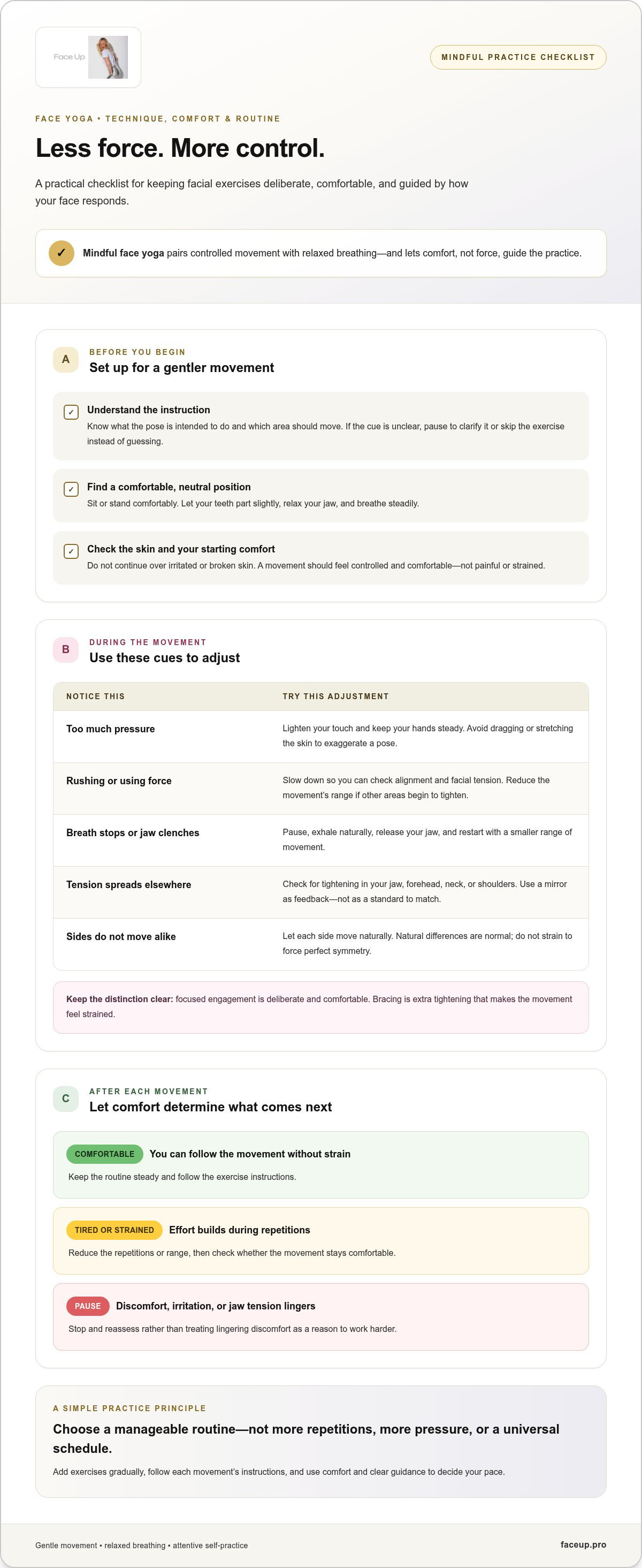
A Face Yoga Safety Checklist: What to Check Before, During, and After
A simple safety check can help you notice when a movement doesn’t feel right for you that day. Think in three stages: prepare, practise gently, then reassess. Face yoga is self-care education, not a way to diagnose a condition or a substitute for medical care. Keep the focus on comfort, and don’t treat pain or persistent symptoms as something to push through.
1. Prepare: choose a comfortable starting point
Begin in a comfortable position where your neck and shoulders can stay relaxed. Wash your hands and make sure your skin feels comfortable before placing your hands on your face. Avoid rubbing irritated or broken skin. Read or watch the full movement instructions before you begin, so you understand the steps. If a movement aggravates existing pain or skin irritation, skip it rather than testing it repeatedly.
2. Practise gently: check in as you move
Stay within a comfortable range of motion and pause between movements to notice how your face and body respond. Check whether you’re holding tension in your jaw, neck, or shoulders, or whether your skin feels irritated. Stop if you experience pain, dizziness, unusual symptoms, or worsening discomfort. Don’t force yourself to finish a sequence just because you’ve started it.
If you’re exploring gentle jaw self-care, the somatic TMJ massage tool guide offers related context. It isn’t a substitute for advice about a specific symptom or health concern.
3. Reassess: notice what happens afterward
After practice, notice whether your skin and jaw feel settled or more uncomfortable. Mild awareness of having moved an area isn’t the same as persistent pain, irritation, or worsening symptoms. If discomfort continues, pause that movement. For symptoms that persist or concern you, seek advice from a qualified healthcare professional rather than trying to identify the cause through face yoga.
Use this checklist as a practical guide, not a guarantee that every exercise will suit every person. Clear instructions and attentive self-checks can help you catch common mistakes, especially continuing when something feels wrong. For structured guidance, explore guided facial practice through the Face Up App.
Practise Face Yoga More Mindfully with Face Up Guidance
The central lesson is simple: prioritize awareness, gentle control, and comfort over force or volume. A practice doesn’t need to feel intense to be attentive. Clear guidance can help you understand a movement’s purpose, follow its instructions, and build a ritual you can return to without adding repetitions just to feel you’ve done enough.
Turn the checklist into a simple practice reset
Choose one familiar movement and use it as a reset. Before you begin, check that you understand the instruction and feel comfortable. As you practise, notice your breathing, the sensation in your face, and whether tension is appearing somewhere you don’t intend. Focus on those cues rather than judging your appearance in the mirror.
If the movement feels effortful or unclear, make it smaller and slower. If it still doesn’t feel comfortable, pause instead of pushing through. Focusing on one movement makes it easier to notice what suits you before deciding whether to add anything else.
Use structured guidance for a more considered ritual
The Face Up App offers guided facial exercises and somatic practices for self-practice. A guided sequence gives you clear cues to work with and can bring attention and consistency to your routine. The aim isn’t to promise a particular appearance or health outcome, but to make your practice more deliberate and responsive to how you feel.
For focused learning around jaw awareness, the Jaw Release Course offers a dedicated digital course. Whichever approach you choose, let comfort guide your pace. Mistakes such as forcing a movement or continuing through discomfort are easier to catch when you give yourself time to notice your response.
For a more guided approach to mindful facial self-practice, explore Face Up.
Build a Face Yoga Practice That Feels Right for You
Common face yoga mistakes often come down to doing too much: pressing harder, rushing movements, holding tension, or adding repetitions without checking how you feel. A more mindful approach is straightforward: follow clear instructions, keep movements controlled, and pause if discomfort or irritation appears. Let comfort and consistency guide your routine instead of chasing a dramatic change.
The Face Up App offers facial exercises and somatic practices for guided self-practice. Founded by Olga Newman, Face Up brings attention to facial movement and the body. Structured guidance can help you return to a considered ritual while staying responsive to your comfort.
Explore Face Up for a more guided way to practise. Start gently, stay curious, and adjust as you go.
Frequently Asked Questions
Can face yoga cause wrinkles?
Forceful or highly repetitive movements that repeatedly crease the skin could potentially deepen expression lines, but evidence about face yoga’s effects is limited. Focus on controlled movements rather than exaggerating a pose or pulling the skin. If an exercise creates strong creasing or discomfort, reduce its range or stop. Gentle technique doesn’t guarantee wrinkle prevention or other visible results, so keep expectations measured and let comfort guide your practice.
How often should beginners practise face yoga?
There’s no single practice frequency that suits every beginner. Follow the instructions for the exercises you’re learning, and choose a routine you can practise comfortably and consistently. Start with a manageable number of movements rather than adding many at once. Notice how your face feels during and afterward. If irritation, pain, or lingering tension develops, pause and reassess instead of increasing frequency or repetitions.
Is face yoga safe for sensitive skin?
People with sensitive skin should use a gentle approach and pay close attention to how their skin responds. Practise with clean hands, avoid rubbing or stretching the skin, and skip movements over irritated or broken areas. Stop if you notice irritation or discomfort that worsens or persists. Face yoga guidance is educational, not a diagnosis. Seek qualified healthcare advice for ongoing or concerning skin symptoms.
What should face yoga feel like?
Face yoga should feel controlled and comfortable, not painful or strained. You may notice the intended area moving, but your jaw, neck, or shoulders shouldn’t need to brace to complete the exercise. Keep breathing naturally and use a smaller range if a movement feels effortful. Stop if you experience pain, dizziness, unusual symptoms, or worsening discomfort instead of pushing through.
Can I do face yoga every day?
You may be able to practise daily if the exercise instructions allow it and your routine remains comfortable, but daily practice isn’t a requirement for everyone. Don’t treat more sessions or repetitions as automatically better. Build a manageable ritual, monitor your comfort, and pause if your skin or face feels irritated or persistently tense. Adjust your schedule to your response, not a universal rule.
Should I stop face yoga if my jaw hurts?
Yes. Stop the movement if your jaw hurts, and don’t repeat it to test whether the pain will pass. Let the area rest and reassess before returning to practice. If discomfort persists, worsens, or concerns you, seek advice from a qualified healthcare professional. Face yoga is self-care education, not a way to diagnose the cause of jaw pain or replace medical care.
How can I tell if I am doing a face yoga exercise incorrectly?
Signs to reassess include pain, breath-holding, clenched teeth, excessive skin pulling, or tension spreading into areas that aren’t meant to move. Check your alignment in a mirror without trying to make both sides look identical. These are common face yoga mistakes to avoid, but an awkward first attempt doesn’t mean you’ve caused harm. Re-read the instructions, reduce the movement, or skip it if the guidance remains unclear.


