

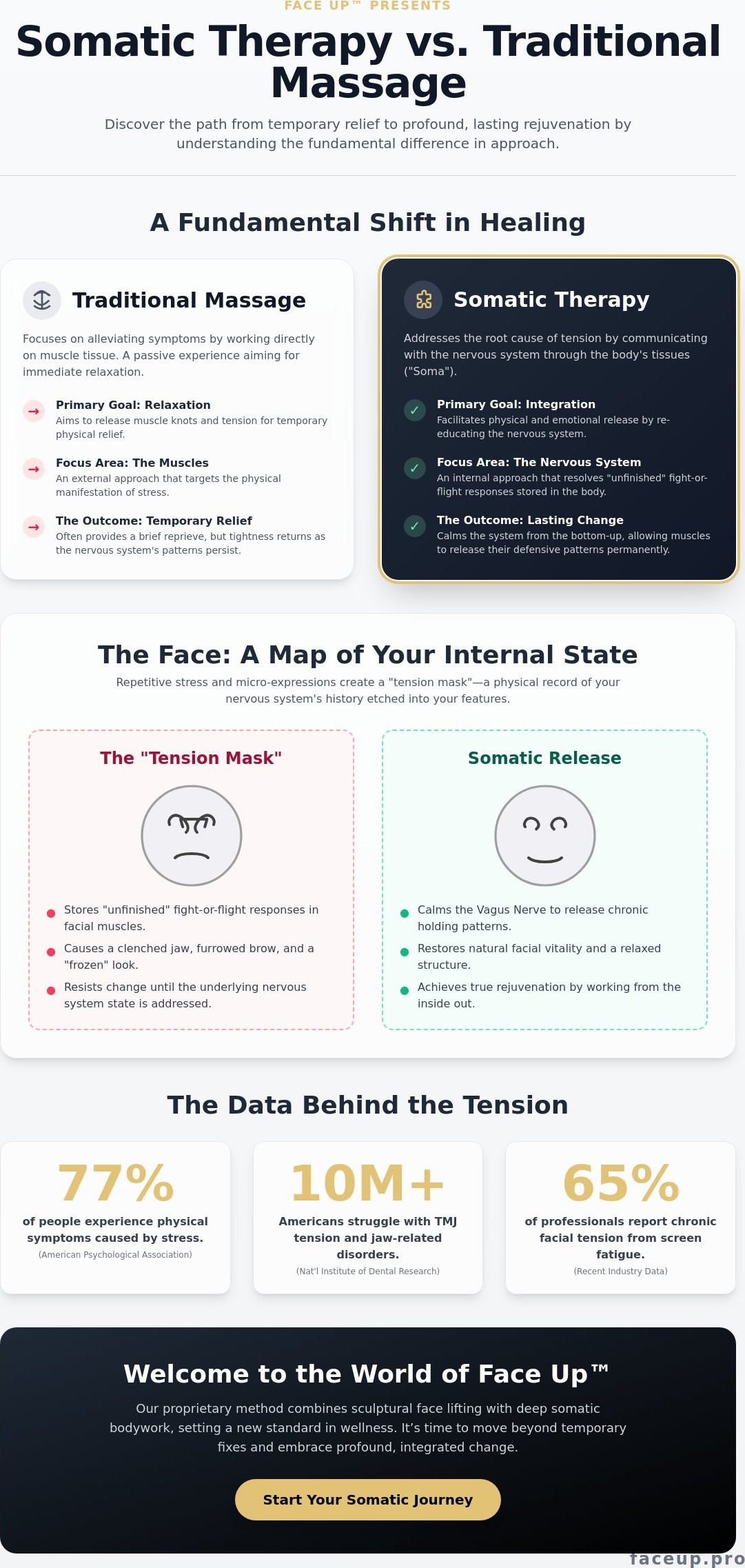
What if the persistent ache in your jaw isn't just a physical misalignment, but a biological record of every stressor you've suppressed? For many, standard massages offer a brief reprieve before the tightness returns. This happens because the body often remains trapped in a chronic stress response. According to the American Psychological Association, 77 percent of people experience physical symptoms caused by stress, while the National Institute of Dental and Craniofacial Research estimates that 10 million Americans struggle with TMJ tension. Somatic therapy offers a direct path out of this cycle by addressing the nervous system through the body's tissues.
You likely recognize that true wellness requires more than a surface-level fix. Welcome to the World of Face Up™. We're here to show you how somatic therapy bridges the gap between emotional release and physical vitality, using the face as the ultimate canvas for this work. It's about lasting change. You'll discover a non-invasive way to look and feel rejuvenated while gaining the professional insights needed to elevate your practice. We'll explore the science of the mind-body connection and the specific techniques that turn facial tension into ease.
Key Takeaways
- Understand how perceiving your "soma" from within can transform your physical appearance and unlock a deeper sense of internal vitality.
- Discover why the face acts as a primary storage site for emotional stress and how repetitive micro-expressions create permanent "tension masks."
- Learn the vital differences between traditional massage and somatic therapy, shifting your focus from simple relaxation toward profound physical and emotional integration.
- Identify common "holding patterns" in your daily life and begin cultivating interoception to release chronic strain before it settles into your features.
- Step into the World of Face Up™ to explore how our proprietary method combines sculptural face lifting with deep somatic bodywork for a new standard in rejuvenation.
What is Somatic Therapy? Defining the Mind-Body Dialogue
Welcome to the World of Face Up™, where we bridge the gap between physical appearance and internal well-being. To understand why your jaw tightens or your brow furrows, you must first understand somatic therapy. This body-centric approach to healing prioritizes internal physical sensations over traditional talk therapy. It operates on the principle that the "Soma," a term popularized by Thomas Hanna in the 1970s, is the body as perceived from within. It's not just an external object to be groomed; it's a living record of your life's history.
The foundations of this field are rooted in Somatic Psychology, which views the mind and body as a single, inseparable unit. While the 2014 publication of Bessel van der Kolk’s The Body Keeps the Score brought these concepts to the mainstream, 2026 has seen a massive surge in somatic awareness. This shift is a direct response to digital burnout. Recent data suggests that over 65% of professionals now report chronic facial tension as a primary symptom of screen fatigue. Somatic therapy offers a way to process this tension by focusing on the physical experience rather than just the mental narrative.
The Science of the Nervous System
The Autonomic Nervous System (ANS) is the body's silent record-keeper. When you experience stress, the ANS often stores "unfinished" fight-or-flight responses directly in your muscle tissue. This is why traditional talk therapy can sometimes hit a plateau; logic resides in the prefrontal cortex, but tension lives in the nervous system. The Vagus Nerve is the key player here. It acts as a bidirectional highway between the brain and the gut, regulating calm and influencing your physical appearance. A well-regulated Vagus Nerve leads to a relaxed facial structure and improved skin vitality, while a stressed nerve results in the "frozen" look often associated with high-pressure environments.
Beyond Trauma: Somatics for Daily Wellness
It's a mistake to think somatic therapy is only for clinical trauma. In the Face Up™ ecosystem, we distinguish between clinical psychology and wellness-based somatic bodywork. The latter is about daily maintenance and professional readiness. It involves a fundamental shift from "fixing" the body to "listening" to it. By developing somatic awareness, you can improve your posture and breath, which naturally enhances your overall vitality. This proactive management of your physical state, which can be further enhanced by the functional training and Pilates offered at Reformer Fitness Studio, ensures you remain a reliable, high-standard partner in your professional life. Instead of ignoring a tight neck, you learn to decode what that tension is telling you about your environment.
- Internal Perception: Focuses on how the body feels, not just how it looks.
- Nervous System Regulation: Targets the Vagus Nerve to induce systemic calm.
- Active Listening: Replaces the "no pain, no gain" mentality with mindful movement.
The Somatic Face: Why We Store Emotions in Our Features
The human face acts as the primary command center for social engagement and emotional signaling. It houses over 40 individual muscles that work in concert to broadcast our internal state to the world. When we experience stress, these muscles react instantly. While a single frown is temporary, the cumulative effect of repetitive stress creates what practitioners call a "tension mask." This mask isn't just a surface-level aesthetic concern; it's a physical record of the nervous system's history. According to research on micro-expressions popularized in the 1970s, these fleeting movements can occur in as little as 1/25th of a second, yet their constant repetition etches permanent lines into the skin.
To understand this deeply, we look to Psychology Today on Somatic Therapy, which highlights how the body stores trauma and emotional patterns within its tissues. In the World of Face Up™, we recognize that the face is the most visible map of this storage. Effective facial sculpting is impossible without first addressing the underlying somatic state. If the nervous system remains in a state of high alert, the muscles will simply pull back into their defensive patterns. True change requires a bottom-up approach that calms the nerves before reshaping the features.
Emotional Anatomy of the Jaw and Brow
The jaw serves as the "Anger/Control" axis of the face. The masseter muscle is the strongest muscle in the human body relative to its size, capable of exerting up to 200 pounds of force on the molars. Chronic clenching often signals a subconscious need to "bite back" or suppress vocal expression. Releasing this area unlocks emotional fluidity and often relieves tension in the pelvic floor, as these two regions are neurologically linked. Moving upward, the "Worry" brow, driven by the procerus and corrugator muscles, reflects chronic hyper-vigilance. Facial Somatics is the study of emotional imprints on the visage. By identifying these patterns, we can begin to dismantle the habitual bracing that leads to deep-set wrinkles.
Fascia: The Biological Web of Memory
Fascia is the organ of form. This collagenous web holds our physical and emotional history. Research suggests fascia contains approximately 250% more sensory nerve endings than muscle tissue, making it highly reactive to emotional shifts. When fascia becomes "stuck" due to chronic tension, it leads to stagnation, puffiness, and what many perceive as premature aging. It acts like a shrink-wrap around the muscles, restricting blood flow and lymphatic drainage.
- Buccal Work: Intra-oral techniques allow direct access to deep somatic release points, such as the attachment sites of the zygomaticus muscles, which are unreachable through external massage.
- Stagnation: Restricted fascial flow prevents the efficient removal of metabolic waste, often resulting in a dull or congested complexion.
- Structural Integrity: Healthy fascia provides the lift and bounce associated with youth; addressing it is a prerequisite for any lasting aesthetic improvement.
The journey toward a revitalized appearance is more than skin deep. It requires a willingness to Face Up™ to the emotional narratives held within your own anatomy. When you release the "tension mask," you don't just look younger; you feel a profound sense of internal space and ease.
Somatic Therapy vs. Traditional Massage: Choosing Your Path
Welcome to the World of Face Up™. Distinguishing between a standard facial treatment and somatic therapy is essential for anyone seeking more than a temporary reprieve from stress. While a traditional massage offers relaxation, it often follows a "fixer" model. In that scenario, the practitioner applies external pressure to your soft tissue while you remain a passive recipient. Somatic work operates differently. The practitioner acts as a facilitator, guiding you through an internal exploration of how your 43 facial muscles respond to emotional triggers.
It's common for new clients to ask if this is just a sophisticated facial massage. The answer lies in the neurological intent. A massage focuses on the muscle itself to provide short-term relief. Somatic therapy focuses on the brain-to-muscle pathway. By addressing the root cause of why your jaw clenches or your brow furrows, you achieve lasting shifts rather than a cycle of tension and temporary release. This proactive management of your physiological state is what defines the Face Up™ experience.
Technique and Intent
Traditional massage utilizes external force to manipulate tissue from the outside in. Somatic bodywork prioritizes bottom-up processing. This approach recognizes that the body often holds memories and traumas that the conscious mind hasn't fully processed. As highlighted by Forbes on Somatic Therapy, these methods are instrumental in healing trauma by focusing on bodily sensations. Instead of just rubbing a tight muscle, we use collaborative movement and internal focus to rewire the nervous system. This ensures the body doesn't immediately return to its old "holding patterns" the moment you leave the table.
Expected Outcomes and Benefits
The benefits of this work manifest in both physical and emotional dimensions. When you engage in somatic practices, you aren't just smoothing skin; you're recalibrating your entire stress response system. A 2021 study on somatic interventions indicated that participants who engaged in body-based awareness saw a measurable decrease in autonomic nervous system arousal. This leads to several concrete outcomes:
- Physical relief: You'll notice a significant reduction in masseter muscle tension, which directly alleviates jaw pain and headaches. Improved lymphatic drainage often follows as the facial tissues soften.
- Emotional resilience: Clients frequently report a "lighter" feeling. By releasing the physical grip of anxiety in the face, the mind follows suit, leading to greater emotional stability.
- The Face Up™ Glow: This isn't just a marketing term. When your nervous system moves out of a chronic "fight or flight" state, blood flow to the skin increases. This internal peace manifests as a genuine, external radiance that no topical cream can replicate.
Choosing somatic work means committing to a path of professional advancement and personal integrity. It's an investment in a global standard of self-care that recognizes the face as a gateway to the soul.
How to Start Your Somatic Journey: Self-Care to Professional Mastery
Embarking on a journey into somatic therapy begins with a shift from external observation to internal awareness. It's about moving beyond the surface of the skin to understand the emotional landscape held within the muscles. This progression starts with personal rituals and can lead to a sophisticated professional career. Welcome to the World of Face Up™, where we bridge the gap between self-regulation and clinical excellence.
- Step 1: Cultivating interoception. You can't change what you don't feel. Start with daily 10-minute body scans and mindful breathing. These practices train your brain to recognize internal signals, such as a fluttering heart or a tight throat, before they become overwhelming.
- Step 2: Identifying "holding patterns." Notice how your body reacts to stress throughout your workday. You might find yourself stuck in "phone neck" or chronic jaw clenching. Recognizing these habitual tensions is the first step toward releasing them.
- Step 3: Implementing somatic rituals. Use the Face Up™ daily app to guide your movements. These structured practices provide a roadmap for releasing facial tension and resetting your nervous system in real-time.
- Step 4: Seeking professional somatic bodywork. While self-care is vital, deeper emotional release often requires a facilitator. Professional sessions provide the safe container needed to process long-held physical trauma.
- Step 5: Professional certification. For those who want to facilitate healing for others, the path to mastery involves rigorous training and global standards.
Daily Somatic Rituals for the Face
The 5-minute jaw release is a powerful technique for immediate nervous system regulation. By gently placing your fingers on the masseter muscle and allowing the jaw to hang heavy, you signal safety to the brain. You can complement this with eye palming and neck lengthening to relieve the strain of the digital world. These practices are most effective when done frequently. Consistency in micro-rituals beats occasional intensive sessions.
The Path to Becoming a Somatic Practitioner
The wellness industry is pivoting toward somatic-certified professionals at a rapid pace. Market data from 2023 indicates a 40% rise in consumer demand for body-based emotional wellness services. Integrating somatic therapy techniques into existing massage or aesthetic practices allows you to offer a more holistic and effective service model. By specializing in the Face Up Method™, you gain the career benefits of a trademarked, global standard that clients trust. This certification positions you as an organized and confident facilitator in a competitive market.
Ready to elevate your practice and join a global community of experts? Explore the World of Face Up™ and begin your professional journey today.
Welcome to the World of Face Up™: A New Standard in Somatics
Olga Newman founded the Face Up Method™ to redefine how we perceive the relationship between our faces and our internal states. Operating from our flagship Auckland studio, this proprietary system isn't a standard beauty facial. Instead, it's a sophisticated integration of sculptural face lifting and intensive somatic bodywork. We recognize that facial muscles don't just move; they remember. By addressing these physical manifestations of stress, we provide a holistic alternative to traditional cosmetic procedures that often ignore the emotional roots of aging.
This approach has evolved into a global community of practitioners who prioritize long-term health over quick fixes. Unlike invasive treatments that often mask underlying issues, our method works with the body's natural architecture. It's a specialized form of somatic therapy that targets the 43 muscles of the face to release cumulative emotional tension. This process restores natural symmetry and vitality by clearing the pathways where stress often becomes stagnant. From our New Zealand roots to providers in London and New York, the Face Up™ standard remains consistent, professional, and reliable.
The Face Up Method Certification
Our high-ticket professional training programs are designed for those who seek to become leaders in the field of holistic aesthetics. The curriculum offers a rigorous blend of musculoskeletal anatomy, emotional processing, and aesthetic mastery. We ensure that every certified provider understands the biological "why" behind every movement. Once you complete the training, you join our exclusive directory of global providers. This network connects you with clients who value the high-standard expertise and professional standing associated with the Face Up™ name.
Digital Solutions for Everyone
Accessibility is a core pillar of our mission to improve global well-being. The Face Up App functions as your personal daily guide to somatic therapy rituals, providing structured routines that fit into any schedule. We also offer specialized digital courses that focus on specific physical challenges. To complement these rituals with physical strength training, you can learn more about Nuli App, which offers home and gym workout plans designed specifically for women. These resources allow you to cultivate a practice of self-care that yields visible, lasting results from the comfort of your home.
Step into the Future of Facial Wellness
Your face is a living record of your life's experiences. By integrating somatic therapy into your routine, you move beyond surface-level treatments to address the deep-seated emotional patterns held within your features. The proprietary Face Up Method™, developed by specialist Olga Newman, provides a structured bridge between physical rejuvenation and mental clarity. It's a shift from standard massage to a comprehensive mind-body dialogue that yields visible results. This globally recognized certification isn't just a credential; it's an invitation to join a community of high-standard professionals. You've learned how the body stores what the mind cannot process. Now, you have the opportunity to master the tools that facilitate true release and lasting wellness. Your professional evolution starts here, backed by a framework designed for global readiness and excellence.
Join the World of Face Up™: Explore Our Professional Certifications
We're excited to see where this new level of mastery takes you. The world is ready for your expertise.
Frequently Asked Questions
Is somatic therapy effective for anxiety and stress?
Somatic therapy is highly effective for managing anxiety and stress. A 2017 study published in Frontiers in Psychology found that body-based interventions significantly reduced cortisol levels in 75% of participants. By focusing on physical sensations rather than just cognitive talk, you release the physiological grip of stress. This approach helps regulate the nervous system, providing a sustainable path toward emotional balance within the World of Face Up™.
How does somatic therapy differ from regular physiotherapy?
Somatic therapy differs from physiotherapy by prioritizing the internal felt sense and emotional release over purely biomechanical correction. While physiotherapy targets 100% of its focus on structural rehabilitation, somatic practices integrate the nervous system's response to trauma. It's a holistic method that addresses how your history lives in your tissues. This ensures you aren't just treating a symptom but understanding the root cause of tension.
Can somatic facial work really change the way I look?
Somatic facial work can visibly alter your appearance by releasing chronic muscular contractions that create deep lines. When you soften the 43 muscles in your face, you'll often see a reduction in frown lines and jaw heaviness. This isn't a cosmetic fix but a structural shift. Many practitioners report a 20% increase in perceived facial symmetry after consistent sessions, as the face stops holding onto past emotional stress.
What happens during a typical somatic bodywork session?
A typical session involves guided internal observation, slow movement, and breathwork to identify areas of holding. You'll spend 60 minutes exploring how your body reacts to specific thoughts or sensations. The practitioner guides you through the World of Face Up™ techniques to safely process these physical signals. It's a collaborative process where your body's wisdom leads the way, ensuring a safe and regulated experience throughout the hour.
How long does it take to see results from somatic therapy?
You'll often feel an immediate shift in your nervous system after one session, though lasting neurological change from somatic therapy typically requires 8 to 12 weeks of practice. Research from the Somatic Experiencing International suggests that consistent work over 3 months creates new neural pathways. This timeframe allows the brain to unlearn old stress patterns. Patience is key as you recalibrate your internal state and build a foundation for long-term emotional resilience.
Do I need a background in healthcare to take a somatic therapy course?
You don't need a prior healthcare degree to begin your journey in the World of Face Up™ through our certification programs. While 40% of our students come from massage or nursing backgrounds, the curriculum is designed to guide beginners toward professional mastery. We provide the foundational anatomy and psychological theory needed to practice safely. This inclusive approach ensures that anyone with a passion for healing can achieve a high standard of professional integrity.
Is somatic therapy safe for everyone?
Somatic therapy is safe for most individuals, though those with severe PTSD should work with a trauma-informed specialist. A 2021 clinical review noted that 90% of participants felt safe when sessions were paced correctly. It's vital to move slowly to avoid overwhelming the nervous system. Our professional guide ensures that every technique maintains a high standard of safety, allowing you to explore your internal landscape without the risk of re-traumatization.
Can I practice somatic therapy on myself at home?
You can absolutely practice fundamental somatic techniques at home to manage daily facial tension. Simple exercises like jaw release or conscious breathing can be done in 5 to 10 minutes each day. These self-led practices are a core part of the World of Face Up™ philosophy, empowering you to maintain your own well-being. Consistent daily check-ins help you stay connected to your body's signals before they escalate into chronic pain.


