

Pressure doesn’t have to mean pain. If you’re wondering whether intraoral massage is supposed to hurt, the short answer is no: tenderness or mild discomfort can happen, but sharp or extreme pain isn’t expected. Tell your therapist if the pressure feels too intense and ask them to ease off or stop.
Massage inside the mouth can feel unfamiliar, especially when your jaw is already sensitive. Knowing what may happen during a session can help you distinguish pressure on a tight muscle from pain that needs attention.
This guide explains how intraoral massage works, what you may feel during and after treatment, and how to communicate your comfort level. It also covers how the approach may support jaw mobility and ease tension, helping you decide whether it suits your needs.
Key Takeaways
- Recognize the difference between tenderness from pressure on a tight muscle and sharp or extreme pain that means the pressure should change.
- Use clear signals and honest feedback to help your therapist adjust the pressure or pause the session.
- Understand why intraoral work focuses on muscles inside the mouth and how a session may also involve the jaw, face, or neck.
- Explore how jaw-focused practices, including Face Up’s Jaw Release Course, may support a more comfortable approach to tension and mobility.
Potential jaw pain and mobility benefits
Intraoral massage is used to address jaw pain and muscle tension, including symptoms associated with TMJ problems. It may also support jaw mobility and reduce related headaches or clenching.
Jaw Pain and Muscle Tension Relief
Intraoral massage applies manual pressure to muscles inside the cheek and mouth, where tension can contribute to jaw discomfort. Releasing tight areas may make opening your mouth, chewing, or speaking more comfortable. It may be relevant when jaw pain occurs alongside clenching or headaches, but it is part of broader care, not a guaranteed cure.
Jaw pain affects more than 10 million Americans. During intake, describe where discomfort occurs, what movements aggravate it, and whether headaches or clenching accompany it. Mention relevant health history and any changes in jaw movement. This gives the massage therapist a clearer picture of your symptoms and helps guide where buccal or external manual work may be appropriate.
Intensity, Tenderness, and Referred Pain
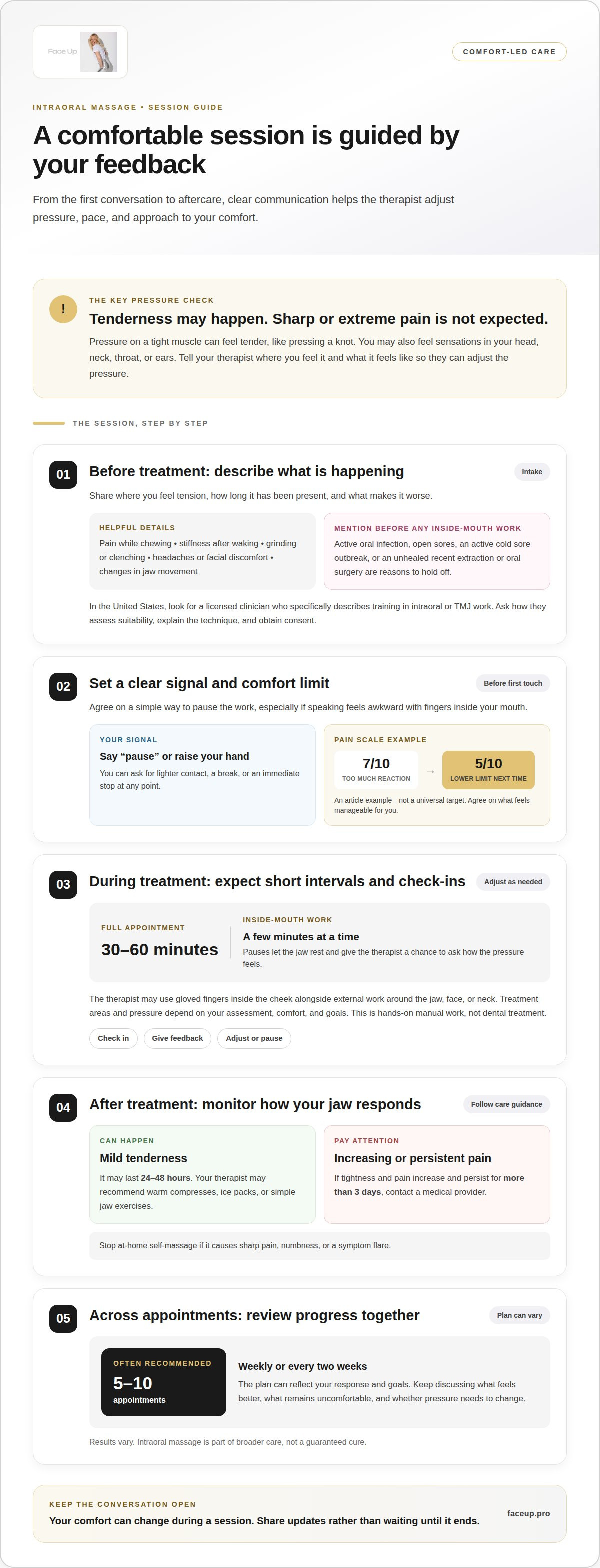
Pressure on a tight muscle may feel tender, like pressing a knot, but it shouldn’t feel sharply or extremely painful. You may also feel sensations beyond the treated spot, including in the head, neck, throat, or ears. Describe where you feel it and what it feels like so the therapist can tell whether the pressure needs adjusting.
After treatment, mild tenderness may last 24 to 48 hours. Jaw benefits can include easier opening, chewing, and speaking, along with fewer headaches or less clenching. One clinical study reported that maximal jaw opening increased from 1.2 inches to 1.5 inches after intraoral massage. Results vary; persistent or worsening pain deserves attention rather than more pressure.
Some clients notice pain relief after a few sessions of intra-oral TMJ work. Many also report reduced headaches and improved jaw mobility after a few sessions. Research supports short-to-medium-term pain reduction and improved jaw function as part of a well-rounded care plan.
What is Intra-Oral Massage?
Intraoral massage works on muscles inside the mouth, using gloved fingers and controlled pressure. In the United States, look for a licensed clinician who specifically describes training in intraoral or TMJ work. Ask how they assess suitability, explain the technique, and obtain consent before treatment begins.
During treatment, a trained therapist may work through the cheek to reach muscles that are difficult to access externally. Buccal massage also works facial muscles from both inside and outside the cheek. The aim is to support jaw function, not push through discomfort. The therapist should explain where they’ll work and invite you to give feedback about comfort.
Set a clear signal before the first touch. You can use a word such as “pause” or raise your hand if speaking feels awkward with fingers inside the mouth. A 0-to-10 pain scale can help describe pressure: say whether it feels tender, too strong, or manageable. You can ask for lighter contact, a break, or an immediate stop at any point.
Intraoral work isn’t appropriate in every situation. An active oral infection, open sores, an active cold sore outbreak, or an unhealed recent extraction or oral surgery are reasons to hold off. Mention these during intake, along with your jaw symptoms, so the practitioner can consider whether to postpone inside-mouth work.
If intraoral pressure isn’t suitable, care may focus on external manual techniques or other parts of a broader jaw plan. For example, the therapist may work around your face and jaw rather than inside your mouth. Discuss serious TMJ symptoms with a doctor. The right approach depends on your symptoms, oral health, and how jaw movement affects daily life.
Therapist communication and session approach
Good communication starts before treatment. Describe where you feel jaw tension, how long it has been present, and whether grinding, headaches, or facial discomfort accompany it. Give specific examples, such as pain while chewing or stiffness after waking. This helps the therapist understand your priorities and tailor the session to your symptoms.
During treatment, say plainly if pressure feels too light or too strong. A pain scale can make feedback specific: if pressure reaches 7 out of 10 and causes too much reaction afterward, agree on a lower limit, such as 5 out of 10, next time. Your comfort can change during a session, so keep sharing updates rather than waiting until it ends.
Intraoral work often happens in short intervals, with pauses that let the jaw rest. A full appointment can take 30-60 minutes, but the inside-mouth portion may last only a few minutes at a time. This pacing gives the therapist opportunities to ask how the pressure feels and adjust the approach before continuing.
After treatment, follow your therapist’s care guidance. They may recommend warm compresses, ice packs, or simple jaw exercises. If tightness and pain in the treated area increase and persist for more than three days, contact a medical provider. Stop at-home self-massage if it causes sharp pain, numbness, or a symptom flare.
Progress is also something to discuss across sessions. Providers often recommend an initial course of five to ten appointments, scheduled weekly or every two weeks; the plan can reflect your response and goals. For guided jaw-focused practice between appointments, the Jaw Release Course offers another way to explore tension release and notice how your jaw responds.
What intraoral massage involves
Intraoral massage combines precise contact inside the mouth with external work around the jaw, face, or neck. The therapist wears non-latex gloves and typically uses one or two fingers to reach muscles that external pressure cannot access as directly. This is hands-on manual work, not dental treatment.
Depending on the assessment, the therapist may work on the masseter, medial and lateral pterygoids, buccal muscles, or temporalis tendon. These structures support chewing and jaw movement. For example, a session may address a tight cheek muscle from inside and outside, followed by gentle work around the face or neck. The areas treated and pressure used depend on your comfort and goals.
The intraoral portion may happen in short intervals, with pauses to let your jaw rest. A pillow or wedge may help you stay upright. The therapist can explain each area before working there. Breathe normally and signal if the pressure feels uncomfortable. The session should feel collaborative, not like something you have to endure.
Oral massage can also bring ordinary but unexpected sensations. Some people notice drooling, a runny nose, or watering eyes during treatment. Mild tenderness may follow, but sharp or extreme pain isn’t necessary for the technique. Stop at-home self-massage if it causes sharp pain, numbness, or a symptom flare. Avoid eating a large meal beforehand for greater comfort.
The key distinction is the method: trained, gloved contact targets soft tissue, while dental care focuses on teeth and oral health. Intraoral work may be included alongside external manual techniques, exercises, or other care. If you want to explore a gentle, jaw-focused practice between sessions, discover guided jaw-release practices.
Face Up
Face Up offers ways to explore facial and jaw tension through guided practice and hands-on bodywork. The Jaw Release Course supports self-practice, while the Face Up App Subscription provides daily self-practice rituals. For hands-on care, the Face Up Sculpting Treatment focuses on facial sculpting and somatic bodywork. These options offer a distinct path for people interested in jaw and facial tension; they don’t replace dental or medical care when symptoms need assessment.
Explore Face Up’s Jaw Release Course, app, and hands-on bodywork to find an approach that fits your goals.
Make your next step a comfortable one
Knowing whether intraoral massage is supposed to hurt can help you approach jaw care with clearer expectations. Your experience of pressure is useful information, not something to dismiss. Share what you notice during any care conversation, especially if jaw tension affects everyday activities such as eating or speaking.
Face Up offers different ways to explore facial and jaw wellbeing. The Jaw Release Course and Face Up App Subscription support self-practice, while Face Up Method Certification is for practitioners developing their professional practice. Choose the option that fits your interest, whether you’re looking for guided practices or professional training.
If you’d like to discuss which Face Up offering aligns with your goals, contact Face Up to discuss your care. Take the next step at a pace that feels right for you.
Frequently Asked Questions
Does it hurt?
Intraoral massage can feel tender or uncomfortable, but it shouldn’t be sharply or extremely painful. If you’re wondering whether intraoral massage is supposed to hurt, focus on the quality of the sensation: pressure on a tight area is different from sharp pain. Tell the therapist what you feel, where you feel it, and whether it changes as the pressure shifts.
How do you massage TMJ in your mouth?
A trained therapist performs intraoral TMJ work with gloved fingers, targeting muscles inside the cheek and mouth. The therapist controls the pressure and can combine internal contact with external work around the jaw or face. Don’t take a professional technique as a reason to press deeply into your own mouth. For self-massage, stop if you feel sharp pain, numbness, or a symptom flare.
What can I expect after this massage?
After treatment, you might feel sleepy, groggy, or foggy, and your jaw may feel temporarily tender. Notice how your symptoms respond during everyday activities, such as eating or speaking, rather than judging the result from a single moment. If tightness and pain in the treated area increase and persist for more than three days, contact a medical provider.
Should intraoral massage hurt during treatment?
No. Some tenderness can occur, but you shouldn’t have to endure sharp or extreme pain for the technique to work. Agree on a simple signal, such as saying “pause,” before treatment begins. This gives you a clear way to ask for lighter pressure or a break, even when it’s difficult to explain your discomfort while the therapist is working inside your mouth.
What sensations are normal during intraoral massage?
Pressure on a tense area can feel like contact with a tender muscle knot. Some people also notice reflex responses, such as watering eyes or increased saliva. These sensations aren’t the same as sharp pain. You may also feel groggy or sleepy during or after TMJ treatment, so describe what you notice rather than assuming every unusual sensation signals a problem.
What level of pain is a warning sign during intraoral massage?
Sharp, extreme pain is a warning to ask the therapist to ease off or stop; numbness or a symptom flare also means you should stop at-home massage. A 7 out of 10 on a discomfort scale is a point to begin backing off, not a target to reach. Speak up sooner if the pressure feels wrong for you.


