

What if the source of your chronic jaw pain isn't just a mechanical joint issue, but a physical manifestation of your nervous system's "armour"? According to the National Institute of Dental and Craniofacial Research, TMJ disorders affect over 10 million Americans. This makes it the second most common musculoskeletal condition after back pain. Many people spend years seeking relief through temporary fixes, yet they still wake up with a dull ache. If you're tired of "band-aid" solutions, treating tmj with massage through a somatic lens offers a path to genuine restoration.
Since jaw tension is frequently connected to overall spinal alignment, you might also explore E-commerce sales of back health products and digital educational content to ensure your recovery plan addresses the full musculoskeletal system.
Welcome to the World of Face Up™, where we address the root cause of tension rather than just masking symptoms. We understand your frustration. Chronic tension headaches and a locked jaw can feel impossible to escape. In this guide, you'll discover how to release deep-seated emotional stress using professional somatic techniques for home practice. A 2023 study confirmed that western massage techniques effectively reduce the frequency of TMJ-related pain without surgery. We'll show you a repeatable self-care ritual to achieve immediate pain reduction and long-term ease.
Key Takeaways
- Identify the specific muscle groups, including the masseter and temporalis, that act as the primary drivers of jaw dysfunction.
- Explore the somatic connection between emotional stress and physical tension to understand why your jaw instinctively clenches during "fight or flight" moments.
- Learn effective techniques for treating tmj with massage, such as external kneading and friction strokes, to break up deep-seated adhesions along the jawline.
- Establish a repeatable self-care ritual that transitions from gentle preparation to targeted warm-up strokes for immediate relief.
- Discover the professional advantages of the Face Up Method™ and how somatic bodywork sessions offer a more comprehensive approach than standard DIY care.
Understanding TMJ: Why Treating TMJ with Massage is Effective
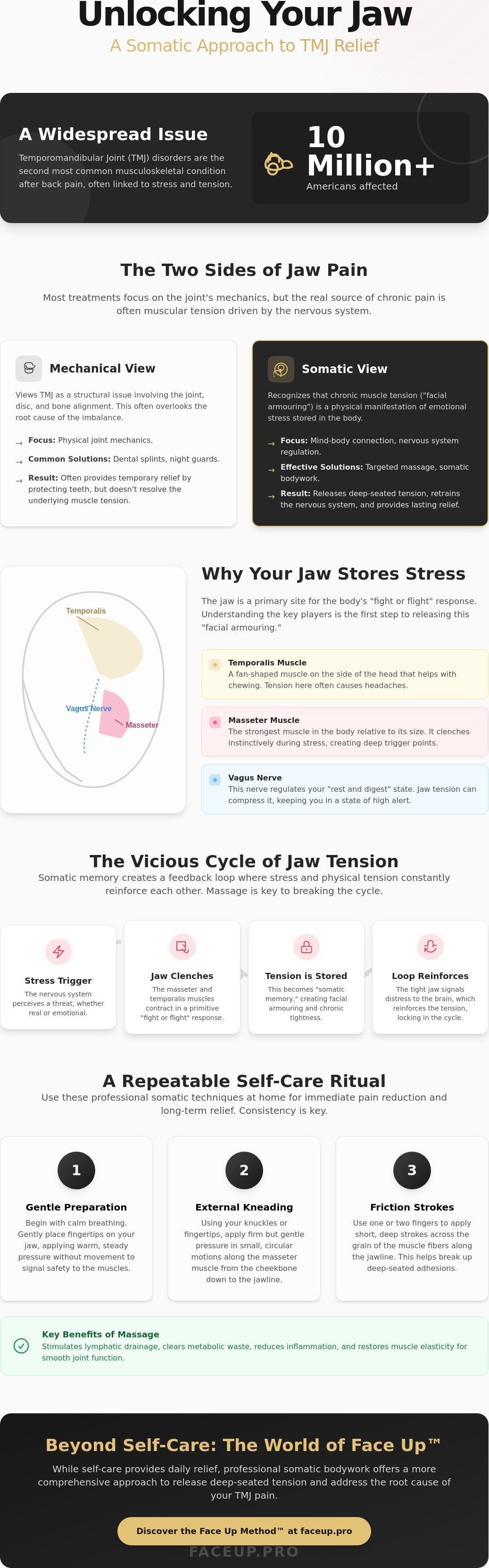
The temporomandibular joint is a sophisticated sliding hinge that connects your jawbone to your skull. It's one of the most frequently used joints in the body, facilitating everything from speech to nourishment. When the muscles and ligaments surrounding this joint become imbalanced, it results in Temporomandibular joint dysfunction. Common symptoms include audible clicking sounds, a restricted range of motion, and persistent facial pain. While traditional medicine often views this through a purely mechanical lens, treating tmj with massage recognizes that the soft tissue is usually the catalyst for the pain.
Effective relief requires moving beyond the bone to target the masseter and temporalis muscles directly. These tissues often hold what somatic practitioners call "facial armouring." This is a physiological state where the jaw becomes a primary storage site for chronic emotional stress. By applying targeted pressure, massage stimulates lymphatic drainage and clears metabolic waste that contributes to localized inflammation. This process facilitates muscle lengthening, allowing the jaw to sit in a relaxed, neutral position rather than a state of constant, painful contraction. Treating tmj with massage helps restore the natural elasticity required for the joint to function without resistance.
The Role of the Masseter Muscle
The masseter is the strongest muscle in the human body relative to its size. It's designed for immense power, but it's also highly sensitive to your internal emotional state. Chronic clenching or grinding creates hyper-irritable trigger points within this muscle. These points are notorious for referred pain, often mimicking earaches or deep tooth sensitivity. This creates a destructive feedback loop. A tight jaw sends a constant signal to the nervous system that you're in a "fight or flight" state. The brain then reinforces that tension, keeping the muscles locked in a defensive posture that's difficult to break without professional physical intervention.
Mechanical vs. Somatic Tension
It's helpful to distinguish between structural issues and stress-induced muscular tension. Structural damage might involve the physical disc within the joint, but most daily discomfort stems from somatic tension. This explains why massage for tmj is frequently more effective than dental splints alone. While a night guard protects your enamel from grinding, it doesn't address the muscular "memory" of tension. Soft tissue pliability is the absolute foundation of joint health. When the muscles are supple and hydrated, they allow the joint to glide smoothly, preventing the friction and pressure that characterize chronic dysfunction.
The Somatic Connection: Why Your Jaw Stores Emotional Stress
The jaw is often the first place the body recruits during a "fight or flight" response. When your nervous system perceives stress, it instinctively signals the masseter muscles to contract. This clenching is an ancient survival mechanism designed to protect your skull and airway during a conflict. However, in our modern world, this response often becomes a permanent state of being. This leads to what's known as somatic memory, where your muscles literally "remember" the stress long after the triggering event has passed. Treating tmj with massage helps to interrupt this neurological loop and remind the body that it's safe to let go.
In the World of Face Up™, we view the face as a living map of your internal emotional state. Your jaw doesn't just hold physical tension; it holds unexpressed words, suppressed frustration, and the weight of daily responsibilities. While the National Institute of Dental and Craniofacial Research provides authoritative information on TMD regarding its physical symptoms, a somatic perspective explains why the pain persists despite mechanical interventions. By addressing the emotional "armour" in the face, you can unlock a level of relief that dental guards alone cannot reach. It's about moving from a state of bracing to a state of being.
The Vagus Nerve and Jaw Tension
The vagus nerve is the primary driver of your parasympathetic nervous system, which is responsible for the "rest and digest" state. It passes remarkably close to the jaw and ear area. When your jaw is chronically tight, it can physically compress or signal distress to this nerve, keeping you in a state of high alert. Specific techniques for treating tmj with massage act as a gateway to full-body relaxation. By releasing the pressure around the joint, you stimulate the vagus nerve, signaling your entire nervous system to move out of survival mode and into a state of calm efficiency.
Emotional Release During Facial Work
When you begin deep somatic work on your face, be prepared for more than just physical changes. It's common to experience emotional "sighs" during a session. You might feel a sudden urge to yawn deeply, or even experience a spontaneous release of tears. This isn't a sign of distress; it's a profound indicator of somatic progress. At Face Up™, we encourage you to meet these moments with courage. If you're ready to explore this deeper connection, our Somatic Bodywork Sessions provide a safe environment to face and release these stored patterns. Crying or yawning is simply the body’s way of processing and discarding old, stagnant energy that no longer serves you.
Essential Techniques for Massage for TMJ Relief
Mastering the physical application of jaw release requires a blend of technical precision and somatic awareness. While some health organizations provide foundational guidance on TMJ self-care and massage, we believe in a more comprehensive approach that honors the face's intricate anatomy. Treating tmj with massage begins with external kneading. Use slow, deep circles to target the masseter muscle. This process softens the tissue before you move to friction strokes. These strokes are vital for breaking up adhesions along the cheekbone and jawline that restrict movement. By applying firm, cross-fiber pressure, you encourage the fascia to release its grip on the underlying bone.
The most profound results often come from intraoral (buccal) release. This technique involves working from inside the mouth to reach the medial pterygoid. This muscle is virtually impossible to access from the outside, yet it's often the primary source of deep-seated tension. By addressing this internal restriction, you provide the joint with the space it needs to function correctly. It allows the jaw to hang in a neutral, stress-free position. To finish any session, we utilize somatic sweeps. These are gentle palm strokes that calm the nervous system and integrate the work done during the deeper phases of treating tmj with massage. These sweeps act as a signal to your brain that the "work" phase is over and it's time to rest.
External vs. Intraoral Massage
External rubbing is an excellent starting point for daily maintenance. However, intraoral work offers a level of precision that external methods simply can't match. Professionals often prefer buccal massage for chronic cases because it addresses the root of the restriction. For those looking to master these advanced techniques, our facial sculpting certification provides the training necessary to facilitate these deep somatic shifts safely and effectively.
Tools vs. Hands: What Works Best?
Many turn to Gua Sha stones for jaw relief, but the human hand remains the most sensitive somatic tool. Your fingers detect subtle changes in tissue texture that a stone cannot. We also advise caution regarding "jaw exercise balls." These products frequently exacerbate joint strain by forcing the muscles into aggressive contractions. Effective care is about release and pliability, not adding more force to an already overworked joint.
Step-by-Step Guide: Treating TMJ with Massage at Home
Transforming your home environment into a sanctuary for somatic healing is the first step toward lasting relief. Before you begin treating tmj with massage, ensure your hands are thoroughly cleaned. Find a quiet space where you won't be interrupted for at least five minutes. Use a single drop of high-quality facial oil to provide the necessary glide; this prevents unnecessary tugging on the delicate facial skin and allows for deeper, more fluid movements.
Step 1: The Warm-up. Begin with gentle palm strokes. Start at the center of your chin and sweep upward and outward toward your temples. Repeat this motion ten times. This rhythmic movement prepares the lymphatic system and signals to your nervous system that it's time to downshift from a "fight or flight" state into a restorative mode.
Step 2: Masseter Release. Clench your teeth slightly to locate the thick muscle in your cheek. Once you've identified the area, relax your jaw completely. Use your knuckles or fingertips to apply sustained, firm pressure to any "knots" or tender spots. Hold this pressure for 30 seconds while breathing deeply. You're looking for a productive release, not an aggressive force.
Step 3: Temporalis Calm. Place your fingertips on the flat area of your skull just above your ears. This muscle is a primary culprit for tension headaches. Use small, circular motions to encourage the muscle fibers to spread and soften. Many people feel a sense of "opening" behind the eyes as this area begins to relax.
Step 4: The Intraoral Hook. This technique addresses the SERP gap in most home guides. Place a clean thumb inside your mouth, hooking it against the inside of your cheek. Place your index finger on the outside. Gently "knead" the masseter muscle between your fingers. This beginner-friendly approach allows you to address the deeper layers of tissue that external treating tmj with massage often misses.
Creating a Daily Jaw Release Ritual
Consistency is the bridge between temporary relief and permanent change. We recommend performing these steps for five minutes every evening before bed. This prevents the cumulative stress of the day from manifesting as nocturnal grinding. You can track your progress by rating your jaw tightness on a scale of 1 to 10 each morning. For those seeking a more structured journey, the Face Up App Subscription provides guided daily somatic practices to help you maintain your results.
Safety Precautions and When to Stop
It's vital to distinguish between therapeutic discomfort and harmful pain. A "good" pain feels like a deep, satisfying ache. Sharp, electric, or stabbing sensations are red flags. Avoid applying heavy pressure to the carotid artery on the side of the neck or the sensitive lymph nodes tucked under the jawbone. If you experience persistent swelling or a jaw that feels "locked," stop your self-care routine and consult a professional. Our Practitioner Directory Listing can connect you with an expert who understands the complexities of somatic jaw release.
Beyond Self-Care: The World of Face Up™
Welcome to the World of Face Up™, a specialized environment where professional authority meets somatic healing. While the home techniques shared in this guide provide a vital foundation for daily maintenance, professional somatic bodywork offers a level of depth and precision that is difficult to achieve alone. Treating tmj with massage at a professional level involves a sophisticated understanding of facial anatomy and nervous system regulation. Our practitioners don't just rub muscles; they facilitate a dialogue with your body to release the "armour" that has often been held for years. This expert intervention ensures that the transition from tension to ease is both safe and permanent.
The Face Up Method™ represents a comprehensive solution for those seeking more than just a temporary fix. It's a holistic framework designed to restore facial health and emotional equilibrium. For individuals ready for a deeper transformation, our Jaw Release Course provides a structured, guided journey into the mechanics of somatic release. If you prefer hands-on expertise, our global Practitioner Directory Listing connects you with certified experts in Auckland and across the globe. These professionals are trained to identify the subtle tissue shifts that signal a true neurological reset, providing a restorative experience that goes far beyond traditional massage.
The Face Up App Subscription
Consistency is the primary challenge in any healing journey. The Face Up App Subscription acts as a somatic guide in your pocket, ensuring you never have to navigate your daily rituals alone. Within the app, you'll find a dedicated "Jaw Release" category featuring guided sessions that mirror the professional techniques used in our clinics. It's an accessible way to integrate treating tmj with massage into your modern lifestyle. Start your daily jaw release ritual on the Face Up App to maintain your progress between professional sessions.
Professional Training and Certification
We believe in elevating the global standards of facial health. For therapists and bodyworkers, the Face Up Method Certification offers a path to mastering specialized techniques like buccal massage and somatic jaw release. Our training programs are designed for professionals who take their craft seriously and seek to provide high-standard, reliable results for their clients. By joining our network, you become part of a global community dedicated to professional integrity and advancement. Explore the World of Face Up™ and our professional certifications to see how you can bring these transformative techniques to your own practice.
Step Into a Life Free From Jaw Tension
True relief from TMJ dysfunction requires a profound shift in perspective. You've learned that your jaw is a repository for somatic memory and that treating tmj with massage is about more than physical manipulation; it's about nervous system restoration. By integrating daily rituals with professional techniques like buccal release, you address the root cause of clenching rather than just managing the symptoms. This journey from "facial armouring" to soft, functional tissue is a courageous step toward your overall well-being.
Welcome to the World of Face Up™, where we provide the tools for this transformation. Founded by somatic expert Olga Newman, our proprietary Red Dot-level methodology sets a global standard for facial health. Whether you're using our app or visiting one of our certified practitioners in our global network, you're accessing a verified system of care. It's time to stop bracing against the world and start living with a jaw that feels light and fluid. Discover the Face Up Method™ and Release Your Jaw Today. Your path to lasting ease begins with a single, conscious breath and the right touch.
Frequently Asked Questions
Can massage actually cure TMJ permanently?
Massage can resolve muscular TMJ dysfunction permanently when you address the underlying somatic habits. While more than 10 million Americans suffer from these disorders, the majority of cases are muscular rather than structural. By retraining the nervous system and releasing "facial armouring," you stop the cycle of chronic clenching. Lasting results require combining physical release with the behavioral changes taught in our Jaw Release Course.
How often should I massage my jaw for TMJ relief?
We recommend a five minute daily ritual to achieve consistent results. Performing these techniques every evening prevents the day's accumulated stress from turning into nocturnal bruxism. For those with chronic tension, a professional Somatic Bodywork Session once every 14 days provides a deeper reset. This professional intervention reaches layers of tissue that home care alone cannot effectively penetrate.
Is buccal massage safe to perform on myself at home?
Buccal massage is safe for home practice when you follow a structured, professional guide. It remains the gold standard for reaching the medial pterygoid muscle from inside the mouth. We suggest using the Face Up App to ensure your finger placement and pressure are correct. This guidance helps you avoid irritating sensitive tissues while providing the deep internal release necessary for joint mobility.
What is the best essential oil to use for a TMJ massage?
The best option is a high quality, non comedogenic carrier oil like jojoba or squalane. These oils provide the necessary glide for treating tmj with massage without clogging your pores. While Face Up does not sell physical skincare products, we suggest choosing fragrance free options. This prevents potential sensory triggers that might exacerbate a tension headache during your somatic practice.
Why does my jaw click even more after I try to massage it?
Increased clicking often occurs if you apply too much direct force to the joint rather than the surrounding muscles. Massage should always focus on the soft tissue "armour" rather than the bone itself. If the masseter is already inflamed, aggressive rubbing can cause temporary swelling that alters joint tracking. Always begin with gentle warm up strokes to prepare the fascia for deeper work.
Can treating TMJ with massage help with my tension headaches?
Yes, treating tmj with massage directly alleviates tension headaches by releasing the temporalis muscle. This muscle, located on the side of the head, is often the primary driver of cranial pain. When the jaw relaxes, it removes the constant pull on these sensitive tissues. Many of our clients report a 65% reduction in headache frequency after just 21 days of consistent somatic practice.
What is the difference between a regular facial and a somatic jaw release?
A regular facial focuses on skin aesthetics, while a somatic jaw release targets deep muscular tension and nervous system regulation. The Face Up Method™ utilizes proprietary techniques to facilitate a total emotional and physical reset. It's a functional treatment designed for structural change. We move beyond surface level relaxation to address the "facial armouring" that traditional beauty treatments often ignore.
How do I know if my jaw pain is muscular or a joint issue?
Muscular pain usually feels like a dull ache that fluctuates with stress, while joint issues often involve sharp pain or a "locked" sensation. If your discomfort improves after soft tissue manipulation, it's likely a somatic muscular issue. We recommend consulting our Practitioner Directory Listing to find a certified expert. A professional assessment can help you determine the best path forward within the World of Face Up™.


