

A face sculpting practitioner in Melbourne may offer packages based on the areas treated, the method used and whether you book a single session or a series. Choose a package that matches your goals and clearly explains what each appointment includes, rather than focusing only on the number of sessions.
It’s reasonable to want clear pricing and a realistic sense of when changes may become visible before you commit. Pricing depends on the treatment areas, session format and inclusions, and is provided after a quote request.
This guide explains what facial sculpting packages may cover, how consultations and offers can differ, and what may affect the timing of visible changes. It also offers ways to read patient experiences carefully, comparing claims with the approach and plan that suit you.
Key Takeaways
- Compare packages by the areas treated and what each session includes, not just the number of appointments.
- A useful consultation clarifies your goals and helps you understand how the treatment plan is shaped.
- Visible changes depend on the approach and your starting point, so look for realistic explanations of timing.
- Read patient experiences for details about their treatment journey, and explore Face Up’s offerings to find an approach that fits your goals.
Masseter, jawline, chin and under-chin treatment packages
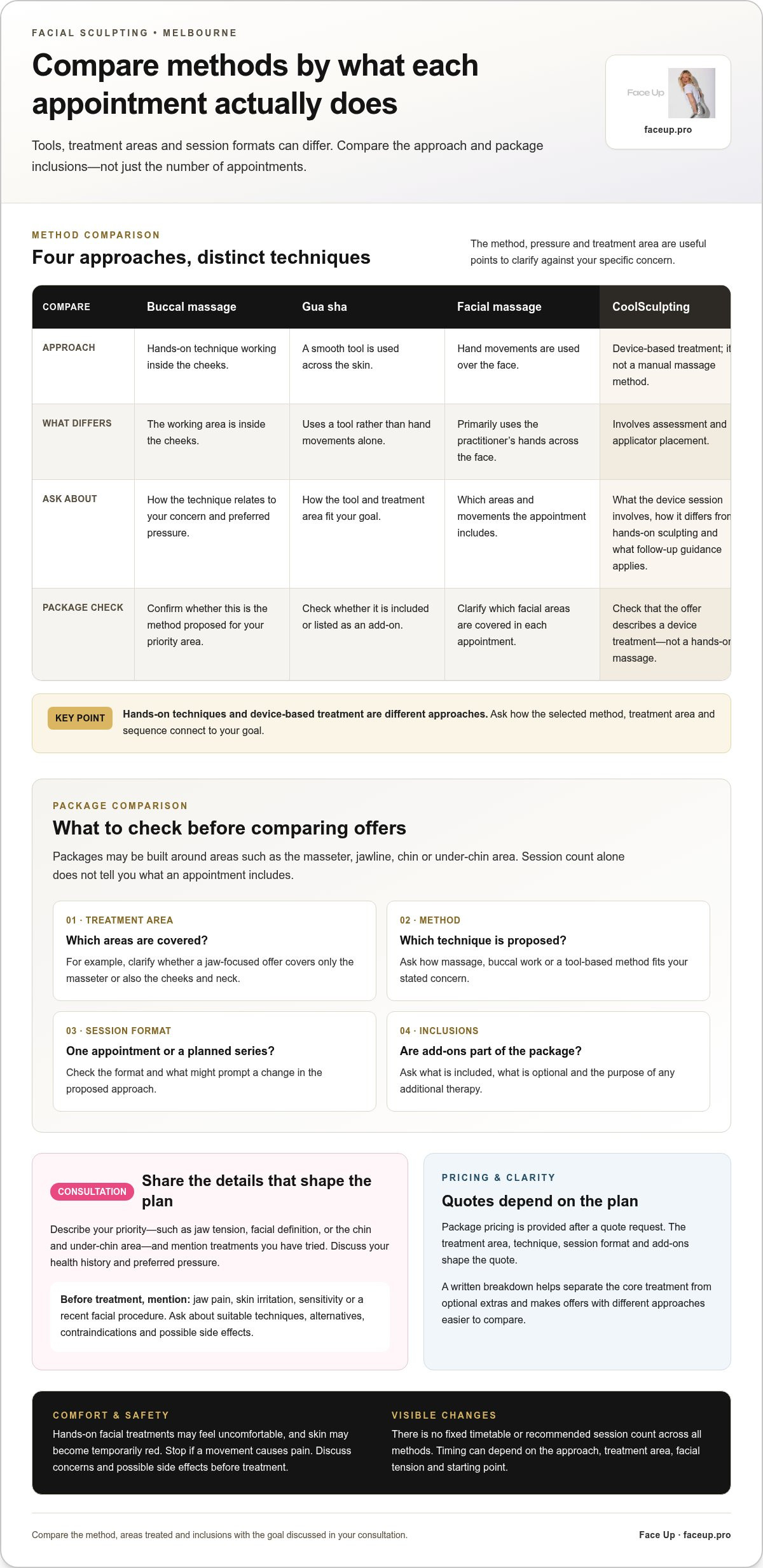
Facial sculpting uses hands-on techniques to work with facial tissues and muscle tension. In Melbourne, a face sculpting practitioner may build a package around the masseter, jawline, chin or under-chin area. Check which areas and techniques each appointment covers, rather than relying on the session count alone.
Buccal massage works inside the cheeks, while gua sha uses a smooth tool across the skin. Facial massage mainly uses hand movements over the face. The methods differ in tools, pressure and treatment area, so compare the technique with your specific concern.
Practitioners may combine facial massage, gua sha or buccal techniques in a treatment plan. Ask how each step relates to your goal, such as easing jaw tension or focusing on the chin. Add-on therapies should have a clear purpose and be explained as separate parts of the treatment, not assumed to be included.
Suitability starts with a consultation about your concerns, health history and preferred pressure. Mention jaw pain, skin irritation, sensitivity or a recent facial procedure before treatment. The practitioner can use this information to discuss suitable techniques and areas, explain the proposed sequence and outline any alternatives.
CoolSculpting is a device-based treatment, not a manual massage method. It involves assessment and applicator placement, unlike buccal massage or gua sha, which use hands or a tool. Ask what the device session involves, how it differs from hands-on sculpting and what follow-up guidance applies.
Hands-on facial treatments may feel uncomfortable, and skin may become temporarily red. Stop if a movement causes pain. Discuss contraindications and possible side effects before treatment, especially if you have active irritation, sensitivity or a recent procedure. Clear answers help you decide whether the technique suits your concern.
Consultations and provider offers
A useful consultation turns a broad concern into a treatment plan. In Melbourne, a face sculpting practitioner may ask whether your priority is jaw tension, facial definition, or the chin and under-chin area. Describe your goal and any massage or facial treatments you’ve tried to give the discussion a practical starting point.
Use the consultation to understand the proposed method, session format and package inclusions. For example, ask whether a jaw-focused offer covers only the masseter or also includes work across the cheeks and neck. Clarify whether it covers one appointment or a planned series, and what might prompt a change in approach. These details make packages easier to compare than session totals alone.
- State your priority: explain whether you’re focused on tension, facial contour or a specific area.
- Review the technique: ask how hands-on massage, buccal work or a tool-based method fits that goal.
- Clarify the offer: identify included areas, appointment format and any add-on therapies.
Package pricing depends on the case and is provided after a quote request. The treatment area, technique, session format and add-ons shape the quote. A written breakdown can help you distinguish the core treatment from optional extras and compare offers with different approaches, rather than assuming they provide the same experience.
Before agreeing, summarise the plan in your own words: the concern being addressed, the proposed method and what the package includes. If your goal is a softer-looking jaw, for instance, check that the discussion addresses the jaw area rather than shifting automatically to another treatment. A clear consultation helps you decide whether the offer matches your priorities.
Expected timing of visible changes
Visible changes after facial sculpting don’t follow a fixed timetable. The method, treatment area, facial tension and your starting point all shape what you notice. Someone seeking a softer-looking jaw, for example, may track that concern differently from someone focused on facial puffiness. A practitioner can explain what the selected approach aims to address and what signs to observe.
There is no recommended session count or fixed duration for results across all methods. The plan depends on your goal, the techniques used and how your face responds. Results may change over time as daily habits and muscle tension shift.
Use a consistent approach to compare your experience. Before an appointment, write down your main concern and note how it feels or appears. Afterward, record immediate sensations separately from changes you notice later. If you take photographs, keep the lighting, expression and camera angle similar. This helps distinguish a lasting pattern from differences in how an image was taken.
At each follow-up, review your original goal rather than automatically adding new concerns. If jaw tightness was your priority, note whether it feels different during everyday activities such as eating or speaking. If your focus was facial contour, compare the same area in similar conditions. This feedback helps you discuss whether the approach still fits.
Ask the practitioner how they’ll assess progress and when they’ll revisit the plan. A clear review point should connect the treatment method to your stated aim, not rely on a promised result. If your observations show no meaningful change, share that directly and discuss whether to adjust the technique, pressure or treatment focus.
Everyday factors can also affect what you notice between appointments. Changes in sleep, hydration, stress or jaw-clenching habits may alter how your face feels or looks. Keep brief notes about relevant changes and bring them to your next appointment. This context helps distinguish treatment-related observations from other influences.
Patient reviews and experiences
Patient reviews can reveal how a facial session felt, how the practitioner communicated and what follow-up involved. Treat each account as one person’s experience, not a promise of the same result. For example, a testimonial describing monthly facials for at least 8 years shows ongoing use, but doesn’t establish that every reader needs regular appointments.
Look for specific details, not just praise. A useful review may describe the technique, the area treated, comfort during the appointment and whether expectations were explained. Compare those details with your priorities, such as jaw tension or facial massage. A review that only says “great service” offers less practical insight than one explaining what happened.
To understand hygiene and booking arrangements, read the practitioner’s published treatment and appointment information. Look for details about room preparation, tools, rescheduling and cancellations, including how reusable tools are cleaned and what happens if you need to change an appointment. Clear information helps you understand the experience before booking.
Read several accounts with different perspectives. Give more weight to reviews that explain the treatment context than to repeated, brief comments. Notice whether responses address concerns respectfully and explain next steps. A detailed account can help you prepare questions, but it cannot establish how a technique will feel for you.
Keep your review criteria simple: technique discussed, comfort, communication, hygiene information and booking clarity. If a review mentions discomfort, check whether it explains the pressure or area involved. That distinction matters because a brief comment may not tell you whether the experience resembles your planned treatment.
For a practical next step, use the practitioner directory to explore listed practitioners and compare how they describe their approach. Then use the review details that matter most to shape your consultation discussion.
Face Up: Face Up Method Certification
Face Up Method Certification is a professional training option for practitioners interested in Face Up’s facial sculpting method. It suits readers considering a practitioner pathway, rather than those seeking only a treatment appointment.
For personal practice, the Face Up App Subscription offers daily self-practice rituals, while the Jaw Release Course focuses on jaw release. Face Up Sculpting Treatment is the relevant option for those seeking a hands-on session. Each serves a different purpose, so choose based on whether your next step is professional learning, self-practice or treatment.
These Face Up offerings let you explore facial sculpting beyond comparing packages and patient experiences. To learn more about Face Up Method Certification or other options, visit faceup.pro.
Choose a next step that fits your goals
Choose your next step based on what you want from facial sculpting: a treatment experience, personal practice or professional learning. Finding a face sculpting practitioner in Melbourne is one path; building a regular self-practice or developing practitioner skills are different goals, each with its own starting point.
Face Up offers Face Up Method Certification for practitioners, the Face Up App Subscription for self-practice and the Jaw Release Course for focused learning. Consider which direction feels relevant now, then explore that option at your own pace. A clear intention can help you decide what information or support would be useful next.
If you’d like to discuss which Face Up option aligns with your interests, contact Face Up to discuss options. Take the next step when it feels right for you.
Frequently Asked Questions
Who are the best-reviewed face sculpting practitioners in Melbourne?
The most useful choice is a practitioner whose reviews describe the treatment you’re considering, not simply the highest overall rating. Look for detailed accounts mentioning the method, communication, comfort and how concerns were handled. A review of buccal massage, for example, may not reflect someone’s experience with gua sha. Compare recent, specific feedback and notice whether the practitioner responds constructively to questions or criticism.
Where can I find face sculpting practitioners in Melbourne suburbs?
A face sculpting practitioner in Melbourne may work from a studio, clinic or another local setting, so start with the suburb where you’d prefer to attend. Face Up’s Practitioner Directory Listing helps people find certified Face Up providers in local cities. Explore listings by suburb, then consider travel distance alongside the practitioner’s stated approach and the treatment you want.
What qualifications or training should a Melbourne face sculpting practitioner have?
Training should relate to the specific technique offered, such as hands-on facial sculpting or buccal massage. Ask the practitioner to explain their training and how it informs their method. Face Up Method Certification provides professional training in Face Up’s facial sculpting method, making it relevant for practitioners pursuing that approach. A qualification name alone doesn’t tell you whether a particular technique suits your goals.
What happens during a face sculpting appointment and how long does it take?
An appointment usually starts with a discussion of your goals and the planned method, followed by the treatment and an opportunity to share feedback. The sequence and duration depend on the technique and areas addressed. For example, hands-on facial work differs from a session using a gua sha tool. Before booking, review the appointment details so you can plan around the stated session length.


