The secret to a youthful, defined jawline might not be found in a more intense muscle workout, but rather in the profound release of the tension you have been holding for years. When choosing between buccal massage vs microcurrent, you are essentially deciding between a manual somatic release and an electrical stimulus. While the broader skincare devices market is projected to reach $20.86 billion by 2026, many individuals find that technology alone cannot address the deep-seated emotional and physical blockages that manifest as chronic jaw tension or persistent puffiness.
It is completely natural to feel overwhelmed by the competing claims of high-tech wands versus the specialized art of manual sculpting. You likely want a solution that offers more than just a temporary lift; you seek a routine that provides genuine emotional release and a structured path to facial rejuvenation. Both paths offer unique advantages. This article explores the fundamental differences between these two methods, ensuring you can confidently select the approach that aligns with your personal wellness goals. We will examine how these techniques target the facial structure and which one is better suited for your specific needs, whether that is relieving TMJ discomfort or achieving a more contoured profile.
Key Takeaways
- Distinguish between the intra-oral structural release of manual therapy and the surface-level electrical stimulation used in toning devices.
- Explore how the Face Up Method™ utilizes somatic facial therapy to address deep-seated emotional stress stored within the facial muscles.
- Compare buccal massage vs microcurrent to determine if your face requires deep muscular relaxation for tension or a temporary "workout" for muscle laxity.
- Identify the best ritual for your lifestyle, whether you prefer a therapeutic 60-minute professional session or a brief daily technological intervention.
- Understand the importance of professional certification and specialized training to ensure safety and somatic depth when performing advanced sculpting techniques.
Understanding the Foundations: Buccal Massage and Microcurrent Explained
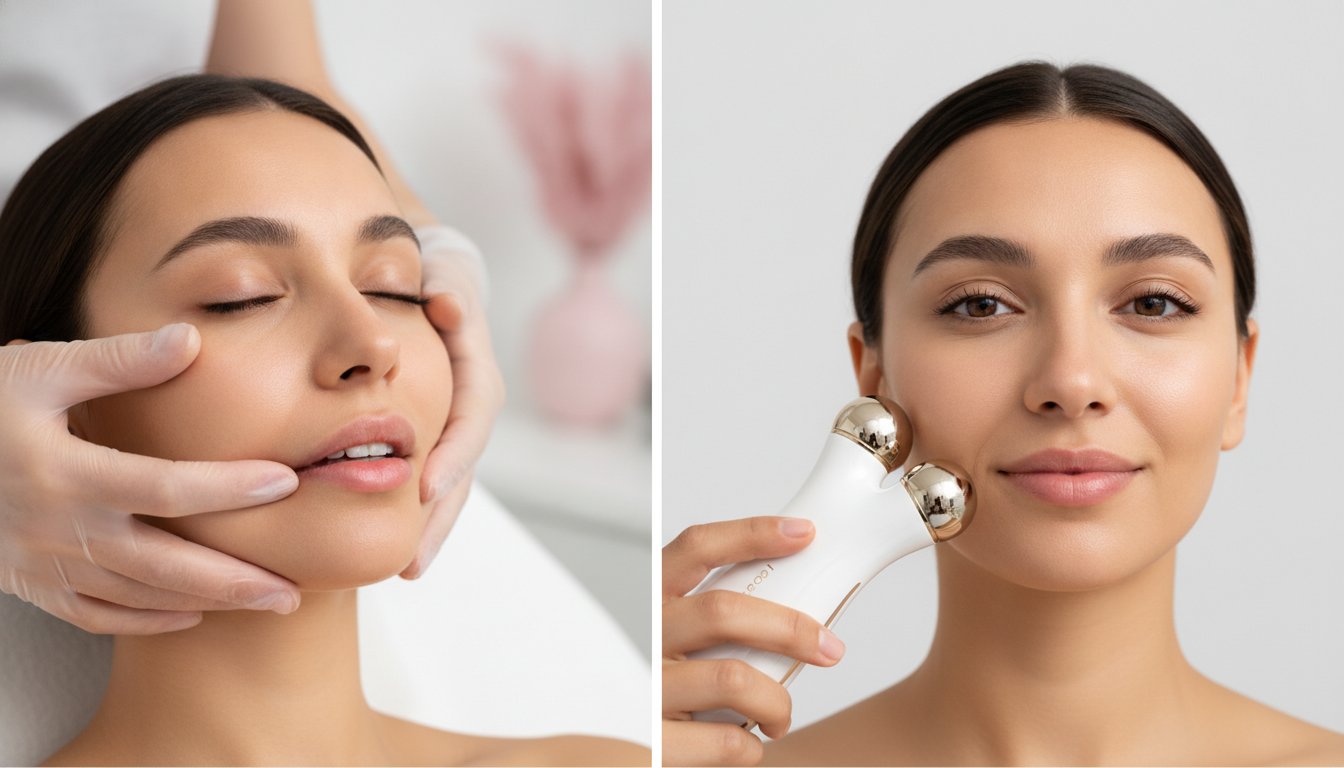
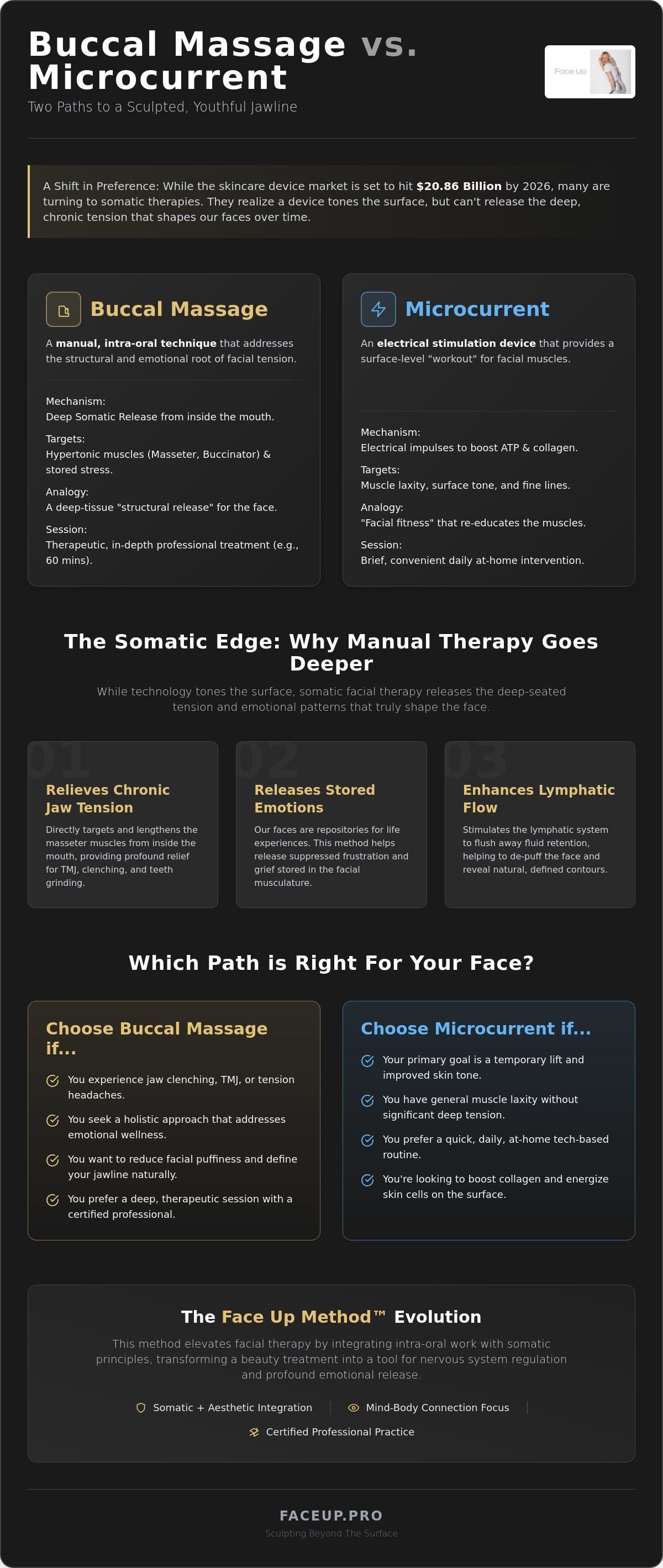
To understand the nuanced debate of buccal massage vs microcurrent, we must first look at how these methods interact with the physical and emotional architecture of the face. While both aim for a lifted, sculpted appearance without the use of needles or surgery, they work through entirely different mechanisms. Buccal massage is a specialized manual technique that involves working the facial muscles from inside the mouth. In contrast, microcurrent uses low-level electrical pulses to stimulate muscle fibers from the skin's surface.
As we move through 2026, many professionals are noticing a significant shift in client preferences. While high-tech gadgets dominated the market for years, there is a growing movement toward somatic and manual therapies. People are realizing that a device might tone the surface, but it cannot release the deep, chronic tension that changes the shape of our faces over time. The Face Up Method™ addresses this by prioritizing the release of stored emotional stress, positioning manual work as a foundational pillar of facial longevity.
The Anatomy of the Buccal Cavity
The buccal cavity refers to the area of the inner cheek. This space houses the masseter and buccinator muscles; these are often the hardest working muscles in the body due to constant chewing, speaking, and stress-related clenching. When these muscles become hypertonic, they shorten and pull the facial features downward. An intra-oral approach allows a practitioner to grasp these muscles from both sides. This provides a level of sculpting and release that is simply impossible with external massage alone. Beyond muscle work, this method effectively stimulates the lymphatic system, helping to flush away the fluid retention that often masks a naturally defined jawline.
The Science of Microcurrent Stimulation
Microcurrent falls under the broader umbrella of Cosmetic electrotherapy. It works by delivering tiny electrical currents that mimic the body's natural bio-electrical signals. This process is designed to boost the production of adenosine triphosphate (ATP), which provides the cellular energy needed for muscle repair and collagen synthesis. Many practitioners refer to this as "facial fitness" because it re-educates the muscles to stay in a more lifted, contracted position. However, there is a clear distinction when comparing buccal massage vs microcurrent. While a device can tone a muscle, it often lacks the capacity to reach deep-seated muscular knots or address the complex emotional "holding patterns" that high-standard somatic work targets.
The Somatic Edge: Why Buccal Massage Goes Deeper Than Tech
Somatic bodywork is the practice of releasing physical tension to heal emotional patterns. This definition is central to understanding the true power of somatic facial therapy. Our faces are not merely aesthetic canvases; they are repositories for our life experiences. Every suppressed frustration, long-held grief, or moment of intense focus leaves a physical trace in our musculature. This is where the debate of buccal massage vs microcurrent takes a turn toward the holistic. While a device can provide a superficial lift, it lacks the intuitive capacity to address these deep-seated somatic imprints.
The Face Up Method™ positions itself at the intersection of aesthetic refinement and emotional wellness. By integrating intra-oral techniques, practitioners can reach the root of tension that purely technological solutions often bypass. This approach transforms a standard beauty treatment into a tool for nervous system regulation. It is a shift from simply reducing wrinkles to restoring the body's internal balance. It creates a space where physical manipulation leads to psychological relief.
Releasing the Jaw: More Than Just Aesthetics
Chronic jaw tension is a pervasive issue for modern professionals. Whether it stems from stress or repetitive habits, hypertonicity in the masseter muscles often leads to TMJ discomfort and teeth grinding. Buccal techniques offer profound relief by manually lengthening these muscles from the inside out. For those seeking a deeper understanding of these mechanics, our Ultimate Guide to TMJ Massage Therapy provides a comprehensive look at restoring balance to the jaw. During these sessions, clients often experience an "unwinding" effect. This is a visceral sensation where the physical release of a knot triggers an unexpected emotional shift, providing a sense of lightness that no electrical current can replicate.
Manual Lymphatic Drainage vs. Electrical Toning
When comparing how these methods handle fluid retention, the human hand remains the gold standard. Manual lymphatic drainage relies on specific, rhythmic movements to move stagnant lymph and reduce facial puffiness. While understanding how microcurrent facials work is helpful for those seeking muscle re-education, technology cannot replace the biochemical impact of human touch. The physical contact during a Face Up Sculpting Treatment helps lower cortisol levels and calms the fight-or-flight response. Our practitioners use intentional rhythms to guide the nervous system into a state of deep rest, ensuring the results are visible both in the mirror and in your overall sense of peace.
Buccal Massage vs Microcurrent: A Direct Comparison
The physical experience of buccal massage vs microcurrent is perhaps the most immediate differentiator for anyone seeking a natural facelift. A microcurrent treatment typically involves a gentle, rhythmic tingle or a slight metallic taste in the mouth as the low-level electricity stimulates the surface muscles. It is a passive, technology-driven sensation. Conversely, a professional buccal session is an active, deep-tissue experience. It involves intentional pressure within the oral cavity to grasp and stretch the muscles. This manual approach provides a visceral sense of release that many find far more grounding than the buzz of a handheld device.
Longevity of results also varies significantly between the two. Microcurrent acts much like a "gym session" for the face; it provides an immediate, temporary pump and lift by contracting the muscle fibers. However, these effects fade quickly without consistent re-application. Manual structural work focuses on "unwinding" the fascia and lengthening shortened muscles. This creates cumulative, long-term changes in the facial architecture. For individuals who prefer to avoid all external electrical frequencies, buccal massage stands as the ultimate "clean" alternative. It relies solely on the high-standard skill of a practitioner to restore facial harmony.
Safety considerations are another critical factor in your decision. Microcurrent is classified as a Class 2 medical device, and it comes with specific contraindications. You should generally avoid electrical stimulation if you have a pacemaker, active implants, or are currently pregnant. Buccal massage is a manual somatic therapy and is accessible to a broader range of people. It is an ideal path for those who prioritize a frequency-free environment and want to achieve results through biological mechanical tension rather than electrical impulses.
Treatment Frequency and Maintenance
Maintaining your results requires a different commitment for each method. To see lasting benefits from microcurrent, you generally need to use a device daily or at least four times per week to maintain "muscle memory." In contrast, the Face Up Method™ favors a more sustainable rhythm. A monthly professional session is often sufficient to address deep structural concerns. You can then sustain these results between appointments by integrating daily rituals found in the Face Up App Subscription. This structured self-care routine ensures your facial muscles remain relaxed and sculpted without the need for constant gadgetry.
Targeted Concerns: Which Method Wins?
Choosing the right path depends on your primary aesthetic and physical goals. Each method excels in different areas:
- For sagging skin and fine lines: Microcurrent is highly effective for surface-level toning and improving skin texture through ATP production.
- For deep nasolabial folds and facial widening: Buccal massage is the clear winner. It addresses the internal muscle hypertonicity that causes these folds to deepen over time.
- For chronic jaw tension: Manual release is far superior for physically breaking down the knots that lead to TMJ discomfort.
How to Choose the Right Path for Your Face
Selecting the most effective path forward requires an honest assessment of your current facial state and your long-term wellness priorities. When evaluating buccal massage vs microcurrent, the first question to ask is whether your face is dealing with muscle laxity or muscle hypertonicity. Muscle laxity refers to the sagging or loss of tone associated with aging; this is where electrical stimulation excels. Hypertonicity, however, is the chronic tension and shortening of muscles that creates deep folds and a "heavy" lower face. If your jaw feels tight and your face looks wider than it used to, you are likely dealing with tension that needs a manual release rather than a technological workout.
The ideal candidate for buccal massage is someone seeking both a profound structural lifting effect and a significant emotional decompression. This method is not just about the surface; it is about the internal architecture. Your lifestyle also plays a decisive role in this choice. You must decide if you prefer the convenience of a five-minute daily gadget or the deep, restorative experience of a 60-minute therapeutic ritual. While a device offers a quick utility, a somatic treatment provides a dedicated space for nervous system regulation and professional-grade sculpting.
The Case for Manual Sculpting
You should prioritize manual sculpting if you suffer from TMJ discomfort, frequent tension headaches, or a noticeably "heavy" jawline. This approach is perfect for those who value a holistic, whole-body approach to beauty and wellness. Because buccal techniques work intra-orally, they can release the masseter and buccinator muscles in ways a surface device cannot. If you are not yet ready for a professional session, our Jaw Release Course serves as an excellent somatic guide to beginning this practice at home. It allows you to take control of your tension and experience the "unwinding" effect firsthand.
The Case for Microcurrent Gadgets
Microcurrent devices are a fantastic option if you want a quick "pick-me-up" before social events or a structured way to maintain surface tone. This technology is particularly beneficial for younger skin looking to prevent the early signs of gravity-induced sagging. It is a proactive tool for "facial fitness." However, the effectiveness of any at-home device depends entirely on your discipline. It only works if you use it every day. If you find that gadgets often end up forgotten in a drawer, you may find more value in the accountability and depth of a professional Face Up Sculpting Treatment.
Elevating Your Practice: The Face Up Method™ Evolution
While the comparison of buccal massage vs microcurrent provides a helpful starting point for your rejuvenation journey, achieving lasting facial harmony requires a more integrated approach. Standard buccal massage is often treated as a singular technique, but within our ecosystem, it serves as just one component of a much broader somatic journey. The Face Up Method™ represents an evolution in how we view facial health. We are moving away from the aggressive, often clinical "anti-aging" narratives of the past. Instead, we embrace a "pro-vitality" philosophy. This approach treats the face as a living reflection of your internal state, prioritizing the release of chronic tension to reveal your most vibrant self.
The transition from a technology-dependent routine to a manual somatic practice is a significant step toward self-governance in your beauty ritual. High-standard results depend on more than just following a sequence of moves. They require a deep understanding of how the nervous system responds to touch. A practitioner trained in our method doesn't just manipulate tissue; they facilitate a structural and emotional release that technology simply cannot replicate. This level of somatic depth ensures that the results are not just visible on the surface but felt within your entire being.
Professional Certification for Practitioners
For those looking to bring this level of care to their own clients, the Face Up Method Certification offers a path to professional advancement. Our Facial Sculpting Certification provides the tools needed to master these advanced techniques in 2026. Adding somatic bodywork transforms a standard beauty practice into a therapeutic one, allowing you to address the root causes of facial tension and aging. Upon completion, practitioners join our global directory of verified experts, establishing themselves as high-standard partners in a specialized professional landscape. This community of facilitators is dedicated to maintaining the integrity and proactive management of facial health on a global scale.
The Daily Ritual: The Face Up App
You don't need to be a professional to benefit from these techniques. The Face Up App Subscription serves as a digital mentor, guiding you through daily rituals that sustain your results between professional sessions. The app allows you to master self-massage techniques that mimic the structural benefits of a professional buccal treatment. By integrating somatic bodywork into your morning or evening routine, you create a steady rhythm of self-care that prevents tension from accumulating. This consistent practice is the key to maintaining a defined jawline and a calm, regulated nervous system. Whether you are a professional seeking to expand your toolkit or an individual looking for a clear path forward, we invite you to explore the Face Up Method™ and start your transformation today.
Embrace the Future of Holistic Facial Health
Choosing between buccal massage vs microcurrent is ultimately a decision about how you wish to engage with your own biology. While microcurrent devices offer a practical solution for surface toning, manual somatic therapy provides the deep structural and emotional release necessary for true facial longevity. By addressing the root causes of tension rather than just the symptoms of sagging, you can achieve holistic, non-invasive results that reflect a state of genuine internal balance.
The journey toward a more sculpted, vibrant face is most effective when guided by professional standards and proprietary somatic techniques. Whether you are looking to refine your personal routine or elevate your professional practice, joining a global community of certified practitioners ensures you are at the forefront of this wellness evolution. We invite you to Master the Face Up Method™ with our Professional Certification and discover a path that honors the complex connection between your physical structure and your emotional wellbeing. Your face is a living history; it's time to treat it with the depth and care it deserves.
Frequently Asked Questions
Is buccal massage painful compared to microcurrent?
Buccal massage shouldn't be painful, though you'll feel deep, intentional pressure as the practitioner works the inner cheek muscles. While microcurrent often produces a light tingle or metallic taste, manual work is more visceral. If you have significant tension, you might feel some initial tenderness that quickly gives way to a profound sense of release. High-standard practitioners always adjust their technique to ensure the experience remains therapeutic and grounding.
Can I do buccal massage on myself at home?
You can certainly perform targeted self-massage at home to maintain your results between professional treatments. Our Jaw Release Course provides a structured path for those wanting to master these techniques safely. Using the Face Up App Subscription allows you to follow along with daily rituals designed to mimic professional sculpting. Consistency is key to seeing a visible reduction in puffiness and tension without needing a technological device.
How often should I get a buccal massage for visible results?
A monthly professional session is typically recommended for cumulative structural benefits. When comparing buccal massage vs microcurrent, the manual approach offers more cumulative structural benefits than the temporary lift of electrical stimulation. If you're addressing deep-seated chronic tension or TMJ issues, your practitioner might suggest a more frequent initial series before moving into a maintenance phase to ensure lasting facial health.
Does microcurrent interfere with dental implants or fillers?
Microcurrent can cause a harmless but noticeable metallic taste or sensation if you have dental implants or metal fillings. Regarding dermal fillers, some practitioners suggest that the increased circulation and ATP production might lead to a slightly faster metabolism of the product. It's always best to wait at least two to four weeks after receiving injectables before using any electrical stimulation or deep manual massage to allow the product to settle.
Can buccal massage help with TMJ and jaw clicking?
Buccal massage is one of the most effective non-invasive methods for addressing TMJ discomfort and jaw clicking. By manually releasing the masseter and buccinator muscles from the inside out, the practitioner helps restore proper alignment and function to the jaw joint. This physical "unwinding" of the muscles often leads to an immediate reduction in the clicking sounds and the associated pain that many busy professionals experience daily.
Is it safe to use microcurrent and buccal massage in the same week?
It's perfectly safe to integrate both methods into your weekly routine, provided you don't perform them on the same day. Many people find a powerful synergy in buccal massage vs microcurrent when they use the device for surface toning and the manual work for deep structural release. This balanced approach ensures you're addressing both muscle laxity and muscle hypertonicity for a more comprehensive and personalized facial rejuvenation.
What is the "Face Up Method" and how does it differ from standard buccal massage?
The Face Up Method™ goes beyond standard buccal techniques by incorporating somatic bodywork to address the emotional stress stored in facial tissues. While a typical massage focuses on physical manipulation, our method prioritizes nervous system regulation and deep emotional unwinding. This proprietary ecosystem includes the Face Up Method Certification for professionals, ensuring a high-standard experience that promotes long-term vitality rather than just a temporary aesthetic fix for aging concerns.
Are the results of buccal massage permanent?
While no natural lifting method is permanent, the structural changes from regular manual work are long-lasting and cumulative. Unlike the fleeting lift of a single gadget session, consistent somatic release helps retrain your muscles to stay in a relaxed, lengthened state. Maintaining a structured self-care routine through the Face Up App Subscription ensures that you preserve your defined jawline and continue to prevent the buildup of new emotional tension.


