

Your jaw functions as the physical "on-off" switch for your entire nervous system. If your masseter muscles are locked in a state of guarding, it's biologically impossible to signal true safety to your brain. You might find yourself searching for vagus nerve exercises for facial relaxation because standard stretching just isn't reaching the deep, somatic roots of your tension. When you're stuck in a perpetual fight-or-flight state, that chronic clenching doesn't just cause pain; it creates a heavy, tired appearance that topical treatments cannot resolve.
We understand how frustrating it is to wake up with a dull ache in your jaw or to feel like your face is wearing a mask of stress you can't take off. You've likely tried traditional stretches only to find the relief is fleeting at best. In this guide, you'll learn how to hack your nervous system using the Face Up Method™ to finally melt away that deep-seated tension. We'll explore somatic techniques and specific vagus nerve exercises for facial relaxation that provide immediate relief, helping you achieve a softer, more youthful expression and a regulated internal state.
Key Takeaways
- Discover why the jaw acts as your body's primary stress container and how it directly impacts your nervous system's ability to rest.
- Learn how to improve vagal tone to achieve a naturally soft facial expression and enhanced circulation without invasive treatments.
- Understand the critical difference between aggressive face yoga and vagus nerve exercises for facial relaxation that prioritize nervous system safety.
- Master targeted somatic techniques like the Auricular Ear Pull to release deep-seated tension held in the facial nerves and muscles.
- Transition from temporary relief to a sustainable practice by integrating the Face Up Method™ into your daily self-care routine.
The Jaw-Vagus Connection: Why Facial Tension is a Nervous System Signal
The Vagus nerve acts as the primary highway for your parasympathetic nervous system, serving as the essential conduit for signaling "rest and digest" to every organ in your body. While its reach is vast, many people overlook that this highway has a major entrance ramp: your jaw. We view the jaw as far more than a simple hinge; it's a somatic archive where we store unresolved stress and environmental demands. When you experience a perceived threat or high-pressure situation, your jaw is often the first place to tighten, acting as the body's primary "stress container."
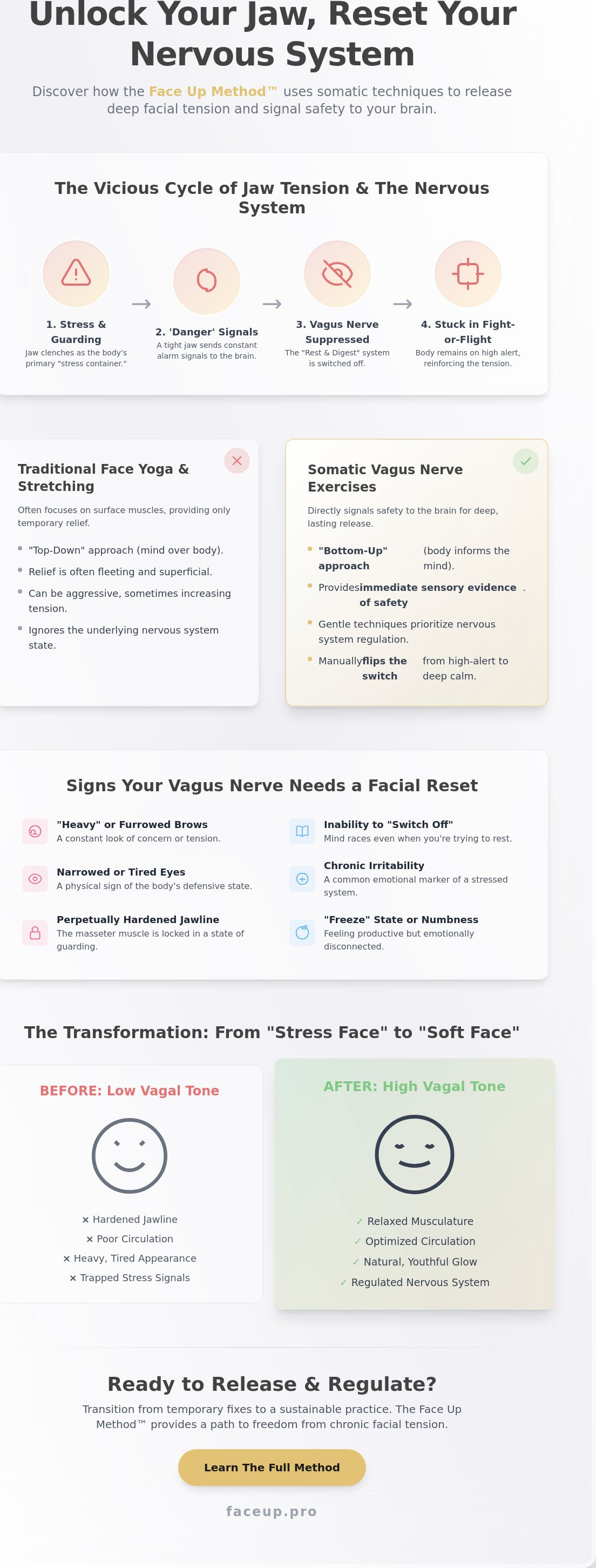
This clenching creates a biological feedback loop that can be difficult to break. A tight jaw sends a constant stream of "danger" signals back to the brain, effectively locking the vagal system in a suppressed state. This keeps you trapped in a fight-or-flight response, even when the external stressor has disappeared. The Face Up Method™ philosophy treats facial relaxation as a "bottom-up" neurological process. We don't wait for the mind to calm down to relax the face. Instead, we use physical interventions to change the brain's state. By focusing on vagus nerve exercises for facial relaxation, we can manually flip the switch from high-alert to deep calm.
The Trigeminal-Vagal Bridge
The nerves that control your jaw, known as the trigeminal nerves, maintain a direct line of communication with the vagal system. Your masseter muscle is the strongest physical guard in the human body. When it stays engaged, your brain interprets this as a state of active defense. You can't simply think your way out of this tension. "Clenching through it" makes it physiologically impossible for your brain to feel safe. This is why vagus nerve exercises for facial relaxation are a vital tool for resetting the system. They provide the specific sensory input required to convince the brain that the threat has passed and it's safe to disarm.
Signs Your Vagus Nerve Needs a Facial Reset
How do you know if your nervous system is stuck? Physical markers often include "heavy" brows, narrowed eyes, and a jawline that feels perpetually hardened. Emotionally, you might experience an inability to switch off, chronic irritability, or "freeze" states where you feel productive but emotionally numb. These symptoms suggest your face is holding onto an emotional history that needs a somatic release. This concept is central to the somatic massage therapy approach, which addresses how our tissues store past experiences. When the face is finally relaxed through somatic work, the mind can follow into a state of regulated peace.
Stimulating the Vagus Nerve: The Key to Unlocking Chronic Stress Face
Vagal tone is the internal metric that determines how effectively your body recovers from stress. In 2026, we recognize that facial aesthetics are deeply tied to this neurological health. A high vagal tone results in what we call a "soft face." This isn't achieved through products, but through relaxed musculature, optimized circulation, and the natural glow that emerges when the nervous system is truly at rest. Engaging in vagus nerve exercises for facial relaxation offers a direct path to this state by bypassing the noisy chatter of a stressed mind.
Most people are familiar with "top-down" relaxation, such as mindfulness or meditation. While these are valuable, they often fail when you're already trapped in a high-stress state. It's difficult to think yourself into a calm state when your body is screaming otherwise. Somatic, "bottom-up" interventions are significantly faster because they provide immediate sensory evidence of safety to the brain. By physically releasing the tissues of the face, you essentially hack the stress response from the outside in. This manual intervention is the most efficient way to signal to your entire system that the perceived threat has passed.
Neuro-Facial Sculpting: More Than Just a Massage
Neuro-facial sculpting is the intentional release of nerves and fascia to change the brain's state. The Face Up Method™ uses specific, purposeful touch to signal the brain to let go of defensive holding patterns. A primary focus of this work is the auricular branch of the vagus nerve, which is located near the ear. Because this nerve branch is so accessible, targeted stimulation here can trigger an almost immediate drop in systemic tension. This approach moves beyond traditional surface-level massage, treating the face as a gateway to the entire parasympathetic system. For those looking to deepen their practice, exploring the Face Up App Subscription provides daily guided sequences to maintain this neurological clarity.
Breaking the Fight-or-Flight Face
Throughout the day, most of us experience "micro-clenches." These are tiny, often unnoticed contractions in the jaw and brow that occur during digital work or difficult conversations. Over time, these micro-clenches solidify into a permanent "stress face." Another critical factor is your tongue's resting position; if it isn't resting gently against the roof of the mouth, it can actually inhibit vagal function. To anchor a state of safety and break these patterns, you can use a tmj massage tool to provide consistent, soothing input to the trigeminal and vagal nerves. These tools help transition the face from a site of stored trauma to a canvas of relaxation. Consistent use of vagus nerve exercises for facial relaxation ensures that these micro-clenches don't become your permanent expression.
Somatic Vagus Nerve Exercises vs. Traditional Face Yoga
Traditional face yoga often treats the face like a gym for the muscles, focusing on resistance and repetitive movements. While building muscular tone has its place, it frequently fails those suffering from chronic, deep-seated clenching. Vagus nerve exercises for facial relaxation take a fundamentally different path. Instead of muscular effort, we focus on nervous system negotiation. We aren't trying to "work out" the face; we're trying to convince the brain that it's safe to stop guarding. This shift from effort to ease is the cornerstone of modern somatic practice.
When you experience chronic jaw clenching, your muscles are in a state of protective guarding. Aggressively pulling on these tissues signals a threat to the brain, which responds by tightening the muscle further to protect the joint. It's a biological rebound known as the stretch reflex. The Face Up Method™ prioritizes melting over stretching. This means we wait for the tissue to yield to our touch rather than forcing it to move. By 2026, the most effective wellness protocols have shifted toward this "gentle intention," recognizing that the nervous system only relaxes when it feels completely safe.
The Trap of Aggressive Jaw Stretching
If your jaw feels tighter ten minutes after a "hard" stretch, you've likely triggered a guarding response in the pterygoid muscles. These are the body's primary defenders in the facial region, and they don't respond well to force. This is why we implement the "4/10 Pressure Rule" for all somatic work:
- Pressure level 1 to 3: Gentle sensory input that calms the skin and superficial fascia.
- Pressure level 4: The somatic "sweet spot" for signaling muscular release without triggering a guard.
- Pressure level 5 and above: High risk of triggering the stretch reflex and increasing long-term tension.
Following this rule ensures that your efforts result in lasting ease rather than a temporary fix followed by a rebound of tightness. It's about quality of touch, not quantity of force.
Why Somatic Release Lasts Longer
4 Vagus Nerve Exercises for Instant Facial Relaxation
You don't need a cold plunge or a completely silent room to reset your nervous system. By using these specific vagus nerve exercises for facial relaxation, you can achieve a state of physiological calm in minutes. Before beginning, we recommend creating a "Somatic Container." This involves sitting comfortably, grounding your feet on the floor, and taking a moment to simply observe the current level of tension in your jaw without judgment. This mental boundary ensures you aren't just performing a movement, but engaging in a genuine neurological negotiation.
The Auricular Ear Pull: A 30-Second Reset
The auricular branch of the vagus nerve is highly accessible near the ear canal. To perform this exercise, gently grasp your earlobes between your thumb and forefinger. Apply a very slight traction, pulling the lobes outward and slightly downward. Hold this gentle tension for 30 seconds while maintaining a soft gaze. A spontaneous, deep exhale often follows this movement, serving as a biological marker that your nervous system has successfully shifted into a parasympathetic state. This "vagal sigh" is your body's way of confirming the reset is complete.
The Masseter Melt: Releasing the Main Clencher
Locate the "hinge" of your jaw where the upper and lower teeth meet. Instead of using your fingertips, place your knuckles against the masseter muscle with a slow, weighted pressure. This is a cornerstone technique taught in our facial sculpting certification training because it prioritizes depth over speed. Allow your knuckles to sink into the tissue as if they are melting through warm butter. Rather than pushing against the tightness, breathe directly *into* the muscle, visualizing the fibers broadening with every exhale. This sinking action bypasses the stretch reflex and encourages the muscle to yield voluntarily.
Buccal Release: The Deepest Vagal Hack
The buccinator and internal masseter muscles often hold "calcified" tension that external work cannot reach. For this exercise, ensure your hands are clean. Place your thumb inside your cheek and your index finger on the outside, pinning the muscle tissue between them. Use the "Pin and Breathe" method: find a point of tension, maintain steady but gentle pressure, and take three deep, diaphragmatic breaths. This internal work provides a unique sensory input that signals safety to the deeper cranial nerves. Always prioritize a gentle touch; if you feel sharp pain, you've exceeded the "4/10 Pressure Rule" and should lighten your contact. To master these techniques and more, you can explore the full curriculum in our Jaw Release Course.
Finally, conclude your practice with the Soft-Palate "Ah." Open your mouth slightly and imagine your soft palate at the back of your throat lifting and broadening, as if you are about to yawn. This releases the deep connection between the throat and the jaw, allowing the entire facial structure to settle into a state of ease. These exercises work best when performed as a sequence, moving from the external ear to the internal oral cavity.
The Face Up Ritual: Building a Sustainable Path to Freedom
While the techniques shared in the previous sections provide immediate relief, true transformation requires moving beyond the "quick fix" mentality. A somatic ritual is a committed practice of nervous system negotiation. It's the difference between temporary symptom management and fundamental biological change. By integrating vagus nerve exercises for facial relaxation into your daily life, you retrain your brain to recognize safety as your default state rather than a rare occurrence. This consistency is what allows the tissues to truly "unlearn" the habit of clenching.
The Face Up App Subscription offers a structured ecosystem for this journey, providing daily, guided 5-minute sequences that fit into even the most demanding professional schedule. We've observed that jaw tension rarely exists in isolation; it's often anchored by neck tension and specific postural habits. Combining jaw release with broader somatic rituals ensures that the relief you feel in your face is supported by your entire upper body structure. If you find that self-practice reaches a plateau, it may be time to book a Somatic Bodywork Session or consult our Practitioner Directory Listing to find a specialist who can provide deeper, manual intervention tailored to your unique somatic profile.
Your Daily 5-Minute Somatic Schedule
Establishing a rhythmic "gateway" for your nervous system helps maintain vagal tone throughout the day. We recommend a three-part approach to keep your face soft and your mind regulated:
- Morning: Use a "Vagal Wake-Up" sequence to set a calm, expansive tone before the day's professional demands begin.
- Workday: A mid-day "Check-In" ritual is essential to prevent the accumulation of micro-clenches during high-focus tasks or digital work.
- Evening: The "Deep Release" prepares your system for a restful, grind-free sleep, ensuring you don't wake up with the jaw pain or heavy appearance discussed earlier.
Mastering the Method: Professional Certification
For wellness professionals and bodyworkers, somatic facial work represents the next evolution of the beauty and longevity industry. Clients are increasingly seeking solutions that address the root neurological causes of tension rather than just the aesthetic symptoms. The Face Up Method™ training program provides a rigorous, evidence-based curriculum for those looking to facilitate these deep shifts for others. You'll learn to navigate the complex interplay of fascia, cranial nerves, and emotional storage in a professional landscape that values integrity and proactive management. Explore the Face Up Method Certification to join a global community of practitioners dedicated to high-standard, holistic care. By mastering these vagus nerve exercises for facial relaxation, you can offer your clients a clear path forward toward both aesthetic brilliance and nervous system resilience.
Step Into a State of Sustainable Calm
The Face Up Method™ provides a 100% non-invasive and natural focus for those seeking lasting relief. Developed by somatic bodywork expert Olga Newman and trusted by thousands of practitioners globally, our approach ensures you aren't just masking symptoms but retraining your body's baseline state for safety. It's time to stop fighting your tension and start providing your system with the sensory evidence it needs to let go. Ready to release the clench? Start your journey with the Face Up Jaw Release Course.
Frequently Asked Questions
Why is my jaw still tight even after I massage it?
Massage often only addresses superficial muscle fibers without resolving the underlying neurological signal to guard. If you haven't addressed your vagal tone, your brain continues to send a "danger" signal that keeps the masseters engaged. Traditional massage can sometimes even trigger a stretch reflex that causes the muscle to snap back tighter. This is why a somatic approach is necessary to break the cycle.
Can vagus nerve exercises really change my face shape?
While these exercises don't change your bone structure, they significantly alter your appearance by releasing chronic muscular hypertonicity. Consistently practicing vagus nerve exercises for facial relaxation can lead to a more defined jawline and a lifted brow area as the "stress mask" of clenching dissolves. This results in a softer, more balanced facial contour that looks more rested and youthful.
How often should I perform these vagus nerve exercises?
Consistency is more important than duration, so we recommend short, daily sessions of five to ten minutes. Performing these exercises two to three times a day helps maintain a regulated nervous system baseline throughout your professional schedule. Over time, these frequent "micro-resets" retrain your brain to hold less tension as its default state. This cumulative effect is what creates lasting somatic change.
Is buccal massage safe to do on myself at home?
Yes, buccal massage is safe for home practice provided you follow proper hygiene and the "4/10 Pressure Rule" mentioned earlier. Always wash your hands thoroughly before placing your thumb inside your cheek. Focus on gentle, rhythmic pressure rather than aggressive pulling to ensure you're signaling safety to the cranial nerves. If you feel sharp pain, you're using too much force and should lighten your touch.
What is the "Somatic Archive" and how does it affect my jaw?
The "Somatic Archive" refers to the way your body stores unresolved emotional stress and past environmental demands within its physical tissues. The jaw is a primary storage site for these experiences because it's biologically linked to our survival and defense instincts. Releasing this archive requires somatic techniques that address the nervous system directly. This allows the tissues to finally let go of historical tension patterns.
Can these exercises help with tension headaches?
These exercises are highly effective for tension headaches because many are caused by referred pain from the jaw and neck muscles. By utilizing vagus nerve exercises for facial relaxation, you reduce the systemic pressure that often leads to cranial discomfort. Releasing the trigeminal-vagal bridge helps calm the nerves that frequently trigger headache symptoms. Many users report a significant reduction in headache frequency after establishing a regular ritual.
Do I need special tools for vagus nerve facial relaxation?
No specialized equipment is required to start, though certain tools can certainly enhance your practice. Your own hands are the most effective tools for somatic work because they provide immediate sensory feedback to your brain. However, many people find that a dedicated massage tool helps provide the consistent, weighted pressure needed for deep masseter release. The most important "tool" is your own focused, gentle intention.
What should I do if I feel emotional while doing these exercises?
Feeling emotional is a normal part of somatic release and indicates that you're successfully accessing stored stress. If emotions arise, simply pause, breathe deeply, and allow the sensation to move through you without judgment. This is a sign that your "Somatic Container" is working. If the feeling becomes overwhelming, stop the exercise and ground yourself by placing your feet firmly on the floor until you feel stable.


