

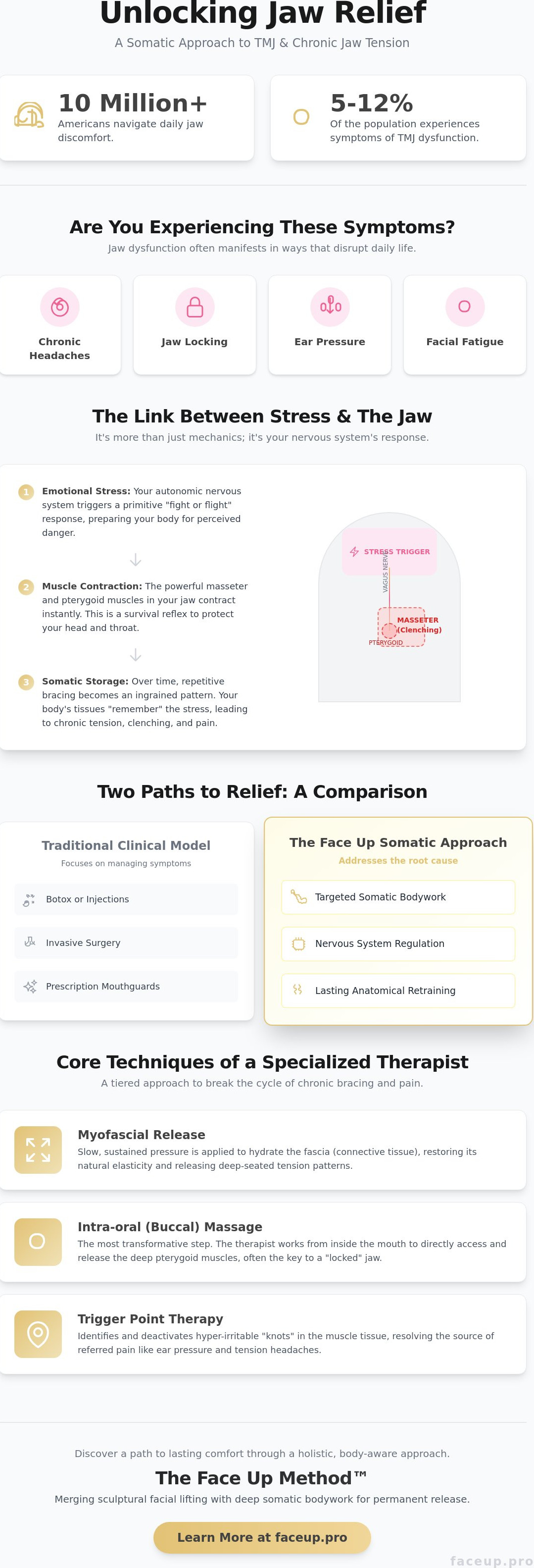
Did you know that more than 10 million Americans are currently navigating the daily discomfort of jaw dysfunction? You might be part of the five to twelve percent of the population who wakes up with chronic headaches or feels that restrictive, locked sensation during high-stress periods. If you're tired of being told that Botox or surgery are your only options, partnering with a specialized tmj massage therapist offers a refreshing, somatic alternative. This method addresses the deep-seated link between your physical clenching and the emotional stress your nervous system is working to manage.
It's incredibly draining to deal with ear pressure and facial fatigue while trying to maintain your professional focus. We believe that true relief comes from understanding why your body holds onto tension in the first place. This article explores how somatic bodywork can facilitate a permanent release of jaw pain by regulating your nervous system. You'll learn about the emotional triggers behind your clenching and how to find a qualified practitioner to guide your journey toward lasting comfort.
Key Takeaways
- Understand how a specialized tmj massage therapist targets the masseter and pterygoid muscles to provide relief from chronic jaw locking and facial fatigue.
- Explore the somatic link between your nervous system and jaw tension to identify the emotional triggers that cause persistent clenching.
- Compare traditional clinical models with the Face Up Method™, a proprietary approach that merges sculptural facial lifting with deep somatic bodywork.
- Learn how to evaluate a practitioner’s expertise in buccal massage and somatic techniques to ensure you receive high-standard, specialized care.
- Discover the path to professional advancement with the Face Up Method™ Certification for those seeking to offer holistic jaw release within their own practice.
What Does a Specialized TMJ Massage Therapist Actually Do?
A visit to a general practitioner often ends with a prescription for a mouthguard or a suggestion for invasive injections. A specialized tmj massage therapist takes a different route, focusing on the intricate architecture of the jaw to address the root of the pain. TMJ massage therapy is a targeted intervention for the temporomandibular joint and surrounding connective tissues. It isn't merely about rubbing a sore spot; it's a sophisticated branch of somatic bodywork designed to reset the body's primary stress-holding center. By focusing on the masseter, temporalis, and pterygoid muscles, these specialists help you regain the mobility you've lost to years of involuntary clenching.
The Anatomy of Jaw Tension
The jaw is a mechanical marvel. As the body's most active joint, its complexity makes it vulnerable to dysfunction. Temporomandibular joint dysfunction often arises when the balance between bone, disc, and muscle is disrupted. The masseter and temporalis muscles are the heavy lifters of the jaw, capable of exerting immense force. However, it's often the lateral and medial pterygoid muscles, hidden deep within the jaw structure, that hold the key to the "locked" sensation many experience. Tension rarely stays localized. It frequently cascades from the neck and shoulders, creating a structural pull that forces the jaw out of alignment. Over time, the fascia, or the body's internal connective webbing, becomes dehydrated and rigid, effectively locking the clenching pattern into your physical blueprint.
Common Techniques Used by Specialists
A tmj massage therapist uses a tiered approach to break this cycle of chronic bracing. The work typically involves three primary methods:
- Myofascial Release: This foundational step involves applying slow, sustained pressure to hydrate the connective tissue and restore its natural elasticity.
- Intra-oral (Buccal) Massage: By working from the inside of the mouth with gloved hands, the therapist can directly access the pterygoid muscles that are otherwise unreachable. This is often the most transformative part of a session.
- Trigger Point Therapy: Specialists identify and deactivate hyper-irritable "knots." These points are often the silent culprits behind referred ear pressure and the splitting headaches that feel like they're originating behind your eyes.
Unlike invasive medical suggestions, these techniques retrain the muscles to rest. This provides a path toward functional recovery without altering your natural anatomy. It's a collaborative process that invites you to reconnect with your body's signals rather than just silencing the symptoms.
Beyond Mechanics: Why Your Jaw Stores Emotional Stress
While mechanical dysfunction is a significant factor, your jaw often serves as the primary gatekeeper for your emotional state. When you encounter stress, the autonomic nervous system triggers a "fight or flight" response that causes the masseter muscles to contract instantly. This is a primitive survival reflex intended to protect the throat and head from potential injury. Over time, this repetitive bracing leads to somatic storage, a phenomenon where the body’s tissues retain the memory of stress even after the mind has moved on. A tmj massage therapist works to interrupt this neurological loop, helping the body unlearn these ingrained patterns of protection. By addressing the nervous system alongside the musculature, you can move past the temporary relief of a standard massage and toward a more durable state of ease.
The Vagus nerve, which serves as the main highway for the parasympathetic nervous system, passes in close proximity to the jaw joint, so releasing tension in this area can directly stimulate a state of deep neurological relaxation.
The Vagus Nerve and Jaw Release
By intentionally softening the jaw, you send a clear signal to the brain that it's safe to enter a "rest and digest" state. This work often reveals surprising somatic links, such as the fascial connection between the jaw and the pelvic floor. These two regions frequently mirror each other’s tension levels; as one releases, the other often follows. Integrating these insights into a somatic bodywork session allows for a more holistic reset of the autonomic nervous system than traditional physical therapy alone. This "bottom-up" approach focuses on the body's internal sensations to regulate the nervous system rather than forcing a mechanical stretch.
Breaking the Cycle of Bruxism
Nighttime teeth grinding, or bruxism, is rarely just a dental issue. It's often a subconscious emotional processing mechanism where the body attempts to "chew through" the day’s unresolved stressors or suppressed frustrations. While many TMJ disorder treatments utilize mouthguards to prevent tooth wear, they don't always resolve the underlying neurological drive to clench. Shifting the focus from managing symptoms to releasing the root emotional trigger can lead to profound results. This process doesn't just alleviate pain; it also offers aesthetic benefits. As the muscles finally let go of their chronic grip, a natural rejuvenation occurs. This often smooths the facial features, reduces lower-face puffiness, and restores a sense of calm readiness to the entire body.
Clinical TMJ Massage vs. The Face Up Somatic Approach
The choice of a tmj massage therapist often depends on whether you seek a temporary fix or a fundamental shift in how your body processes stress. Traditional clinical models typically operate in a sterile medical environment. They focus heavily on pain reduction through mechanical manipulation, which is often dictated by narrow insurance protocols. While this can provide immediate relief from acute symptoms, it frequently treats the patient as a passive recipient. If the underlying neurological habit isn't addressed, the tension almost inevitably returns once the physical pressure is removed.
Choosing a tmj massage therapist who understands the Face Up Method™ means moving beyond simple symptom management. This approach recognizes that the jaw doesn't exist in isolation. Current research on TMD causes suggests a strong link between psychological factors and physical dysfunction. By merging sculptural facial lifting with deep somatic bodywork, we address both the mechanical and emotional layers of tension simultaneously. This creates a proprietary ecosystem where the client is an active partner in their own recovery.
Comparing Treatment Philosophies
Medical massage is often symptom-focused and clinical. A therapist might spend the entire hour focused strictly on the joint itself. This is beneficial for those with severe structural damage where mechanical function is the only priority. However, for most people, jaw tension is a recurring issue driven by the nervous system. Somatic facial therapy looks at the body as a whole, focusing on practitioner-client partnership. If your tension returns a few days after an appointment, a passive treatment model isn't addressing your root needs. You need a strategy that builds a sustainable ritual for jaw health rather than just relying on sporadic, emergency appointments.
The Role of Facial Sculpting in TMJ Relief
A unique aspect of our approach is the integration of sculptural face lifting. This technique provides visible aesthetic benefits while simultaneously releasing deep-seated muscular knots. A comprehensive session must include work on the neck and decollete to be truly effective. Tension in the chest and shoulders pulls on the platysma muscle, which in turn drags the jaw down and creates a cycle of constant resistance.
Practitioners in our network focus on the "emotional mask" we all carry. These are the micro-expressions and habitual contractions that eventually etch themselves into our features. By releasing these patterns, we don't just alleviate pain; we restore the natural, fluid beauty of the face. This transition from "managing symptoms" to "reclaiming expression" is what sets the somatic approach apart from traditional clinical work.
Evaluating a TMJ Massage Therapist: What to Look For
Choosing a tmj massage therapist is a decision that impacts both your physical comfort and your emotional well-being. While a standard massage license provides a basic foundation, it doesn't guarantee the specialized skills required for complex intra-oral work. You should seek a practitioner who views the jaw as a component of a larger somatic system. They should be able to explain how their techniques address both the muscular knots and the neurological signals that keep those knots in place. A high-standard professional will prioritize a collaborative approach, ensuring you feel empowered rather than just being a passive recipient of care.
The environment where you receive treatment is just as critical as the therapist's technique. A professional studio should prioritize nervous system regulation through calm lighting, a steady pace, and a welcoming atmosphere. If you feel like just another transaction in a busy, sterile clinic, your body's "guarding" response will likely prevent the therapist from accessing deeper tissues safely. Look for a space that feels like a sanctuary, where the practitioner takes the time to listen to your history before beginning the physical work.
Questions for Your Potential Therapist
Before booking your first session, it's helpful to interview your practitioner to ensure their philosophy aligns with your needs. Consider asking these specific questions:
- Do you perform intra-oral work, and what is your protocol for it? Intra-oral or buccal massage is often essential for reaching the internal pterygoid muscles. A qualified professional will always use gloves and explain the process clearly before beginning.
- How do you incorporate the nervous system into your jaw release sessions? A somatic-minded tmj massage therapist will use gentle, invitational touch rather than force to encourage the body to let go.
- Can you provide TMJ massage tool recommendations for home use? Lasting relief requires a partnership where the therapist provides the knowledge for you to maintain your progress between appointments.
Red Flags to Avoid
Be cautious of practitioners who take a narrow, purely mechanical view of your pain. One major red flag is a therapist who only works on the jaw without addressing the neck, scalp, or shoulders. As we established earlier, jaw tension is almost always a cascade effect from the surrounding tissues. You should also avoid overly aggressive "trigger point" work that causes you to hold your breath or tense up; this actually causes the body to guard further. Finally, a lack of intake questions regarding your stress levels or emotional history suggests the practitioner isn't looking for the root cause of your clenching.
To find a professional who meets these high standards of care and somatic expertise, you can explore our practitioner directory listing to connect with a certified specialist in your area.
Advancing Your Practice: Certification and Self-Care
The journey toward jaw health often begins with a personal need for relief, but it frequently evolves into a professional calling. If you've experienced the transformative power of a specialized tmj massage therapist, you may recognize the immense value this somatic wisdom brings to the wellness industry. Transitioning from a client to a certified practitioner allows you to bridge the gap between aesthetic beauty and deep physiological release. By integrating these specialized techniques into your existing practice, you offer a high-standard service that addresses the modern epidemic of stress-induced tension.
Our proprietary ecosystem is designed to support both the professional seeking advancement and the individual committed to long-term self-healing. Whether you're a massage therapist, an esthetician, or a bodyworker, adding somatic jaw release to your repertoire differentiates you in a competitive market. It moves your service model away from purely transactional treatments and toward a holistic, mentorship-based partnership with your clients.
The Face Up Method™ Certification
The Face Up Method Certification provides a comprehensive framework for mastering the art of sculptural facial lifting and intra-oral work. This professional facial sculpting certification covers the intricate anatomy of the 57 facial muscles, with a specific focus on the primary clenching drivers we discussed earlier. Beyond the physical mechanics, the training emphasizes nervous system regulation and trauma-informed touch. This somatic foundation is what truly differentiates a Face Up practitioner. Upon completion, you gain global visibility through our Practitioner Directory Listing, connecting you with a community of professionals who value integrity and proactive management in diverse international markets.
Daily Rituals for Lasting Jaw Release
Lasting results are rarely achieved through sporadic appointments alone; they require a commitment to daily nervous system maintenance. The Face Up App Subscription serves as a digital mentor, providing five-minute daily rituals that prevent the return of chronic bruxism. These guided sessions help you maintain the space created during a professional Somatic Bodywork Session. For those who want to dive deeper into their own healing journey, our Jaw Release Course offers an educational path to understanding your personal emotional triggers. This combination of professional intervention and consistent self-practice is the most reliable way to ensure a permanent release of tension.
For individuals who wish to complement these practices with advanced home-based wellness technology, the decision to buy ozone generator Israel can provide a supportive tool for managing systemic inflammation and promoting overall physiological balance alongside your somatic work.
Whether you're looking for a qualified tmj massage therapist for TMJ massage therapy in Auckland or you're seeking to join our global network of certified specialists, the path forward is clear. We invite you to step into an environment where professional excellence meets profound personal well-being. By embracing a somatic approach, you aren't just treating a joint; you're restoring the body's natural capacity for ease and expression.
Reclaiming Your Natural State of Ease
True resolution for jaw pain requires a shift in perspective. We've explored how chronic clenching isn't just a mechanical failure but a protective signal from your nervous system. By understanding the somatic link between your emotional state and physical tension, you can move beyond temporary fixes toward a life of lasting comfort. Whether you're seeking a specialized tmj massage therapist for treatment or looking to deepen your own self-care practice, the path forward involves regulating the body's internal stress response rather than simply fighting the symptoms.
Our proprietary somatic facial sculpting method provides the tools you need to sustain this progress. Through our globally recognized certification and daily app-based rituals, we empower both practitioners and individuals to achieve high-standard results that resonate far beyond the treatment room. You're invited to join a community dedicated to professional excellence and holistic well-being.
Ready to transform your approach to jaw health? Master the Face Up Method™ and become a certified practitioner today. We look forward to supporting your journey toward professional advancement and physical freedom.
Frequently Asked Questions
Is TMJ massage therapy painful?
TMJ massage therapy should never be painful; instead, it involves a deep, productive pressure that remains within your comfort threshold. A specialized tmj massage therapist uses a somatic approach to ensure your nervous system feels safe, which prevents the body from guarding or tensing further. If you feel sharp pain, the practitioner should adjust their technique immediately to maintain a state of calm and relaxation throughout the entire session.
How many sessions do I need to see results for jaw clenching?
Most clients experience noticeable relief from jaw clenching within one to three sessions. However, achieving a permanent release of chronic tension typically requires a more consistent approach tailored to your specific stress patterns. Combining professional Somatic Bodywork Sessions with daily rituals from the Face Up App helps solidify these results and prevents the return of clenching habits. Long-term progress depends on your commitment to both professional treatment and daily maintenance.
Can I perform TMJ massage on myself at home?
You can absolutely perform effective self-release techniques at home to manage daily tension. While a professional tmj massage therapist provides deep, targeted work, consistent self-care is essential for long-term success. Our Jaw Release Course provides step-by-step guidance on how to safely access your own masseter and temporalis muscles to maintain a state of ease and prevent future flare-ups between professional appointments.
What is the difference between buccal massage and TMJ massage?
Buccal massage specifically refers to the intra-oral technique of working on the muscles from inside the mouth, whereas TMJ massage is a broader category that includes both internal and external work on the joint. A comprehensive session often integrates both to reach the deep pterygoid muscles that are inaccessible from the outside. This combination ensures that the structural and muscular aspects of the joint are addressed simultaneously for a more thorough release.
Will insurance cover my TMJ massage therapy sessions?
Insurance coverage varies significantly depending on your specific provider and geographic location. In many jurisdictions, somatic bodywork is considered a private wellness service and may not be directly covered under standard medical insurance plans. We recommend contacting your provider to see if they reimburse for sessions performed by licensed practitioners or if you can use a Health Savings Account (HSA) for these specialized treatments.
Can jaw massage help with migraines and tension headaches?
Jaw massage is highly effective at reducing the frequency and intensity of migraines and tension headaches. The temporalis and masseter muscles are common sites for trigger points that refer pain directly to the temples and behind the eyes. By releasing these specific areas, a practitioner can alleviate the pressure that often serves as a primary headache trigger. This approach provides a natural alternative to managing chronic head pain without relying on medication.
What should I wear to a somatic bodywork session?
You should wear comfortable, loose-fitting clothing that allows for easy movement and relaxation. During a Somatic Bodywork Session, your practitioner may work on your neck, shoulders, and scalp, so it's best to avoid high collars or restrictive jewelry. Most of the work is focused on the face and head, allowing you to remain fully clothed while receiving treatment in a professional, calm studio environment designed for your comfort.
Is intra-oral work safe during a TMJ massage?
Intra-oral work is safe and often necessary for a full recovery when performed by a certified professional. Your therapist will always use medical-grade, powder-free gloves and follow strict hygiene protocols throughout the session. This technique is the most direct way to reach the lateral and medial pterygoid muscles, which are frequently the primary culprits in jaw misalignment. It's a highly targeted approach that provides relief where external massage cannot reach.


