

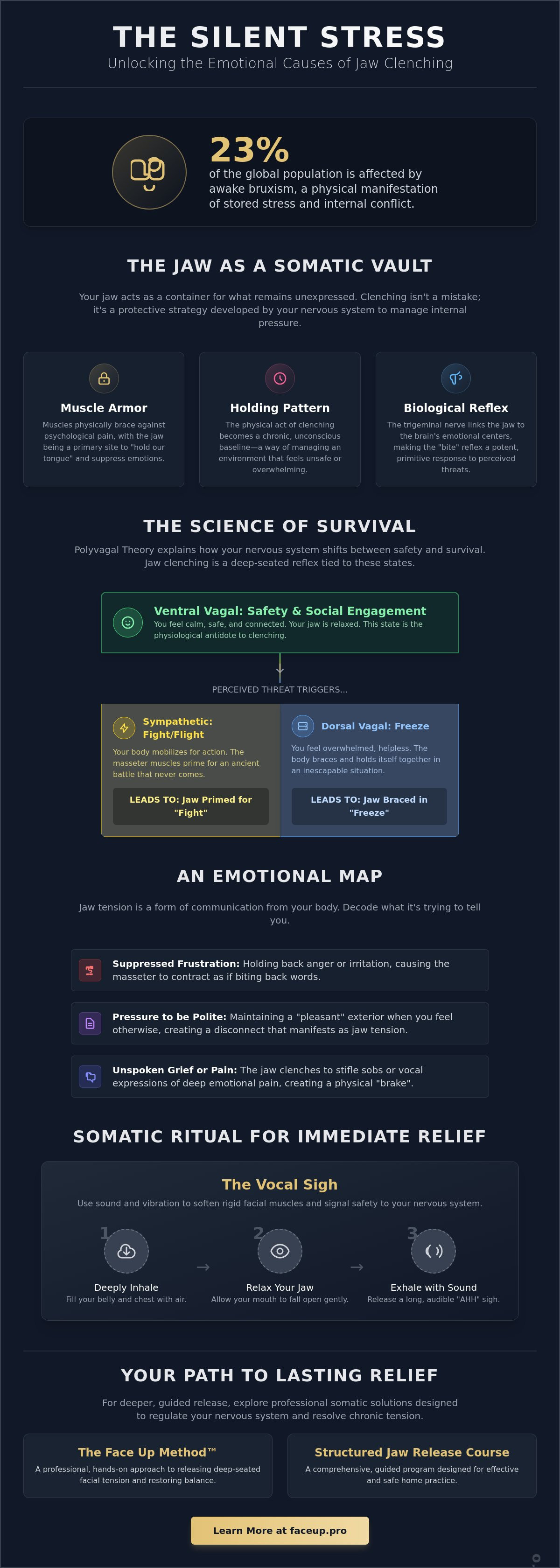
What if the tightness in your jaw isn't just a physical reaction to a long day, but the physical architecture of every word you've ever chosen not to say? Many of us wake up with facial pain or a dull headache, feeling as though our faces are locked in a state of permanent defense. It's a frustrating cycle where painkillers often fail to provide relief. This tension frequently stems from the deep-seated emotional causes of jaw clenching, where the body effectively holds its tongue against perceived threats or internal conflict. You're not alone in this experience; research from April 2026 indicates that awake bruxism now affects approximately 23% of the global population, reflecting a widespread struggle with stored stress.
This guide offers a professional roadmap to understanding the specific emotions tied to your jaw. You'll learn how to identify the unspoken stress held in your face and discover non-invasive somatic techniques to find lasting relief. We'll explore the clinical shift toward bottom-up processing, a method that focuses on nervous system regulation rather than just managing surface symptoms. By connecting your physical tension to your mental state, you can move toward a more expressive, relaxed, and balanced life. We invite you to join a community of professionals dedicated to a high standard of well-being and a clear path forward.
Key Takeaways
- Recognize how your body constructs "muscle armor" to shield you from stress by identifying the specific emotional causes of jaw clenching.
- Gain insight into the Polyvagal Theory to understand why your masseter muscles stay primed for a "fight" response that never arrives.
- Decode what your tension is trying to communicate, from the pressure to maintain a polite exterior to the weight of suppressed frustration.
- Implement immediate somatic rituals like the "Vocal Sigh" to use sound and vibration as a tool for softening rigid facial muscles.
- Explore professional pathways for relief through the Face Up Method™ or a structured Jaw Release Course designed for home practice.
The Jaw as a Somatic Vault: Understanding the Mind-Body Link
Bruxism is often dismissed as a mechanical dental habit, yet in the landscape of somatic work, we recognize it as a sophisticated tool for emotional regulation. Your jaw acts as a container for what remains unexpressed. When we look at The Jaw as a Somatic Vault, we see that the physical act of clenching is frequently a "holding" pattern. It's the body's way of managing internal pressure when the environment feels unsafe or overwhelming. Delving into the emotional causes of jaw clenching reveals that this tension isn't a mistake; it's a protective strategy developed by your nervous system.
The concept of "body armor" describes how our muscles physically brace against psychological pain. The jaw is a primary site for this armor because it serves as the gateway for communication. When we suppress anger, grief, or even the desire to speak up, the masseter muscles contract to "hold our tongue." This creates a chronic state of readiness in the Temporomandibular Joint (TMJ), which functions as the emotional hinge of the face. Over time, this bracing becomes an unconscious baseline, leaving you feeling locked in a cycle of silent stress.
Why Your Brain Chooses Your Jaw
The connection between your jaw and your emotional state is biological. The trigeminal nerve, which controls the muscles of mastication, has a direct pathway to the brain's emotional centers. This is why the "bite" reflex is such a potent survival mechanism. It's a primitive response to threat. Distinguishing these emotional causes of jaw clenching from functional habits, like chewing gum, is essential for finding lasting relief. While functional tension is temporary, emotional clenching is a persistent signal from the brain that it's still in a state of defense.
The Cost of a Locked Jaw
A locked jaw carries costs that extend far beyond physical discomfort. It significantly impacts your facial aesthetics, often leading to a widened lower face or premature signs of aging as the muscles remain chronically shortened. Beyond the face, jaw tension ripples through the entire body. It restricts the quality of your breath and often mirrors tension in the pelvic floor through the "deep front line" of fascia. For those seeking to address the physical symptoms while exploring the emotional roots, professional TMJ massage therapy offers a vital bridge to restoring balance and fluidity to your facial structure.
The Science of Survival: Polyvagal Theory and the Clenching Reflex
To truly understand the emotional causes of jaw clenching, we must look toward the nervous system. Polyvagal Theory explains how our body shifts between states of safety and survival. In this framework, the jaw is a primary responder. It's often the first place we "armour" ourselves when we perceive a threat. This physiological bracing isn't a conscious choice; it's a deep-seated reflex designed to protect us from harm. When your nervous system senses danger, it prioritizes survival over relaxation, leading to the chronic tension many of us feel daily.
When the nervous system enters a "fight" state, the masseter muscles prime for an ancient battle. Even in a modern office or a difficult conversation, your body prepares to bite or defend. Conversely, the "freeze" response manifests as a bracing clench. It's a way to hold yourself together in an environment that feels overwhelming or inescapable. Research from Johns Hopkins Medicine helps us create An Emotional Map, attributing this tension to deep-seated frustration, pain, or nervous tension. This chronic clenching creates a feedback loop; tight muscles send a constant signal to the brain that the environment is unsafe, keeping you in a state of high alert.
The Masseter: The Strongest Muscle of Emotion
The masseter is arguably the strongest muscle in the human body relative to its size. It can exert immense pressure, which is why chronic clenching leads to significant facial pain and headaches. Beyond its strength, the jaw acts as a "brake" for the nervous system. By locking the jaw, the body attempts to stifle emotional outbursts or vocalizations that might feel socially dangerous. The ventral vagal state is the physiological antidote to this locking, representing a state of social engagement where the face is soft and the voice is melodic.
Breaking the Feedback Loop
Traditional talk therapy is a "top-down" approach that focuses on thoughts. While valuable, it often misses the "stuck" physical clench held in the tissues. Effective healing requires a "bottom-up" approach, moving from the body to the mind. By engaging in a Somatic Bodywork Session, you can begin to communicate directly with your nervous system. This professional intervention helps release the physical memory of stress, allowing the brain to finally register that the "battle" is over. It's about moving from survival into a state of calm efficiency and professional readiness.
An Emotional Map: What Your Jaw is Trying to Say
While general stress is a common label, your jaw often holds a much more specific emotional signature. It acts as a somatic archive for the nuances of your daily interactions. For many high-achieving professionals, clenching is the physical manifestation of the "Good Girl" or "Good Boy" syndrome. This involves the subconscious effort to maintain a composed, polite exterior even when internal pressures are mounting. You aren't just clenching; you're wearing a mask of professional decorum that requires the muscles of the face to remain in a state of rigid, unyielding stillness.
This tension also speaks to the burden of responsibility. When you feel you're "carrying the weight of the world" or managing complex global requirements, the mandible often bears that metaphorical load. It becomes a site of structural bracing. Similarly, the jaw is the primary physical boundary for your voice. When you feel the need to say "no" but social or professional obligations prevent it, the jaw clenches to physically bar the exit. To address this, many professionals turn to the NLP training provided by Toby and Kate McCartney to help navigate these internal protests and establish the boundaries needed to release that "locked" sensation.
Suppressed Anger and the 'Bite' Reflex
Anger is perhaps the most potent of the emotional causes of jaw clenching. From a somatic perspective, the jaw is the site of our primitive "bite" reflex. When we feel treated unfairly, silenced, or frustrated, our biology primes us for an aggressive response that we must then suppress to remain socially acceptable. This suppression is a primary driver for bruxism. According to the Mayo Clinic, identifying the emotional causes of jaw clenching such as anger or frustration is a critical step in managing the condition. In traditional somatic views, this is often linked to the liver meridian, which governs the smooth flow of energy and is frequently disrupted by "stuck" irritation.
The Fear of Expression
The jaw also serves as a protective gate against the fear of being "too much." Many people clench to prevent themselves from "letting the cat out of the bag" or expressing emotions that feel too loud or chaotic for their environment. This fear of vulnerability is stored directly in the jaw hinge. When you begin to release this area through somatic work, it's common to experience a sudden emotional catharsis. Releasing the physical lock often releases the emotional one, leading to unexpected tears or a newfound ability to speak your truth with clarity and confidence. This progression is a natural part of moving toward a more transparent and integrated professional life.
Somatic Rituals: 5 Steps to Release Emotional Jaw Tension
Addressing the emotional causes of jaw clenching requires a transition from intellectual understanding to active, bodily participation. It's about moving from the "why" to the "how." These somatic rituals are designed to interrupt the nervous system's bracing patterns and invite a state of professional ease. By engaging with these steps, you provide your body with the safety it needs to let go of stored stress.
- Step 1: Mindful Observation. Throughout your day, identify the specific "trigger" moments when your jaw begins to lock. Is it during a high-stakes meeting or while navigating digital administrative tasks? Recognition is the first step toward neurological change.
- Step 2: The Vocal Sigh. Inhale deeply and exhale with an audible "ahhh" sound. The physical vibration of your vocal cords helps loosen the masseter muscles from the inside out, signaling a shift away from the "fight" response.
- Step 3: Intra-oral Release. Using a clean thumb, apply gentle pressure to the inside of the cheek. This beginner's guide to buccal contact allows you to reach deep-seated tension that external massage often misses.
- Step 4: Tongue Positioning. Practice resting your tongue gently on the roof of your mouth, just behind your front teeth. This natural "resting" state discourages the mandible from clenching and promotes better breath quality.
- Step 5: The Face Up Ritual. Combine rhythmic, diaphragmatic breathing with gentle somatic touch. This final step integrates all previous elements to anchor a sense of calm within your facial structure.
Creating a Safe Space for Release
Environment plays a critical role when performing emotional jaw work. The Face Up philosophy emphasizes a non-invasive, gentle approach that respects the body's boundaries. To facilitate a deeper release, many find it helpful to use a specialized TMJ massage tool. This allows for precision and control, ensuring the experience remains supportive rather than overwhelming. Creating this dedicated space helps the brain recognize that it's no longer in a state of defense.
Consistency Over Intensity
In the landscape of somatic healing, five minutes of daily ritual is far more effective than a lengthy, infrequent session. Integrating these steps into your morning or evening routine builds a sustainable habit of nervous system regulation. The goal of this practice is to cultivate a permanent felt sense of safety, not just to perform a temporary physical stretch. To support your journey with expert guidance, we invite you to explore the Face Up App Subscription for daily somatic protocols tailored to your professional lifestyle.
Mastering the Face Up Method™: Professional Somatic Solutions
The Face Up Method™ represents a sophisticated shift in how we approach facial tension and bruxism. While many traditional paths rely on invasive procedures like Botox to temporarily paralyze the muscles, our approach focuses on the root emotional causes of jaw clenching. We view the face as a living map of your internal state. By utilizing deep tissue and intra-oral techniques, the Face Up Method™ facilitates a profound release of the fascial and emotional armor we've discussed. It's a holistic alternative that respects the body's natural intelligence, offering a clear path forward for professionals who value both integrity and effective results.
For those seeking a structured environment to begin this work at home, the Jaw Release Course offers a comprehensive protocol. It guides you through the nuances of somatic release at your own pace, ensuring you have the tools to manage stress as it arises. To maintain these results, the Face Up App Subscription provides a daily rhythmic gateway to guided somatic rituals. These digital solutions ensure that nervous system regulation remains a consistent part of your professional lifestyle. Additionally, we invite beauty and wellness professionals to explore our Face Up Method Certification, joining a global community of practitioners dedicated to these high-standard somatic standards.
The Power of Somatic Facial Sculpting
Releasing emotional tension does more than just ease pain; it naturally lifts and sculpts the face. When the masseter and surrounding tissues are no longer locked in a defensive clench, the facial structure regains its natural fluidity and grace. A standard facial often focuses on the skin's surface, but a Face Up somatic treatment works from the inside out. It addresses the deep-seated holding patterns that contribute to a heavy or "locked" appearance. You can find a reliable partner for this journey by searching our Practitioner Directory Listing to connect with a certified expert in your jurisdiction.
Your Journey to a Tension-Free Life
True relief comes when we acknowledge the deep connection between emotional freedom and physical jaw health. Throughout this guide, we've explored how the jaw acts as a vault for unspoken truths and survival reflexes. By choosing to "Face Up" to these internal states, you move beyond mere symptom management and toward a state of calm efficiency. It's time to release the "unspoken" stress that no longer serves you. We're here to facilitate that transition with professional authority and welcoming accessibility. Explore our Jaw Release Course for lasting freedom and step into a more expressive, balanced version of yourself.
Reclaiming Your Expressive Freedom
Understanding the emotional causes of jaw clenching is the essential first step toward a more integrated and transparent professional life. By recognizing how your body utilizes the masseter as a defensive shield, you can begin to dismantle the "body armor" that holds your unspoken stress. We've explored how somatic rituals and nervous system regulation move you beyond surface-level symptoms toward genuine, long-term relief. Releasing this tension doesn't just ease pain; it restores your natural facial architecture and your ability to communicate with confidence.
Founded by Olga Newman, a specialist in somatic bodywork, the Face Up Method™ is trusted by practitioners globally for its non-invasive approach to facial sculpting. Our proprietary "Jaw Release" protocol has already been used by thousands to restore balance and fluidity to their lives. We invite you into our proprietary ecosystem to find a clear path forward. Release your jaw and rediscover your voice with the Face Up Method™. You deserve to move through the world with a face that feels soft, open, and ready for connection. Step into your new chapter of clarity and ease today.
Frequently Asked Questions
Can emotional trauma cause permanent jaw clenching?
Emotional trauma can lead to chronic clenching patterns, but the body's neuroplasticity means these habits aren't necessarily permanent. Somatic work focuses on rewiring the nervous system to release "stuck" survival responses. By addressing the deep-seated emotional causes of jaw clenching, you can retrain the masseter muscles to find a neutral resting state. It's a process of moving from a state of constant defense toward a state of safety and ease.
How do I know if my jaw pain is emotional or dental?
Dental issues often involve specific tooth pain or visible wear on enamel, while emotional tension usually presents as a dull, diffuse ache that worsens during periods of high professional stress. If your dentist finds no structural cause, the root is likely somatic. Emotional tension often feels like "locked" energy in the cheeks and temples. It's helpful to observe whether the pain fluctuates based on your mental state or daily interactions.
Why do I clench my jaw more at night even when I'm relaxed?
Nighttime clenching occurs because the subconscious mind continues to process the day's unresolved stressors while the conscious mind is asleep. Your nervous system may still be in a state of high alert, even if you feel physically relaxed in bed. This is why sleep bruxism affects approximately 21% of people globally. It's the body's way of "chewing through" the unspoken tension it couldn't address during your waking hours.
What specific emotions are stored in the jaw muscles?
The jaw is a primary site for suppressed anger, frustration, and the fear of being "too much." It also stores the weight of heavy responsibilities and the struggle to maintain personal boundaries. When we "hold our tongue" or suppress a natural "bite" reflex in response to unfairness, that energy is stored directly in the facial fascia. Identifying these specific emotional causes of jaw clenching allows for a more targeted and effective somatic release.
Can somatic therapy help with TMJ without using a mouthguard?
Somatic therapy offers a holistic alternative by addressing the underlying nervous system dysregulation rather than just protecting the teeth. While mouthguards act as a physical barrier, somatic work aims to eliminate the urge to clench entirely. By releasing the fascial armor and processing stored stress, many individuals find they can reduce their reliance on dental appliances. It's a proactive approach to long-term structural health and professional well-being.
Is there a link between jaw clenching and the 'good girl' syndrome?
How long does it take to see results from somatic jaw exercises?
Many people experience a noticeable shift in facial softness and a reduction in pain after just one or two weeks of consistent, daily practice. Somatic healing is a cumulative process that prioritizes consistency over intensity. While a single session can provide immediate temporary relief, lasting neurological change typically requires a commitment to short, daily rituals. Over time, these practices anchor a permanent sense of safety within your facial structure.
Can Botox for the jaw prevent me from processing my emotions?
Some somatic practitioners believe that paralyzing the muscles with Botox can interfere with the body's natural feedback loop for emotional processing. The muscles of the face are deeply intertwined with our ability to feel and express internal states. By silencing the jaw's physical signals, you might inadvertently mask the very emotional messages your body is trying to send. A somatic approach encourages listening to the tension rather than merely silencing it.


