
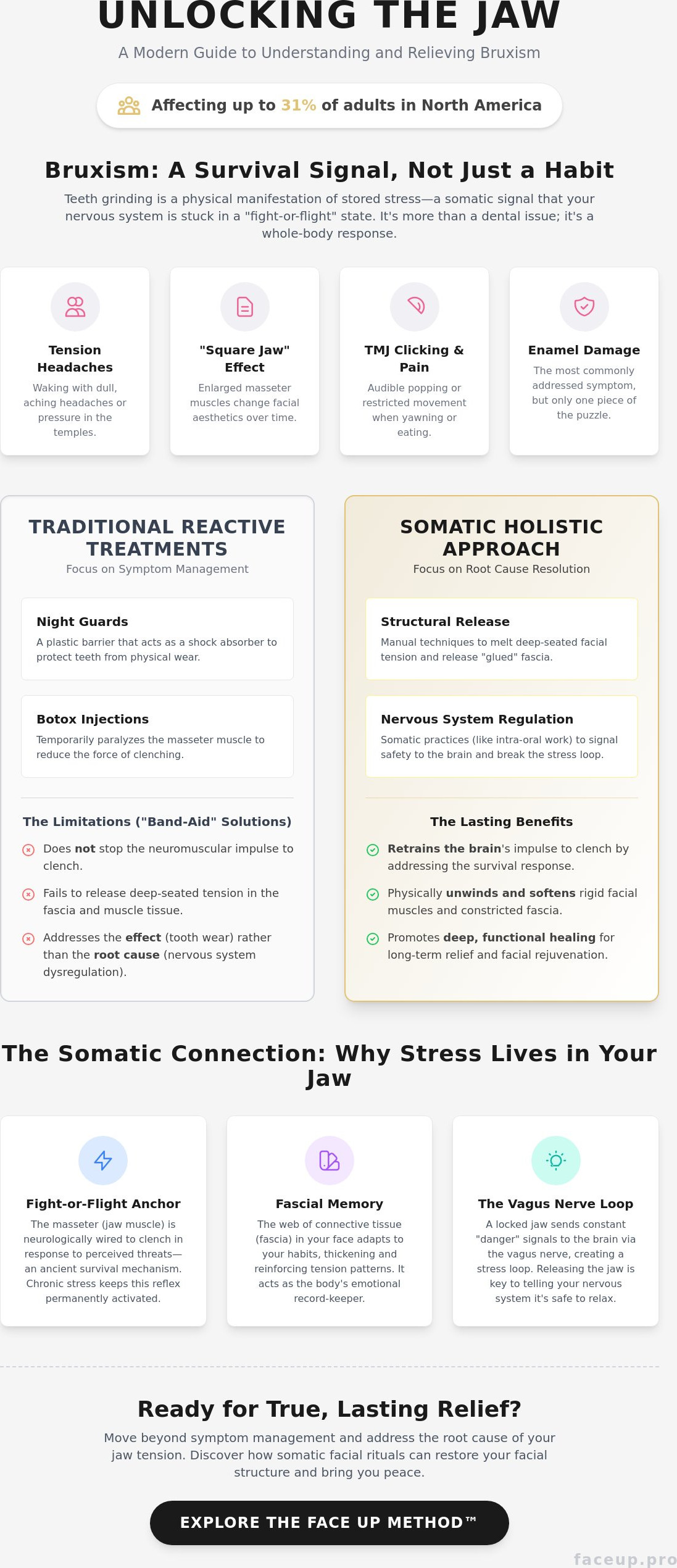
Teeth grinding isn't a dental malfunction; it's a somatic survival response stored deep within your facial tissues. You've likely spent years waking up with tension headaches or worrying about permanent enamel damage. It's frustrating to rely on "Band-Aid" solutions like night guards that protect your teeth but leave your jaw feeling just as locked as before. You might even notice your facial symmetry changing as overactive masseter muscles create a wider, more tense appearance. With sleep bruxism affecting up to 31% of adults in North America, the need for a root-cause solution has never been more clear.
Finding lasting, natural bruxism relief requires moving beyond the surface to regulate your nervous system. By addressing the emotional and muscular roots of this tension, you can reclaim your rest and your health. This article explores how somatic facial rituals help you release the "survival" energy stored in your jaw. You'll discover how to stop the cycle of grinding, achieve a more relaxed facial structure, and finally wake up feeling refreshed and tension-free.
Key Takeaways
- Redefine bruxism as a somatic survival signal to move beyond the limitations of protective night guards and reactive treatments.
- Explore the connection between the fight-or-flight response and the masseter muscle to achieve true natural bruxism relief.
- Gain insight into specific structural release techniques, including intra-oral exploration, for melting deep-seated facial tension.
- Learn how to differentiate between temporary lifestyle tweaks and the lasting benefits of the Face Up Method™.
- Discover how to progress from personal rituals to professional somatic bodywork for complete jaw restoration and facial rejuvenation.
Beyond the Mouthguard: What is Natural Bruxism Relief?
Many people view Bruxism as a simple dental habit. However, viewing it strictly through the lens of tooth wear ignores the complex neurological and emotional patterns behind the clench. True natural bruxism relief isn't about placing a plastic barrier between your teeth. It's about understanding why your body feels the need to guard itself in the first place. This tension is a somatic signal. It's a physical manifestation of stored stress and nervous system dysregulation that requires a holistic approach to resolve.
The Symptoms You Shouldn't Ignore
Identifying the signs of chronic tension is the first step toward recovery. You might wake up with dull, aching headaches or feel a constant pressure in your temples. Over time, this repetitive muscle engagement can lead to the "Square Jaw" effect, where the masseter muscles become enlarged, changing your facial aesthetics. You may also notice audible clicking or popping in the TMJ, alongside restricted movement that makes simple actions like yawning feel uncomfortable. These aren't just minor annoyances. They're indicators that your body is stuck in a cycle of high-alert tension.
Why Traditional Dentistry Often Misses the Mark
Conventional dentistry focuses on dental mechanics. While protecting your teeth is vital, it's only one piece of the puzzle. Mouthguards are essentially shock absorbers; they protect the enamel but don't stop the neuromuscular firing. This is the difference between symptom management and root cause resolution. By moving into the world of somatic bodywork, we address the underlying "survival" response. The Face Up philosophy encourages you to stop fighting your body. Instead, start listening to the signals it sends through the jaw. This shift allows for a transition from mechanical protection to deep, functional healing and true natural bruxism relief.
The Somatic Connection: Why Stress Lives in Your Jaw
The jaw is the body's primary anchor for the fight-or-flight response. When you perceive a threat, your brain signals the masseter muscles to clench. This prepares you to bite or defend yourself. It is an ancient survival mechanism. For many, this reflex becomes a permanent state, creating a loop where the body stays stuck in defense mode. This chronic activation is why many people seek bruxism treatment that goes beyond the surface. The masseter muscle doesn't just move the bone; it stores emotional trauma and suppressed expression. If you've ever swallowed your words or gritted your teeth through a difficult situation, that energy often remains in the tissue.
There is also a fascinating structural relationship between the pelvic floor and the jaw, known in somatic circles as the deep front line. These two areas are developmentally and functionally linked. Tension in one often mirrors tension in the other. This is why just relaxing your mind rarely solves the problem. When the fascia is constricted, it acts like a tight suit that keeps the muscles in a state of perpetual contraction. True natural bruxism relief requires a physical unwinding of these deep connections through bottom-up processing, addressing the body's internal sensations to signal safety to the brain.
The Vagus Nerve and Jaw Tension
Your cranial nerves, particularly the vagus nerve, play a massive role in your ability to relax your face. There is a constant feedback loop between a tight jaw and a stressed brain. When your jaw is locked, it sends a signal to your nervous system that you are still in danger. By using somatic awareness, you can begin to unlearn the clenching reflex. You can explore these connections deeper through a somatic bodywork session designed to reset the nervous system and break the cycle of tension.
Fascial Memory in the Face
Fascia acts as the body's emotional record-keeper. It is a web of connective tissue that adapts to your habits. Long-term bruxers often have thickened facial tissues because the fascia has reinforced itself to support the constant pressure of clenching. Somatic facial therapy helps melt these rigid patterns. It encourages the tissue to return to a state of fluidity. This process isn't just about comfort; it's about reclaiming the natural contours of your face and releasing the history stored in your skin.
Natural Remedies vs. Professional Somatic Techniques
Seeking natural bruxism relief often begins with small changes in your daily routine. While these adjustments provide a foundation for healing, it's essential to understand the difference between managing symptoms and reorganizing the tissue itself. Many people find temporary comfort through lifestyle and home remedies like warm compresses or herbal teas. These methods help soothe the nervous system, but they rarely reach the deep, structural layers of the masseter and temporalis muscles. To truly stop the cycle of grinding, you must move beyond passive relaxation into active, manual manipulation of the facial fascia.
Manual release is necessary because chronic clenching physically alters the state of your connective tissue. As discussed in previous sections, when fascia becomes "stuck," it creates a physical memory of tension that persists even when you aren't actively stressed. Professional somatic techniques work by melting these adhesions through precise pressure and movement. This isn't just about fixing a jaw problem; it's about transitioning into a daily wellness ritual that honors the body's need for space and ease. This philosophy of intentional rest is also central to Slow Travel Repeat, a resource for slow living and wellness retreats. By incorporating these practices, you transform your approach from a reactive struggle into a proactive journey of facial rejuvenation.
The Role of Diet and Supplements
Nutrition plays a supportive role in reducing muscle hypertonicity. Magnesium is particularly effective, as it helps regulate muscle contractions and supports nervous system calm. Chronic clenchers often benefit from increased magnesium intake to prevent the spasms that lead to nighttime grinding. Anti-inflammatory foods, such as those rich in omega-3 fatty acids, can also soothe the inflammation often present in the TMJ. Additionally, hydration is critical for fascial health. Without adequate water, the fascia in your face loses its ability to glide, which further traps tension in the jaw and neck.
Why Manual Release Wins Over Passive Tools
Passive tools and generic exercises often fail to address the specific needs of a locked jaw. For example, "jaw exercise balls" can actually worsen bruxism by overtraining the masseter muscles, leading to more hypertrophy and increased clenching pressure. True relief comes from precision and targeted release. Using a specialized TMJ massage tool allows you to find and release specific trigger points within the jaw that generic tools miss.
- Structural Reorganization: Manual sculpting encourages the muscles to lengthen and the fascia to soften.
- Nervous System Feedback: Direct, mindful pressure signals to the brain that it's safe to let go of the survival clench.
- Precision: Targeting the internal and external jaw muscles ensures you aren't just rubbing the surface, but actually changing the architecture of your face.
This targeted approach ensures long-term natural bruxism relief by addressing the physical reality of the tissue while calming the mind's protective impulses.
5 Steps to Natural Bruxism Relief with the Face Up Method™
Transitioning from chronic clenching to functional ease requires a structured approach that respects the complexity of the facial architecture. While superficial stretches offer momentary comfort, the Face Up Method™ focuses on a deep, five-step reorganization of the jaw's somatic environment. This process moves beyond the surface to address the "survival" energy trapped in the deeper muscle layers. By following these steps, you can achieve natural bruxism relief that lasts because it retrains both the tissue and the nervous system.
- Step 1: External Masseter Release. Begin by melting the surface tension. Use slow, sinking pressure to soften the masseter muscle, which is often the most overworked muscle in the body for those who clench.
- Step 2: Intra-oral (Buccal) Exploration. This is the key to deep change. By accessing the muscles from the inside, you can release the lateral and medial pterygoids, which are nearly impossible to reach externally.
- Step 3: Temporal Decompression. Address the "vice-grip" headaches by releasing the fascia around the temples. This step helps expand the space around the skull, relieving the pressure that often accompanies morning bruxism.
- Step 4: Somatic Breathwork. Use specific breathing patterns to signal safety to your nervous system. This "bottom-up" approach tells your brain that the threat has passed and it's safe to let go of the jaw's defensive posture.
- Step 5: Daily Integration. Prevent the return of the clench by incorporating short, mindful checks throughout the day. Consistency creates a new baseline of relaxation for your facial muscles.
The Power of Buccal Massage
Intra-oral work, or buccal massage, is the gold standard for anyone seeking natural bruxism relief. Most generic exercises fail because they can't reach the pterygoid muscles, which are responsible for the side-to-side grinding motion. Safely releasing these muscles from inside the mouth creates immediate space and allows the jaw to hang in its natural, relaxed position. This technique doesn't just feel better; it physically changes the jaw's resting state by melting the internal adhesions that keep the joint locked.
Creating a Nightly Jaw Release Ritual
Your pre-sleep environment determines the quality of your jaw's rest. You can use the Face Up App to guide your nightly somatic practice, ensuring you don't carry the day's stress into your sleep. A dedicated five-minute routine clears the emotional "residue" from your face, signaling to your body that it's time to transition from defense to recovery. Remember that consistency is more important than intensity. Gentle, daily release builds a more resilient and relaxed facial structure over time. Begin your transformation today by enrolling in our comprehensive Jaw Release Course.
Taking the Next Step: From Self-Care to Professional Mastery
Relief is only the beginning of your journey toward facial ease. Once you've addressed the immediate discomfort of clenching, you enter a sophisticated phase of facial rejuvenation. Achieving natural bruxism relief creates a blank canvas for structural sculpting. When the jaw is no longer locked in a defensive state, the face naturally softens, lifts, and regains its symmetry. This is where self-care evolves into professional mastery. By working with a certified Face Up practitioner for a Somatic Bodywork Session, you can access advanced techniques that provide deeper reorganization of the facial tissues. These sessions move beyond basic release, offering a tailored approach to your unique somatic patterns and aesthetic goals.
Mastering your own jaw health empowers you to take control of your long-term well-being. It's about more than just stopping an unconscious habit; it's about understanding the complex language of your body. Education is the most effective tool for maintaining these results. Through specialized training and professional guidance, you can integrate these rituals into a holistic lifestyle that prioritizes both function and beauty. This proactive management ensures that your jaw remains a site of ease rather than a reservoir for stress.
The Face Up Jaw Release Course
The Jaw Release Course offers a comprehensive deep dive into the anatomy and somatics of the jaw. You'll master the specific rituals that stop grinding at its source by addressing the neurological triggers discussed in earlier sections. This isn't a temporary fix. It's a foundational shift in how you relate to your face. By integrating these practices into your daily life, you ensure that tension doesn't have the chance to rebuild. It becomes a seamless part of your holistic beauty routine, allowing you to maintain a slimmer, more relaxed facial structure from the comfort of home.
Becoming a Certified Practitioner
There's a growing global demand for wellness professionals who understand the intersection of aesthetics and nervous system regulation. As more individuals seek root-cause solutions, the need for tmj massage therapy continues to rise. Obtaining a facial sculpting certification allows you to bridge the gap between traditional beauty treatments and somatic health. This professional path enables you to help others achieve the same natural bruxism relief and facial restoration you've experienced.
By joining our global community, you gain access to a Practitioner Directory Listing, connecting you with clients who are searching for verified, high-standard somatic care. Whether you're looking to enhance your current practice or embark on a new professional advancement, the Face Up Method Certification provides the tools to facilitate deep, lasting transformation. You'll become a facilitator of order and reliability in an industry that is increasingly moving toward holistic, evidence-based wellness.
Reclaiming Your Natural State of Ease
True healing begins when you stop viewing your jaw as a mechanical problem and start treating it as a somatic environment to be nurtured. By addressing the deep emotional and muscular roots of tension, you move beyond temporary fixes toward a sustainable path of restoration. You've learned that the jaw is an anchor for the body's survival response, and that manual release is the key to melting long-standing patterns of clenching.
Embracing this holistic approach provides more than just natural bruxism relief; it offers a foundation for lasting facial rejuvenation and nervous system calm. Whether you choose to dive deep into our specialized Jaw Release Course or connect with an expert through our Global Directory of Certified Practitioners, the path to a relaxed face is within your reach. Our somatic approach to non-invasive beauty ensures you don't just look better, but feel more grounded in your own skin. Start your journey to a tension-free jaw with the Face Up App and rediscover the comfort your body was meant to hold. You deserve to wake up feeling refreshed and renewed every single day.
Frequently Asked Questions
Can you actually stop teeth grinding naturally without a mouthguard?
You can stop teeth grinding naturally by retraining the neuromuscular pathways that trigger the clench. While a mouthguard acts as a protective barrier for your enamel, it doesn't address the underlying somatic tension. Achieving natural bruxism relief involves using techniques that signal safety to your nervous system, effectively "turning off" the impulse to grind. By focusing on the root cause rather than just the dental symptoms, many individuals find they can eventually reduce or eliminate their reliance on plastic guards.
How long does it take to see results from somatic jaw release?
Most people experience a noticeable reduction in tension immediately after their first somatic session or ritual. However, lasting structural change typically requires consistent practice over several weeks as the fascia begins to reorganize and the nervous system adopts a new baseline. For those with chronic clenching habits, a daily commitment to rituals found in the Jaw Release Course helps solidify these results. This leads to a permanent shift in how the jaw carries stress.
Is intra-oral massage safe to do on yourself at home?
Intra-oral massage is safe and highly effective when performed with clean hands and proper guidance. This technique allows you to reach the internal pterygoid muscles that are inaccessible from the outside of the face. It's important to use gentle, mindful pressure rather than forcing the tissue to release. If you're unsure of the anatomy, following a structured program like the Face Up App Subscription ensures you're applying the correct somatic principles for a safe experience.
Why does my jaw feel tighter when I'm stressed, even if I'm not grinding?
Your jaw feels tight because it serves as a primary anchor for the body's defensive response. Even if you aren't actively grinding your teeth, your masseter muscles may still be in a state of "bracing" in anticipation of a challenge. This is a survival reflex controlled by the autonomic nervous system. Somatic work helps you recognize this bracing early. This allows you to release the tension before it develops into a headache or chronic pain.
Can natural bruxism relief help slim my face or change my jawline?
Yes, releasing chronic jaw tension often leads to a slimmer and more contoured facial appearance. When the masseter muscles are constantly overactive, they undergo hypertrophy, which creates a wider or more "square" jawline. By achieving natural bruxism relief, these muscles can finally rest and return to their natural size. This reduction in bulk, combined with fascial sculpting, often results in a more balanced facial structure without the need for invasive procedures.
What is the best time of day to perform jaw release rituals?
The most effective times for jaw release are immediately upon waking and right before sleep. Morning rituals help clear any tension that accumulated during the night, setting a relaxed tone for the day ahead. Evening rituals are essential for "clearing" the day's emotional and physical stress. This prevents that energy from manifesting as sleep bruxism. Consistency in these twice-daily rituals creates a rhythmic gateway to long-term nervous system regulation.
Does the Face Up Method work for both awake and sleep bruxism?
The Face Up Method is designed to address the somatic roots of both awake and sleep bruxism. Awake bruxism is often a response to cognitive load and daily stress, while sleep bruxism is frequently linked to deeper nervous system dysregulation. By retraining the facial tissues and calming the vagus nerve, these techniques provide a comprehensive solution. The goal is to create a state of jaw awareness that persists throughout the entire 24-hour cycle.
What should I do if my jaw clicks or pops during these exercises?
If your jaw clicks or pops, you should reduce the range of motion and move with even greater gentleness. These sounds often indicate that the TMJ disc is slightly displaced or that the surrounding muscles are pulling the joint out of alignment. Somatic rituals focus on softening those pulling muscles to allow the joint to track more smoothly. If clicking is accompanied by sharp pain, it's wise to consult a professional from our Practitioner Directory Listing for a personalized assessment.


