
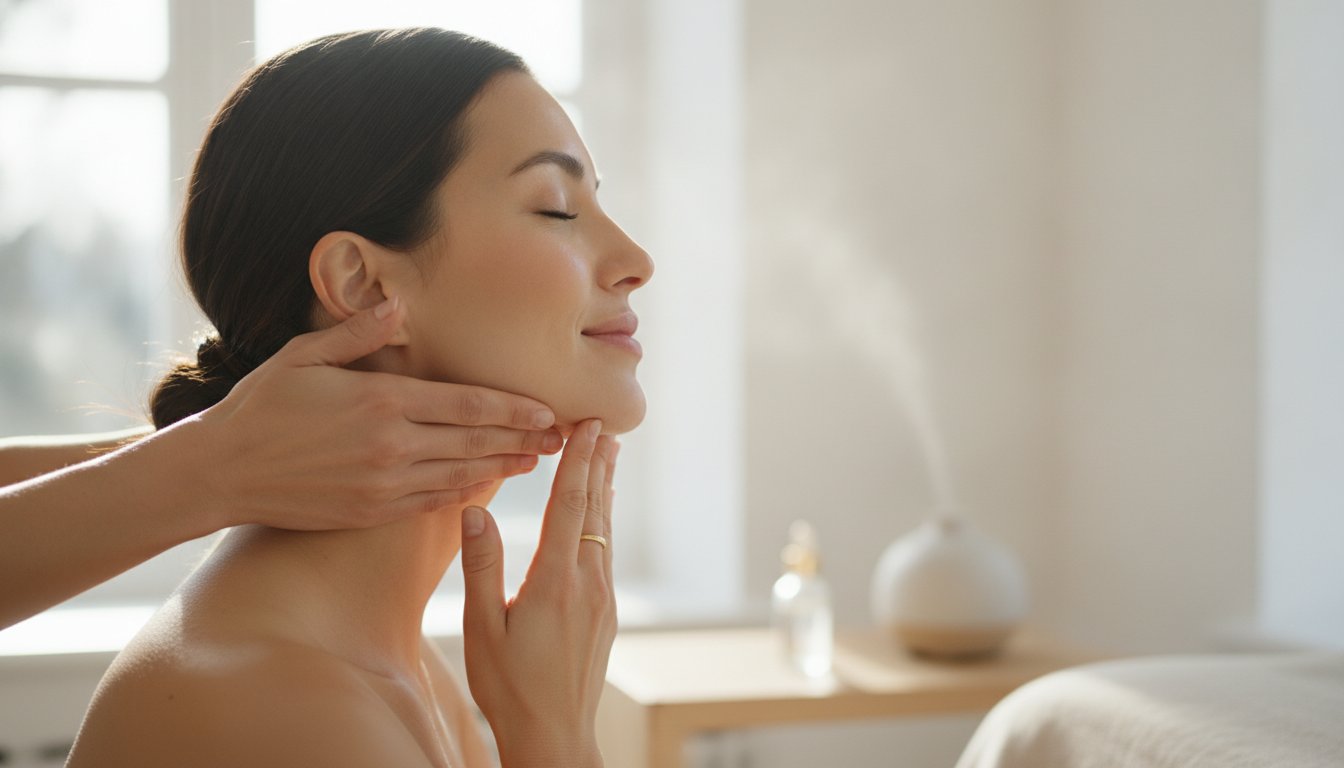
What if the persistent puffiness you see in the mirror isn't just a sign of a late night, but a physical manifestation of stored emotional tension? Your face acts as a living map of your nervous system, often holding onto every deadline and unspoken stress within its delicate tissues. It's common to feel frustrated by a heavy jawline or the visible signs of fatigue that topical creams simply cannot reach. You deserve a sophisticated approach to self-care that addresses both your aesthetic goals and your internal well-being.
By mastering lymphatic drainage facial massage, you can effectively release this "stress fluid," reduce inflammation, and achieve a naturally sculpted appearance. This article provides a professional-grade roadmap to understanding facial anatomy and somatic release. We'll explore how to transition from confusion over online techniques to a repeatable, expert-level ritual that calms your nervous system. You'll discover the precise methods needed to define your jawline and detoxify your skin, establishing a sense of calm efficiency that radiates from the inside out.
Key Takeaways
- Learn the biological "No Pump" reality and why your face requires manual assistance to clear metabolic waste efficiently.
- Understand the "Nickel-Weight" rule to ensure your lymphatic drainage facial massage uses the precise pressure needed for results.
- Identify how chronic stress leads to "Facial Armoring," creating physical blocks that hinder your natural detoxification process.
- Master a professional step-by-step ritual that opens the body's main terminals to achieve visible, long-lasting jawline definition.
- Discover how to transition from basic self-care to the advanced sculpting techniques found within the proprietary Face Up Method™.
The Science of Stagnation: What is Lymphatic Drainage Facial Massage?
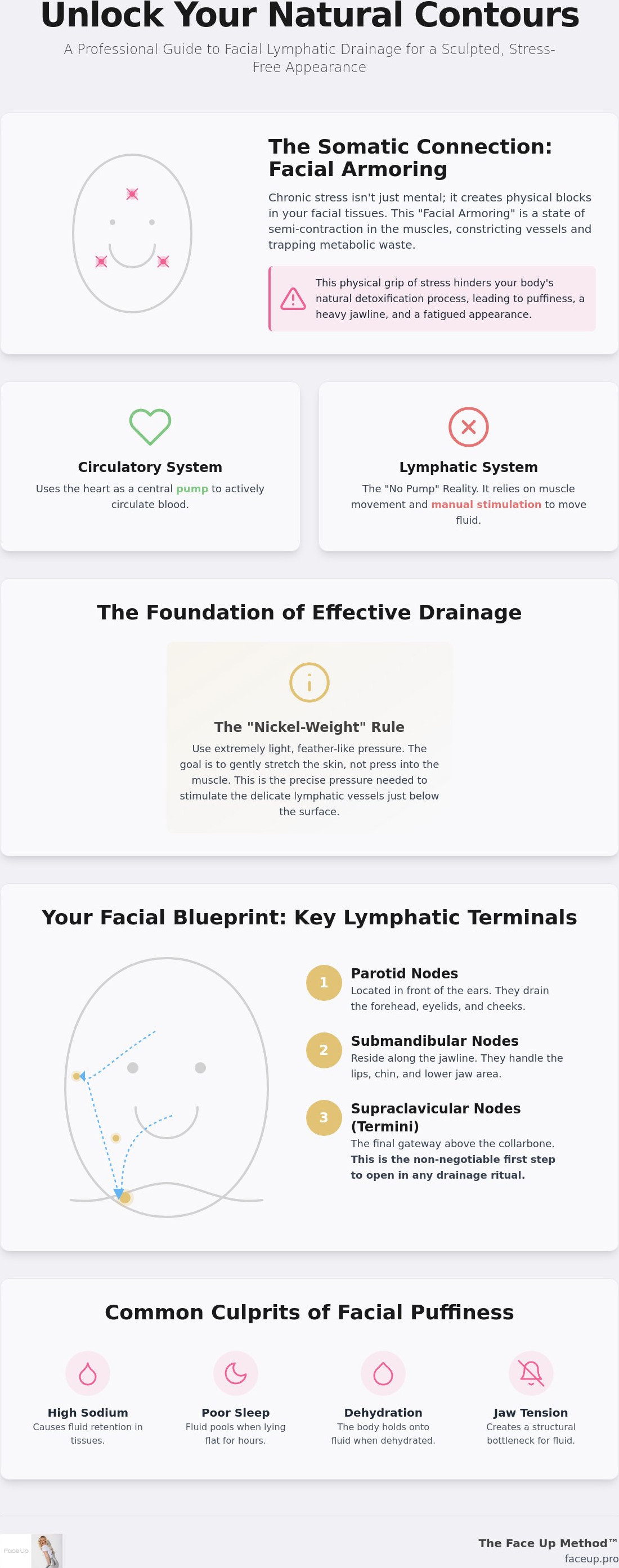
The lymphatic system is a quiet, intricate network that functions as the body's internal filtration system. Unlike the cardiovascular system, which utilizes the heart as a central pump, the lymphatic system lacks a mechanical engine to move fluid. It relies entirely on muscle movement, breathing, and external stimulation to transport interstitial fluid back into the bloodstream. This "No Pump" reality means that the face, which is often subject to horizontal positioning during sleep and minimal muscular exertion, frequently becomes a site for metabolic waste to settle. A lymphatic drainage facial massage is a rhythmic, feather-light technique designed specifically to manually encourage this flow, clearing the path for cellular detoxification.
While many approach this practice for its immediate aesthetic benefits, it's essential to distinguish between purely cosmetic drainage and somatic drainage. Cosmetic techniques often focus on surface-level puffiness. Somatic drainage, however, bridges the gap between the physical and the emotional. It recognizes that the face holds onto stress as much as the mind does. The foundation of these techniques lies in Manual lymphatic drainage (MLD), a medically recognized practice developed to encourage the natural drainage of the lymph, which we adapt here for deep, holistic rejuvenation.
Why Your Face Holds Fluid: The Causes of Puffiness
Puffiness isn't an isolated event; it's a symptom of lifestyle and environmental factors. High sodium intake, inconsistent sleep patterns, and dehydration all contribute to the accumulation of fluid in the tissues. Gravity plays a significant role as well. When you lie flat for hours, fluid pools in the delicate areas around the eyes and jawline. Physical obstructions also hinder flow. For instance, chronic jaw tension can create a structural bottleneck. Integrating tmj massage therapy into your routine can help release these blocks, allowing fluid to transit more freely through the lower face and neck.
The Anatomy of Facial Lymph Nodes
To perform an effective lymphatic drainage facial massage, you must understand where the fluid is going. The face is serviced by several key clusters of lymph nodes. The parotid nodes sit just in front of the ears, the submandibular nodes reside along the jawline, and the supraclavicular nodes are located just above the collarbone.
- Parotid Nodes: These drain the forehead, eyelids, and cheeks.
- Submandibular Nodes: These handle the lips, chin, and lower jaw area.
- Supraclavicular Nodes: These act as the final gateway before fluid leaves the head and neck.
Opening the "drains" at the collarbone is the non-negotiable first step of any ritual because it ensures there is space for facial fluid to move downward. Without clearing these lower terminals, you're simply pushing fluid into a congested area. The termini are the specific anatomical points where the lymphatic vessels finally empty their contents back into the venous bloodstream, completing the cycle of detoxification.
The Somatic Connection: How Stress Impacts Lymphatic Flow
Your face is more than an aesthetic canvas; it's a somatic record of your internal state. While we often view puffiness as a localized issue, it's frequently the result of "Facial Armoring." This concept describes how chronic stress causes facial muscles to remain in a state of semi-contraction, creating physical blocks in the tissue. When you're stuck in a sympathetic nervous system state—commonly known as fight or flight—your body prioritizes core survival over peripheral maintenance. This physiological shift constricts the vessels and tightens the fascia, effectively trapping metabolic waste and hindering the natural lymphatic drainage facial massage process.
Emotional suppression often manifests as persistent tension in the jaw and neck. These areas act as high-traffic corridors for lymphatic fluid. If these pathways are physically compressed by tight muscles, the fluid has nowhere to go, leading to the "heavy" or fatigued look many professionals struggle to resolve. The Face Up Method™ addresses this by serving as a tool for nervous system regulation. It moves beyond the surface to release the physical grip of stress, allowing the body to return to a parasympathetic state where detoxification and healing can actually occur.
The Vagus Nerve and Facial Vitality
Releasing Emotional Tension Through the Jaw
The masseter muscle, located at the angle of the jaw, is the strongest muscle in the human body and a primary site for stored emotional stress. Whether you're clenching during the day or grinding at night, a tight jaw creates a structural dam that prevents fluid from draining into the neck terminals. Clearing this tension is a vital prerequisite for any effective sculpting work. Many find that completing a Jaw Release Course is the essential first step to achieving deep, lasting drainage. Once the jaw is mobile and relaxed, the lymphatic pathways open, allowing for a more defined and de-puffed appearance. For those ready to deepen their practice, exploring a Somatic Bodywork Session can provide the professional guidance needed to unlock these deep-seated emotional blocks.
Manual vs. Tool-Based Drainage: Choosing the Right Approach
Choosing between your hands and a collection of aesthetic tools is a pivotal decision in your self-care journey. While Gua Sha stones and jade rollers are visually appealing, they often lack the nuanced responsiveness required for a truly effective lymphatic drainage facial massage. The primary goal of drainage is to move fluid, not to knead muscle. To achieve this, you must adhere to the "Nickel-Weight" rule. Lymphatic vessels are delicate and sit just beneath the surface of the skin. If you apply pressure heavier than the weight of a nickel, you risk collapsing these vessels, which effectively stops the drainage process entirely.
Hands provide a level of somatic feedback that a stone or roller cannot replicate. Your fingertips act as diagnostic sensors, identifying areas of heat, stagnation, or hidden tension. While a tmj massage tool is invaluable for addressing deep-seated muscular knots in the jaw, manual sculpting remains the gold standard for fluid management. This distinction is critical; tools are best suited for structural release, while hands are superior for the rhythmic, feather-light movements of detoxification.
The Pitfalls of Traditional Beauty Tools
Many popular beauty tools prioritize a cold sensation to reduce swelling, but this can be counterproductive. Excessive cold causes vasoconstriction, which may temporarily tighten the skin but actually slows down the movement of lymph. Additionally, there's a significant difference between "sculpting" and "draining." Sculpting often requires reaching deeper into the muscle and fascia, whereas drainage must remain superficial. Aggressive dragging with a heavy tool can damage the delicate facial fascia, leading to long-term inflammation rather than the desired rejuvenation. You must be mindful of the physical integrity of your skin tissues during every session.
The Power of Somatic Touch
The "Face Up" philosophy centers on the concept of intuitive, responsive massage. We believe your hands are your most sophisticated instruments. By developing "listening hands," you learn to adjust your technique in real-time based on the feedback your tissues provide. This somatic connection allows you to identify "Facial Armoring" as it happens, shifting from a generic routine to a bespoke healing ritual. Practitioners who develop this level of precision are better equipped to navigate the complexities of facial anatomy. This approach fosters a sense of professional integrity and personal connection that tools simply cannot provide.
The Face Up Ritual: A Step-by-Step Guide to Facial Drainage
Performing a lymphatic drainage facial massage requires more than just a sequence of movements; it requires a grounded presence of mind. This ritual is designed as a rhythmic progression that respects the body's natural hierarchy of drainage. By following these steps, you ensure that fluid is not merely shifted across the face, but effectively channeled out of the head and neck area. This process creates the structural space necessary for the sculpting work that follows.
Pre-Ritual Setup: Creating a Somatic Space
- Step 1: Preparation. Place your fingers in the hollows just above your collarbones. Apply a gentle, rhythmic pumping motion five to ten times to open the supraclavicular nodes.
- Step 2: The Neck Sweep. Using the flats of your hands, perform long, downward strokes from the base of the ears toward the collarbones. This clears the path for facial fluid to exit.
- Step 3: Jawline Definition. Focus on the masseter muscle. Use slow, somatic strokes to ease tension before sweeping fluid from the chin toward the earlobes.
- Step 4: Central Face Clearing. Move from the sides of the nose outward toward the parotid nodes located just in front of the ears.
- Step 5: Eye and Forehead Depuffing. Use your ring fingers for the delicate eye area, moving from the inner corners toward the temples. Finish by sweeping the forehead from the midline out to the hairline.
Refining Your Technique: The 'Wave' Motion
The motion used in lymphatic drainage facial massage should be a wave-like "stretch and release" of the skin. This technique gently stretches the tiny filaments that open the lymphatic entries, allowing fluid to enter the vessels. Always move toward the nearest lymph node cluster to ensure efficient transit. The stationary circle technique involves applying light pressure in a circular motion without sliding over the skin to stimulate specific nodes. To master these movements with professional precision, you can access the full guided ritual through the Face Up App Subscription.
Beyond the Surface: Elevating Your Practice
Elevating your practice from a simple daily habit to a professional discipline requires a fundamental shift in how you perceive the face. It isn't just about reducing puffiness for a single evening. It's about establishing a long-term relationship with your body's internal rhythms. When you understand the deeper mechanics of lymphatic drainage facial massage, you move beyond surface-level aesthetics. You begin to treat the face as a gateway to the nervous system, where every stroke is an opportunity for profound somatic release and structural refinement. This transition marks the move from a transactional beauty routine to a proprietary ecosystem of self-care.
This comprehensive approach is central to the Face Up Method™. We believe that true beauty is a byproduct of a regulated nervous system and a clear, healthy lymphatic environment. By integrating these techniques into a broader framework of somatic bodywork, you move past the "No Pump" limitations discussed earlier in this guide. You achieve results that topical treatments cannot touch. You aren't just following a trend; you're joining a global community of practitioners who value integrity, professional standards, and the proactive management of their own well-being. This community provides a sense of belonging that transcends the typical consumer experience.
The Path to Professional Mastery
For those who feel called to share this transformative work with others, the path to mastery is clearly defined. The Facial Sculpting Certification offers a rigorous curriculum that bridges the gap between traditional aesthetics and somatic therapy. This training is designed for professionals who recognize that the future of non-invasive beauty lies in the intersection of anatomy and emotional release. Precision matters. Once certified, you can join our practitioner directory, positioning yourself as a high-standard partner for clients seeking authentic, lasting change. This is the ultimate step for those looking to build a career in specialized professional facial work.
Daily Rituals with the Face Up App
Consistency is the key to preventing chronic fluid stagnation and maintaining a defined jawline. While a professional treatment provides a deep reset, your daily rituals sustain the progress. The Face Up App Subscription provides a curated environment for guided daily lymphatic drainage facial massage practices, making expert-level knowledge accessible from anywhere in the world. Just ten minutes a day can effectively retrain your nervous system and ensure your lymphatic pathways remain open. Consistency creates change. It's a proactive investment in your future self that yields immediate, visible rewards.
Start your somatic journey with the Face Up App today.
Your Path to Somatic Facial Mastery
Mastering the art of lymphatic drainage facial massage is more than a beauty upgrade; it's a commitment to understanding the intricate dialogue between your nervous system and your physical form. You've learned that true sculpting requires a rhythmic, feather-light touch and a deep release of the "facial armoring" caused by chronic stress. By prioritizing manual techniques and somatic feedback, you can achieve a level of detoxification and jawline definition that transcends traditional skincare. Precision matters.
Founded by somatic specialist Olga Newman, the Face Up Method™ provides a holistic, non-invasive approach to rejuvenation that is trusted by a global community of certified practitioners. We invite you to step into a proprietary ecosystem where professional authority meets welcoming accessibility. Explore the Face Up Method™ Certification and start your professional journey to join an elite network of experts dedicated to somatic excellence. Your journey toward a more sculpted, regulated, and vibrant self begins with a single, intentional step.
Frequently Asked Questions
How often should I perform a lymphatic drainage facial massage?
You should aim to perform a lymphatic drainage facial massage daily or at least three to four times per week to maintain consistent fluid transit. While a single session provides immediate relief from puffiness, the cumulative effects on facial sculpting and skin clarity become most apparent after several weeks of regular practice. Incorporating a short ritual into your morning or evening routine ensures that metabolic waste doesn't have the opportunity to stagnate in your tissues.
Can lymphatic drainage help with acne or skin breakouts?
Yes, this technique supports skin health by clearing the interstitial fluid that carries cellular waste and inflammatory markers. By improving the environment around your skin cells, you can reduce the frequency of breakouts related to congestion. However, you must avoid performing massage directly over active, inflamed cystic acne. Instead, work around the perimeter of the breakout to encourage drainage without spreading bacteria or increasing localized irritation.
Is it normal to feel thirsty or tired after a facial massage?
It's quite common to experience increased thirst or a sense of deep relaxation that feels like fatigue after a session. These sensations indicate that your lymphatic system is actively processing and moving fluid back into the bloodstream for filtration. Drinking a glass of room-temperature water immediately following your practice helps your kidneys flush out the mobilized waste. This physiological response is a clear sign that your somatic system is responding to the treatment.
What is the difference between lymphatic drainage and buccal massage?
The primary difference lies in the depth of the tissue being addressed and the specific desired outcome. Lymphatic drainage uses a feather-light touch to move fluid just beneath the skin's surface. In contrast, buccal massage is an intra-oral technique that focuses on the deep muscles of the cheeks and jaw to release chronic tension. While both contribute to a more defined appearance, they address different layers of facial anatomy and serve distinct somatic purposes.
Can I do lymphatic drainage if I have botox or dermal fillers?
You must wait at least two to four weeks after receiving injectables before performing any facial massage. This waiting period ensures that the product has properly settled and hasn't migrated from the intended injection site. Once you've cleared this window, gentle drainage can actually help manage the minor swelling sometimes associated with fillers. Always consult your practitioner to confirm when it's safe to resume your somatic rituals based on your specific treatment timeline.
How soon will I see results from facial lymphatic drainage?
You'll likely notice an immediate reduction in puffiness and a more rested appearance directly after your first session. The "instant lift" is a result of moving stagnant fluid away from the central face. For long-term sculpting and a visible change in the definition of your jawline, you should expect to see significant progress after twenty-one to thirty days of consistent practice. Lasting change requires retraining the tissues and maintaining an open lymphatic pathway over time.
Is there anyone who should avoid this type of massage?
You should avoid lymphatic drainage facial massage if you're currently experiencing a fever, an acute infection, or have active blood clots. Individuals with congestive heart failure or kidney dysfunction should consult a medical professional before beginning, as the technique increases the volume of fluid returning to the heart. If you have an undiagnosed lump or a history of cancer in the lymph nodes, professional medical clearance is a necessary safety precaution before starting any drainage work.
Do I need a special oil or cream for the massage to work?
The most important factor is ensuring your hands have enough slip to glide without pulling the skin. A high-quality, non-comedogenic oil is often the best choice because it stays on the surface longer than a cream. This allows you to maintain the light, rhythmic pressure required for lymphatic work without causing friction. Using a product that complements your skin type prevents irritation while you focus on the somatic release and detoxification of your facial tissues.


