

What if the secret to a sculpted jawline isn't found in a bottle of expensive serum, but in the way your nervous system processes stress? Many individuals invest heavily in topical treatments, yet they still struggle with a "heavy" morning face and persistent jaw tension that no cream can resolve. The reality is that your skin often reflects internal stagnation. By mastering a professional-grade lymphatic drainage face massage technique, you can move beyond surface-level beauty to address the underlying fluid retention and emotional blockages that cause dullness. This practice isn't just about aesthetics; it's about creating a pathway for your body to release what no longer serves it.
It's exhausting to feel like your face is holding onto the weight of your day, resulting in chronic puffiness and sinus congestion. We agree that true rejuvenation should feel as good as it looks. This guide promises to transform your routine by teaching you how to regulate your nervous system and lower stress levels through intentional touch. We will walk you through the precise movements needed to define your cheekbones, clear inflammation, and achieve a regulated state of calm. From understanding the somatic connection to practicing the specific strokes of the Face Up Method, you're about to discover a more profound way to care for your skin and your spirit.
Key Takeaways
- Understand why the facial lymphatic system requires consistent manual stimulation to effectively clear metabolic waste and eliminate chronic puffiness.
- Identify the somatic link between facial tension and the nervous system to release the "emotional mask" held in the jaw and brow.
- Master the professional-grade lymphatic drainage face massage technique by applying the core principles of Pressure, Proximity, and Path for immediate sculpting.
- Learn how to optimize your results using specialized tools while avoiding the common pitfall of applying too much pressure.
- Discover the journey from daily self-care rituals on the Face Up App to achieving professional expertise with the Face Up Method™ Certification.
The Science of Flow: Understanding the Lymphatic System in the Face
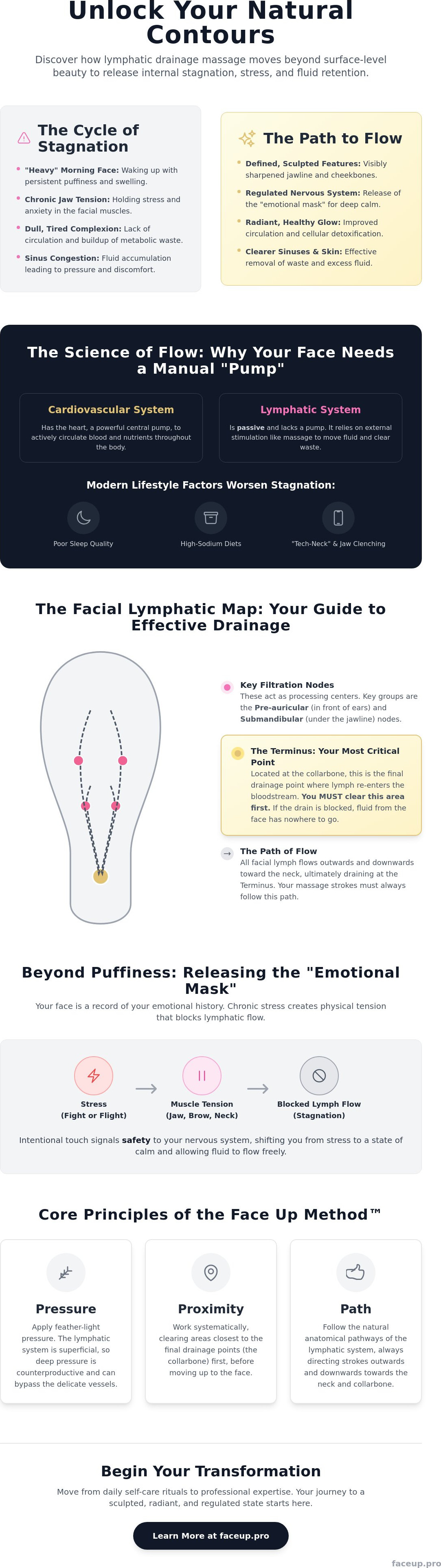
Think of the lymphatic system as your body's internal waste disposal and immune highway. It is a complex network of vessels and nodes that transports "lymph", a clear fluid containing white blood cells and metabolic waste, away from tissues. While the cardiovascular system has the heart to pump blood through the body, the lymphatic system is passive. It lacks a central pump. Instead, it relies entirely on muscle movement, deep breathing, and external stimulation to keep fluid moving. In the face, this structural reality makes the skin particularly susceptible to stagnation, which often manifests as that familiar morning puffiness or a "heavy" feeling in the cheeks and eyes.
Several modern lifestyle factors contribute to this fluid buildup. Poor sleep quality prevents the body from performing its natural nighttime detoxification processes effectively. High-sodium diets can pull water into the tissues, while chronic muscular tension, often caused by "tech-neck" or jaw clenching, physically constricts the narrow lymphatic pathways. When these channels are restricted, fluid accumulates, leading to inflammation and a dull, stagnant complexion. Adopting a consistent lymphatic drainage face massage technique provides the manual "pump" your face needs to clear these blockages and restore a vibrant, healthy glow.
The Anatomy of Facial Lymph Nodes
To move fluid effectively, you must understand the map of the face. Key filtration stations include the pre-auricular nodes, located just in front of the ears, and the submandibular nodes tucked under the jawline. These nodes act as processing centers for facial fluid. However, the most critical point in any ritual is the "Terminus" located at the supraclavicular nodes near the collarbone. This is the final gateway where lymph re-enters the bloodstream. Because all facial fluid eventually drains toward the neck, clearing the neck and collarbone area is the essential first step. If this "drain" is blocked, fluid from the face simply has nowhere to go.
Aesthetic vs. Biological Benefits
The rewards of mastering a lymphatic drainage face massage technique are both immediate and cumulative. In the short term, you'll notice a visible reduction in oedema (swelling) and improved skin radiance as fresh, oxygenated blood replaces stagnant fluid. Over time, the benefits shift toward long-term skin health. Regular drainage supports cellular detoxification and helps build a more resilient skin barrier, allowing your skin to better defend itself against environmental stressors. Manual lymphatic drainage is a specialized technique for fluid management that balances physiological health with aesthetic refinement.
Beyond Puffiness: The Somatic Link in the Face Up Method™
While mechanical drainage is essential, the Face Up Method™ recognizes that the face acts as a biological record of our emotional history. It isn't just about moving fluid; it's about addressing why that fluid stagnated in the first place. When we experience stress, our bodies often create an "emotional mask." This manifests as tightened masseters, a furrowed brow, and a constricted neck. These physical contractions do more than create wrinkles. They physically compress the delicate lymphatic vessels, preventing the natural flow of waste and leading to that "heavy" appearance discussed earlier.
Chronic stress keeps the body in a state of sympathetic dominance, or "fight or flight." In this state, cortisol levels remain elevated, which is known to contribute to systemic inflammation and water retention. By performing a lymphatic drainage face massage technique with somatic awareness, you aren't just sculpting; you're signaling to the brain that the environment is safe. This shift is the cornerstone of the Face Up philosophy, where the face serves as a gateway to regulating the entire body. When we soften the face, we soften the mind.
The Connection Between Facial Tension and Emotions
Your jaw is one of the most common places to store suppressed frustration and anxiety. Chronic jaw clenching, often referred to as TMJ disorder, creates a physical blockade that restricts lymph flow around the ears and jawline. This stagnation often results in a "blocked" or wider appearance of the lower face. For those seeking a deeper release, exploring The Ultimate Guide to TMJ Massage Therapy can provide the foundational work needed to restore balance. Many people report an unexpected emotional shift during this work. Releasing the physical grip of the masseter often allows long-held emotional tension to finally surface and dissipate.
Regulating the Nervous System Through Touch
The Face Up Method™ prioritizes a "nervous system first" approach. By using gentle, rhythmic strokes characteristic of a professional lymphatic drainage face massage technique, we directly stimulate the Vagus nerve. This cranial nerve is a key player in the parasympathetic nervous system, responsible for the "rest and digest" state. Moving from stress to serenity isn't just a mental exercise; it's a physiological transition triggered by intentional touch. When the nervous system settles, the body's natural drainage mechanisms function at their peak. You can begin this journey of self-regulation by exploring the Face Up App subscription, which offers guided rituals designed for modern professionals.
The Professional Lymphatic Drainage Face Massage Technique
Executing a professional lymphatic drainage face massage technique requires a shift in mindset from traditional deep-tissue work to a specialized, rhythmic touch. Before beginning, ensure your environment is calm and your skin is prepared. While some practitioners prefer a completely dry technique for maximum skin traction, using a light, high-quality facial oil can provide the necessary glide for beginners. The goal is to move the skin, not the underlying muscle. This distinction is vital for effective drainage and facial sculpting.
To achieve professional results, you must adhere to the "Three Ps" of drainage:
- Pressure: The touch should be feather-light, similar to the weight of a nickel. Excessive pressure collapses the delicate lymphatic vessels, stopping the flow entirely.
- Proximity: Always start closest to the drainage "drains" (the neck) before working on the areas furthest away (the forehead). This clears the path for fluid to move.
- Path: Every stroke must follow the physiological map of the lymphatic system, guiding fluid toward the nearest cluster of lymph nodes.
Step 1: Opening the Terminus and Neck
Begin by "opening the gates" at the supraclavicular nodes, located in the hollow just above your collarbone. Use gentle stationary circles, pulsing about five to ten times. Following this, perform slow, downward strokes from the base of the ear along the sides of the neck toward the shoulder. This clears the primary "highway" for all facial fluid. Clearing the neck first ensures that the facial fluid has an open, unobstructed pathway to exit the tissues and return to the circulatory system.
Step 2: The Mid-Face and Sculpting the Jawline
Once the neck is clear, move to the jawline. Use L-shaped strokes, placing your thumbs under the chin and index fingers along the jaw, sweeping slowly toward the ears. For the mid-face, use gentle pumping movements around the mouth and nasolabial folds to reduce "heaviness" and stagnation. When targeting the sub-eye area, use your ring finger for feather-light pressure, moving from the inner corner toward the temples. This specific lymphatic drainage face massage technique sequence helps define the cheekbones by removing the fluid that often masks your natural bone structure.
Step 3: The Forehead and Final Flush
For the forehead, use horizontal strokes starting from the center of the brow and moving outward toward the hairline. Finish the ritual with the "Final Flush." This is a rhythmic sequence where you repeat the sweeps from the forehead, down the sides of the face, and finally down the neck to the terminus. This ensures all mobilized fluid is successfully guided back to the circulatory system. After the session, prioritize hydration and rest to support your body's natural detoxification process.
Optimising Results: Tools, Frequency, and Common Pitfalls
Achieving a refined, sculpted appearance through a lymphatic drainage face massage technique is a matter of rhythm rather than force. While the sequence of movements is vital, the efficacy of your practice depends on your understanding of the "Goldilocks" pressure. Many beginners make the mistake of pressing too hard, thinking it will "break up" fat or tension. In reality, the lymphatic system is located just beneath the skin's surface. Applying too much pressure bypasses these delicate vessels and engages the muscle instead. If you see redness or feel deep heat in the skin, you've likely pressed too hard and collapsed the very channels you're trying to clear.
Consistency is your most powerful asset for long-term facial sculpting. A five-minute daily ritual is far more effective for maintaining a defined jawline than a sixty-minute treatment performed once a month. Daily movement prevents fluid from settling and becoming stagnant, which is the primary cause of chronic morning puffiness. Some individuals worry about "purging" or minor breakouts after their first few sessions. This is often a temporary reaction as metabolic waste successfully moves out of the tissues. Supporting your body with adequate hydration and rest will help manage this transition and reveal clearer skin.
Choosing Your Tools Wisely
Your hands are your most sophisticated tools, offering immediate somatic feedback that helps you identify specific areas of tension. However, incorporating specialized tools can enhance the sculptural lifting element of your sequence. Gua Sha stones are excellent for defining the jawline, while rollers provide a cooling effect that aids in reducing inflammation. For those struggling with deep-seated jaw tension, choosing the best TMJ massage tool can provide the targeted relief that manual work sometimes misses. Always sanitise your tools with alcohol or mild soap after every use to prevent skin irritation.
When to Avoid Lymphatic Massage
There are specific times when manual drainage should be paused to protect your health and safety. You shouldn't perform this technique if you have active inflammatory acne, a fever, or swollen lymph nodes due to an active infection. Additionally, if you've recently received Botox or dermal fillers, you must observe specific wait times before performing drainage in those areas. Moving fluid too soon can potentially interfere with the placement or longevity of your injectables. For personalized guidance on complex skin conditions or to experience a professional-grade treatment, consider booking a Face Up Sculpting Treatment with a certified practitioner.
Mastering the Face Up Method™: From Self-Care to Professional Certification
The Daily Ritual: Using the Face Up App
The Face Up App provides a structured environment for those who seek consistent self-practice without the guesswork. By choosing a Face Up App Subscription, you gain access to a library of guided sessions tailored to your specific needs and time constraints. Whether you have five minutes for a quick "Lymphatic Flow" or need a deep "Jaw Release" after a high-stress day, the app serves as a professional mentor in your pocket. It's a specialized environment that allows you to integrate a high-standard lymphatic drainage face massage technique into your modern lifestyle with calm efficiency.
Become a Certified Practitioner
For those who feel called to facilitate this healing for others, the facial sculpting certification represents the ultimate career upgrade. This program goes beyond basic movements, offering an intensive curriculum that covers advanced buccal techniques, somatic bodywork, and complex facial anatomy. As a student of the Face Up Method™, you're mastering a proprietary ecosystem of care that spans global standards. Upon completion, you join an elite Practitioner Directory Listing, positioning yourself as a reliable partner in the specialized field of natural rejuvenation. This path is designed for those who seek order, professional integrity, and a clear way to advance in the international wellness market.
Embrace the Future of Natural Facial Rejuvenation
Integrating somatic awareness into your skincare ritual transforms a simple beauty step into a profound act of self-regulation. We've established that the lymphatic system requires consistent, manual stimulation to clear stagnation and that your facial structure is deeply influenced by your nervous system's state. By mastering the lymphatic drainage face massage technique, you're not just reducing puffiness; you're actively releasing the emotional mask that hides your natural vitality. Consistency remains the key to these lasting results.
Founded by somatic bodywork specialist Olga Newman, the Face Up Method™ is redefining non-invasive beauty globally by bridging the gap between clinical science and holistic wellness. You can maintain your progress through daily rituals on our proprietary Face Up App or take the next step in your professional development. We invite you to Master the Face Up Method™ with our Professional Certification and join an international network of practitioners committed to excellence. Your path to a more sculpted and serene life is ready for you to explore.
Frequently Asked Questions
Is lymphatic drainage face massage safe for everyone?
This technique is safe for the majority of individuals, but it's not suitable for those with active infections, fever, or acute inflammatory skin conditions. If you're managing a serious medical condition such as congestive heart failure or active cancer, you should consult your physician first. For healthy individuals, it's a gentle and effective way to support the body's natural waste disposal system.
How often should I perform a lymphatic drainage face massage?
A daily ritual of five to ten minutes is the most effective way to prevent fluid stagnation and maintain a defined appearance. While a professional treatment provides deeper results, the cumulative benefit of daily home practice is what truly transforms the face. Many users find that morning sessions are best for clearing the "heavy" face that often occurs after sleep.
Can this technique really help with TMJ and jaw pain?
Yes, it's highly effective for managing jaw tension by addressing the somatic storage of stress in the masseter muscles. By clearing the fluid buildup that often accompanies chronic clenching, you can reduce the physical pressure on the jaw joint. This practice helps shift the nervous system into a relaxed state, which naturally discourages the habit of clenching throughout the day.
What is the difference between a regular facial and a somatic facial sculpting treatment?
Standard facials primarily focus on the skin's surface through cleansing, extraction, and exfoliation. In contrast, a somatic Face Up Sculpting Treatment works with the deeper layers of the lymphatic and nervous systems to change the face's actual architecture. It's a holistic approach that prioritizes internal flow and emotional release over topical product application.
Will I see immediate results after one session?
You'll likely see a visible reduction in puffiness and a brighter, more "awake" complexion immediately after your first session. While the aesthetic glow is instant, the structural sculpting of the jawline and cheekbones develops over time with consistent practice. Mastering a professional lymphatic drainage face massage technique ensures these results become more permanent as your system stays clear.
Do I need special oils or tools to do this correctly?
Specialized tools are not a requirement, as your fingertips offer the most precise somatic feedback. However, tools can be helpful for specific goals; a Gua Sha stone can enhance sculpting, while a dedicated tool for jaw release targets deeper tension. Using a light facial oil is recommended to provide the necessary glide without pulling the skin.
How much pressure should I actually use during the massage?
The pressure must be exceptionally light, comparable to the weight of a nickel resting on your skin. The lymphatic vessels are delicate and sit just beneath the surface; if you press too hard, you'll collapse them and stop the drainage entirely. If your skin turns bright red or you feel deep muscle manipulation, you're using too much force.
Can I do lymphatic drainage if I have had Botox or fillers?
You can safely perform a lymphatic drainage face massage technique after injectables, but you must wait for the products to settle. Most practitioners recommend waiting at least two to four weeks after your procedure before applying any manual pressure. This precaution prevents the accidental migration of the product and allows the injection sites to heal completely.


