

What if the tightness in your face isn't just a physical annoyance, but a map of the emotions your nervous system is still trying to process? It's a common struggle for the estimated 35 million people in the U.S. dealing with TMJ-related discomfort. You likely know the feeling of waking up with a dull headache or noticing your face looks wider and more fatigued due to masseter hypertrophy. It's easy to feel that stress is permanently stuck in your face, leading to a fear that only invasive dental or cosmetic procedures can fix the problem.
You don't have to accept this tension as your permanent baseline. By integrating professional jaw massage techniques into your routine, you can release deep-seated emotional weight and naturally define your jawline. This somatic approach bridges the gap between physical relief and aesthetic refinement. This guide explores the connection between your jaw and your nervous system, providing a clear roadmap to help you reclaim a relaxed, sculpted appearance through mindful, body-based practices. We'll show you how to transition from chronic discomfort to a state of calm efficiency and facial clarity.
Key Takeaways
- Understand why your jaw acts as the body's primary stress container and how somatic facial therapy addresses tension at the nervous system level.
- Master professional jaw massage techniques targeting the masseter and temporalis muscles to alleviate chronic tension headaches and define your natural jawline.
- Learn the distinction between external sculpting for surface-level lymphatic drainage and buccal massage for reaching deep, intraoral muscle fibers.
- Discover the Face Up Daily Jaw Release Ritual, including the Temporal Sweep, to clear the upper tension chain and reset your facial posture.
- Shift your perspective from merely "fixing" pain to honoring your body through a consistent somatic practice supported by the Face Up App.
Understanding the Somatic Connection: Why Your Jaw Stores Emotional Tension
The Vagus Nerve and Facial Expression
The connection between your facial expressions and your internal sense of safety is governed by the cranial nerves, particularly the vagus nerve. This nerve acts as a biological bridge between the brain and the body's organs. When you hold tension in your jaw, you're essentially sending a signal of distress to your entire system. Conversely, intentional relaxation of these muscles can lower overall cortisol levels, shifting you from a state of sympathetic arousal into parasympathetic rest. Somatic release is the physical processing of emotional energy. By creating space in the jaw through targeted jaw massage techniques, you invite the nervous system to let go of stored trauma and return to a state of calm efficiency.
The 'Locked Jaw' Cycle: Stress, Bruxism, and Facial Shape
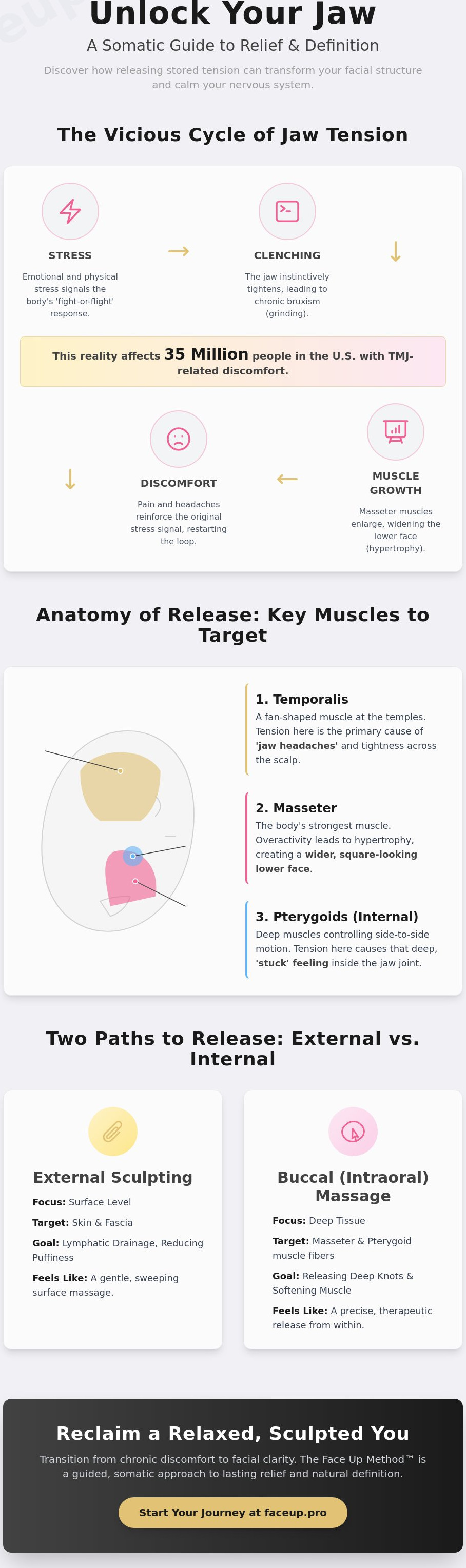
Repetitive clenching doesn't just feel uncomfortable; it physically alters your appearance. This habit often leads to masseter hypertrophy, where the muscle grows larger and creates a wider, heavier lower face. This physical change often accompanies Temporomandibular joint dysfunction, a condition that affects millions and is frequently exacerbated by stress. It creates a feedback loop: a tight jaw triggers an anxious mind, which then causes more clenching. Breaking this cycle requires a targeted intervention. The Face Up Method is designed to interrupt this loop naturally, teaching the body that it's safe to release. Through consistent practice, you can soften the lower face and return to a more balanced, sculpted aesthetic without the need for invasive measures.
The Anatomy of Release: Identifying Key Jaw Muscles for Effective Massage
Understanding the architecture of your face is the first step toward lasting relief. Effective jaw massage techniques require more than general pressure; they demand an intimate knowledge of the muscles that govern your expression and survival. While many focus solely on where the pain is felt, a somatic approach looks at the entire muscular chain involved in mastication and tension storage. By identifying these specific structures, you move from aimless rubbing to a targeted, professional practice that respects the body's design.
The masseter is the primary focus for many, as it's the strongest muscle in the human body relative to its size. It sits along the side of your jaw, and when it's overactive, it can lead to visible widening of the lower face. Above it lies the temporalis, a fan-shaped muscle on the side of your head. If you've ever felt a "jaw headache," you're likely feeling the temporalis mirroring the tension from below. Deeper still are the medial and lateral pterygoids, which act as the internal architects of your jaw's mobility. These hidden muscles manage the side-to-side grinding motion and are frequently the source of that "stuck" feeling. It's also vital to treat the temporomandibular joint as a delicate hinge rather than a weight-bearing joint. Misalignment or excessive force here can exacerbate Temporomandibular Disorders (TMDs), a condition that the NIDCR notes can cause significant facial pain and restricted movement.
Locating Your Tension Points
You can identify these muscles using a simple "clench-and-feel" technique. Place your fingertips on the sides of your jaw and bite down firmly. The hard, protruding muscle you feel is your masseter. Follow this muscle upward to where it meets the cheekbone to find a common trigger point. You should also explore the area above your ears; the scalp tension you find there often mirrors the tightness in your jaw. Don't ignore the small dips and ridges along the bone, as these often house the most stubborn knots. Identifying these specific boundaries allows for a more targeted and effective release.
Lymphatic Considerations in Jaw Work
Deep tissue work on the face must always be balanced with lymphatic awareness. If you dive straight into deep massage without clearing the pathways in the neck, you risk temporary puffiness or fluid stagnation. The Face Up Method™ integrates gentle neck drainage into every ritual to ensure that metabolic waste and excess fluid have a clear exit route. This holistic approach ensures that your sculpting efforts yield a refined, rather than inflamed, result. For those ready to deepen their practice, exploring a Somatic Bodywork Session can provide personalized guidance on these anatomical nuances and help you refine your home care routine.
Comparing External Sculpting and Buccal Massage Techniques
Choosing the right approach for facial tension requires an understanding of how different layers of tissue respond to touch. External massage serves as the essential baseline for daily maintenance. It focuses on the surface-level tissue and lymphatic drainage, which is particularly effective for reducing morning puffiness and softening the outer edges of the masseter. However, to truly address deep-seated emotional and physical tension, many are turning to intraoral methods. Buccal (intraoral) massage is the "secret" to reaching the deep fibers of the masseter that are otherwise inaccessible from the outside. This is why professional buccal massage training online has become a significant global trend. It allows practitioners and dedicated individuals to master the art of internal release, providing a more comprehensive approach to facial health. Utilizing various jaw massage techniques allows for a tailored approach that fits your specific needs.
The Benefits of Intraoral Work
Intraoral work is uniquely effective because it allows for the direct manipulation of the pterygoid muscles. These muscles manage lateral jaw movement and are impossible to reach through the skin alone. Releasing them often results in an immediate "lifting" effect on the corners of the mouth and jowls, as the internal structures that support the lower face begin to relax. While powerful, safety protocols are essential for anyone practicing these techniques. You should always use clean, gloved hands and follow professional guidance to avoid over-stimulating the delicate tissues inside the cheek. Organizations like the Cleveland Clinic recommend specific TMJ massage and jaw exercises to ensure that these movements are performed safely and effectively, preventing unnecessary strain on the joint.
Aesthetic vs. Therapeutic Outcomes
While the relief of chronic pain is a primary motivator, the aesthetic results of these jaw massage techniques are equally compelling. These sculpting techniques help define the jawline and reduce the appearance of a "heavy" lower face without the need for dermal fillers. The key difference lies in the intention; you aren't just "rubbing" the skin. You are moving the muscle tissue itself. By repositioning the masseter and releasing tension, you restore the face's natural architecture and promote a more youthful, rested appearance. For a deeper look at how these methods balance health and beauty, refer to the ultimate guide to TMJ massage therapy. This holistic perspective ensures that every movement serves both your physical comfort and your personal confidence, moving beyond surface-level care into true somatic healing.
Step-by-Step Guide: The Face Up Daily Jaw Release Ritual
A structured ritual provides the nervous system with a predictable path toward relaxation. Unlike random exercises, these jaw massage techniques follow a logical sequence designed to peel back layers of tension. Before beginning, set your somatic environment. Dim the lights and apply a warm compress to the cheeks for at least two minutes. This heat softens the fascia and prepares the masseter for deeper work, ensuring the tissue is receptive to manipulation rather than resistant.
- Step 1: The Temporal Sweep. Place the pads of your fingers above the ears. Apply firm pressure and sweep upward and outward toward the hairline. This releases the upper tension chain that often contributes to scalp tightness and headaches.
- Step 2: Deep Masseter Kneading. Form loose knuckles with your hands. Place them just below the cheekbone and apply slow, controlled pressure in small circular motions. Move downward toward the jaw angle, focusing on the dense "clench" points where the muscle feels most rigid.
- Step 3: The Mandibular Slide. Use your index and middle fingers to "hook" the jawbone. Slide from the chin toward the earlobe with moderate pressure. This movement defines the jawline and encourages lymphatic drainage toward the neck.
- Step 4: Somatic Integration. Close your eyes and take a deep, diaphragmatic breath. As you exhale, consciously imagine the remaining resistance in your jaw melting into the floor. This final step anchors the physical release into your nervous system.
Tools to Enhance Your Practice
Your hands are your most intuitive instruments, but a specialized tmj massage tool can offer a level of precision that fingers sometimes lack. These tools are specifically designed to access trigger points without straining your own finger joints. It's also vital to understand what to avoid. We do not use "jaw exercise balls" in the Face Up Method™. While these products claim to sculpt, they often lead to over-strengthening an already hyperactive masseter, which can worsen clenching and joint strain. Our focus remains on release and lengthening rather than resistance training.
Frequency and Consistency
Consistency is the hallmark of professional somatic care. Adopt the "3-minute morning" rule to prevent the accumulation of daytime tension before it starts. An evening ritual is equally important to ensure a restful, grind-free sleep. If you notice bruising or increased sensitivity, you're likely over-working the muscle and need to rest for 48 hours. The goal is a steady progression toward ease, not an aggressive fix. To deepen your understanding of these movements, you can access guided support through the Face Up App Subscription, which provides a library of somatic rituals tailored to your progress.
Integrating Jaw Massage into a Holistic Wellness Practice
Adopting jaw massage techniques is more than a corrective measure for physical discomfort; it's a commitment to somatic awareness and honoring your body's signals. Transitioning from a reactive "fix-it" mindset to a proactive daily ritual allows you to maintain the progress achieved in earlier stages of your journey. This holistic integration ensures that the nervous system remains regulated, preventing the re-accumulation of the deep-seated emotional tension we explored in the opening sections. By making these practices a non-negotiable part of your routine, you create a sustainable environment for both facial sculpting and mental clarity. The Face Up App Subscription provides the structured, guided support necessary to navigate this somatic journey, offering a rhythmic gateway to consistent self-care that fits into a modern professional lifestyle.
Complementary Somatic Practices
A relaxed jaw does not exist in isolation. It's supported by the surrounding structures of the head, neck, and even the tongue. Proper tongue posture, often referred to as mewing, acts as an internal scaffold for the jaw, helping to maintain the definition achieved through massage. When the tongue rests against the roof of the mouth, it provides a counter-pressure that discourages clenching. Additionally, addressing neck and shoulder tension is vital, as these areas form the foundation of a relaxed face. Incorporating mindfulness techniques throughout the day allows you to catch the first signs of jaw tightening before it becomes a rigid habit. This awareness transforms your practice from a physical exercise into a comprehensive system of nervous system regulation.
The Path to Professional Excellence
The global somatic therapy market was valued at approximately $4.72 billion in 2026 and is projected to grow to over $12.55 billion by 2033. This significant growth reflects a global shift toward body-based healing and a rising demand for specialized practitioners who understand the mind-body connection. As the luxury beauty and wellness industries redefine their standards, somatic facial work is becoming a cornerstone of high-level care. There's a growing need for professionals who can bridge the gap between aesthetic sculpting and therapeutic release, offering clients a holistic and proprietary experience that goes beyond surface-level treatments.
For those who have experienced the transformative power of these rituals and wish to transition from self-care to professional mastery, the Face Up Method™ Certification offers a rigorous and respected path forward. This certification equips existing therapists and wellness professionals with the skills to lead others through their own somatic progressions, establishing them as reliable partners in a specialized professional landscape. You can explore the Face Up Method™ Certification and join our global community to begin your journey toward becoming a certified facilitator of facial release and sculpting. By joining this ecosystem, you contribute to a global movement that values integrity, proactive management, and the profound intelligence of the human body.
Reclaiming Your Natural Architecture Through Somatic Release
Releasing emotional tension from the masseter muscles is more than a physical fix; it's a gateway to nervous system regulation. By mastering both external and intraoral jaw massage techniques, you restore balance to your facial anatomy while naturally defining your features. You've learned that the jaw acts as a container for stress, and by using a structured ritual, you can break the cycle of chronic clenching and facial widening. This practice is about more than just aesthetics; it's about returning your body to its most efficient and relaxed state.
Founded by somatic expert Olga Newman, the proprietary Face Up Method™ is used by certified practitioners globally to provide non-invasive, somatic rejuvenation. This approach empowers you to move beyond surface-level care and into a state of calm, professional readiness. Whether you seek relief from chronic tension or a more sculpted appearance, the path forward is rooted in honoring your body's innate intelligence. Start your journey with the Jaw Release Course today and join a community dedicated to global standards of wellness. You deserve a face that reflects your inner peace and strength.
Frequently Asked Questions
How often should I perform jaw massage for the best results?
Daily practice is recommended for the best results. A short 3-minute session every morning prevents tension buildup throughout the day, while a longer, more intentional ritual 2-3 times a week allows for deeper tissue work. Consistency is the primary factor in training the nervous system to remain in a state of relaxation. If you experience significant soreness, allow for a 48-hour recovery period to avoid over-stimulating the masseter muscles.
Can jaw massage really change the shape of my face or jawline?
Yes, consistent application of jaw massage techniques can visibly refine your facial structure over time. By releasing chronic tension in the masseter muscles, you reduce muscle hypertrophy, which often causes the lower face to appear wider or heavier. This non-invasive approach encourages lymphatic drainage and the repositioning of tissue, leading to a more defined, naturally sculpted jawline without the need for dermal fillers or invasive procedures.
Is it normal to feel emotional or 'weepy' after a deep jaw release?
Feeling an emotional release is a perfectly normal and expected part of somatic bodywork. Because the jaw acts as a primary container for the fight-or-flight response, releasing physical tightness often unlocks suppressed emotional energy or unsaid words. This "bottom-up" processing allows your nervous system to clear stored stress that your mind may have forgotten. Embracing these sensations as they arise is a vital step in honoring your body's journey toward holistic health. If you are looking to support your personal transformation through energy healing and meditation, learn more about Justine Harrington.
Should I avoid jaw massage if I have recently had Botox or fillers?
You should wait at least two to four weeks after receiving Botox or dermal fillers before performing deep jaw massage. Applying pressure too soon can cause the injectables to migrate from their intended location or interfere with the settling process. Once this initial period has passed, gentle massage can be beneficial for maintaining tissue health, but it's always best to consult with your aesthetic provider before resuming a vigorous somatic routine.
What is the difference between a regular facial and a somatic jaw release?
A regular facial primarily focuses on the health and appearance of the skin's surface, whereas a somatic jaw release targets the underlying muscular and nervous system structures. While a facial may include light relaxation strokes, a somatic session uses specific jaw massage techniques to address deep-seated emotional trauma and functional tension. It is a therapeutic practice designed to regulate the body's internal state rather than just providing a temporary aesthetic glow for the skin.
Can jaw massage help with clicking or popping sounds in the joint?
Massage can often alleviate the muscular tension that contributes to joint sounds, though it isn't a direct cure for internal joint derangement. By softening the masseter and pterygoid muscles, you reduce the uneven pull on the temporomandibular joint, which may lessen clicking or popping during movement. However, if these sounds are accompanied by sharp pain or a locked jaw, it's essential to seek a professional assessment from a licensed dental or medical specialist.
Do I need special oils or creams to perform these techniques safely?
You don't need expensive products, but a high-quality oil or balm is necessary to provide enough "slip" for external massage. This prevents dragging or damaging the delicate facial skin during deep tissue work. For intraoral or buccal techniques, you should use clean, gloved hands without any product to maintain a firm grip. The goal is to maintain a professional standard of hygiene while ensuring safety and precision during every movement of your ritual.
How long does it take to see a visible difference in jaw tension?
Most individuals report an immediate sense of lightness and reduced pain after their first session. Visible aesthetic changes, such as a more defined jawline or reduced puffiness, typically become apparent after two to four weeks of consistent daily practice. Because somatic work involves retraining the nervous system and muscle memory, long-term results depend on your commitment to maintaining a regular, mindful ritual that honors the body's natural pace of change.


