
Your morning mirror shouldn't feel like a confrontation with a stranger. If you wake up with heavy eyelids and a softened jawline, your body isn't failing you; it's communicating with you. Understanding how to reduce face puffiness in the morning requires looking beyond the surface of the skin. While the global facial beauty device market is projected to reach $24.77 billion by 2026, many of these tools fail to address the underlying somatic tension that keeps fluid trapped in your tissues.
It's frustrating to invest in expensive serums only to find that chronic jaw tension and stress are the real culprits behind facial heaviness. You deserve a routine that works as hard as you do. In this guide, you'll learn the root causes of morning facial edema and master a 5 minute somatic ritual to restore your natural facial contours. We'll explore the vital link between your nervous system and lymphatic flow, providing a professional path to lasting facial sculpting and a more vibrant reflection. By moving from a transactional skincare mindset to a proprietary somatic practice, you can reclaim your morning and your confidence.
Key Takeaways
- Uncover the physiological mechanics of morning facial edema, specifically how horizontal positioning redistributes interstitial fluid during sleep.
- Understand the somatic relationship between a dysregulated nervous system and stagnant lymph to master how to reduce face puffiness in the morning.
- Distinguish between the temporary vasoconstriction of cold therapy and the sustainable, structural results of targeted lymphatic drainage.
- Preview the essential steps of the Face Up morning protocol, focusing on clearing the terminus and facilitating fluid movement toward the heart.
- Learn how these foundational somatic techniques can serve as a gateway to professional advancement through the Face Up Method Certification.
Understanding Morning Facial Edema: Why You Wake Up Puffy
Waking up with a "full" face is a common experience, but it's often misunderstood as a simple skin issue. In reality, what you see in the mirror is a manifestation of Edema, which is the medical term for fluid accumulation in the body's tissues. Morning facial edema specifically refers to the buildup of interstitial fluid that occurs while you sleep. While many sources claim that sodium intake is the sole culprit, the physical mechanics of your body's drainage system play a far more significant role in determining how to reduce face puffiness in the morning.
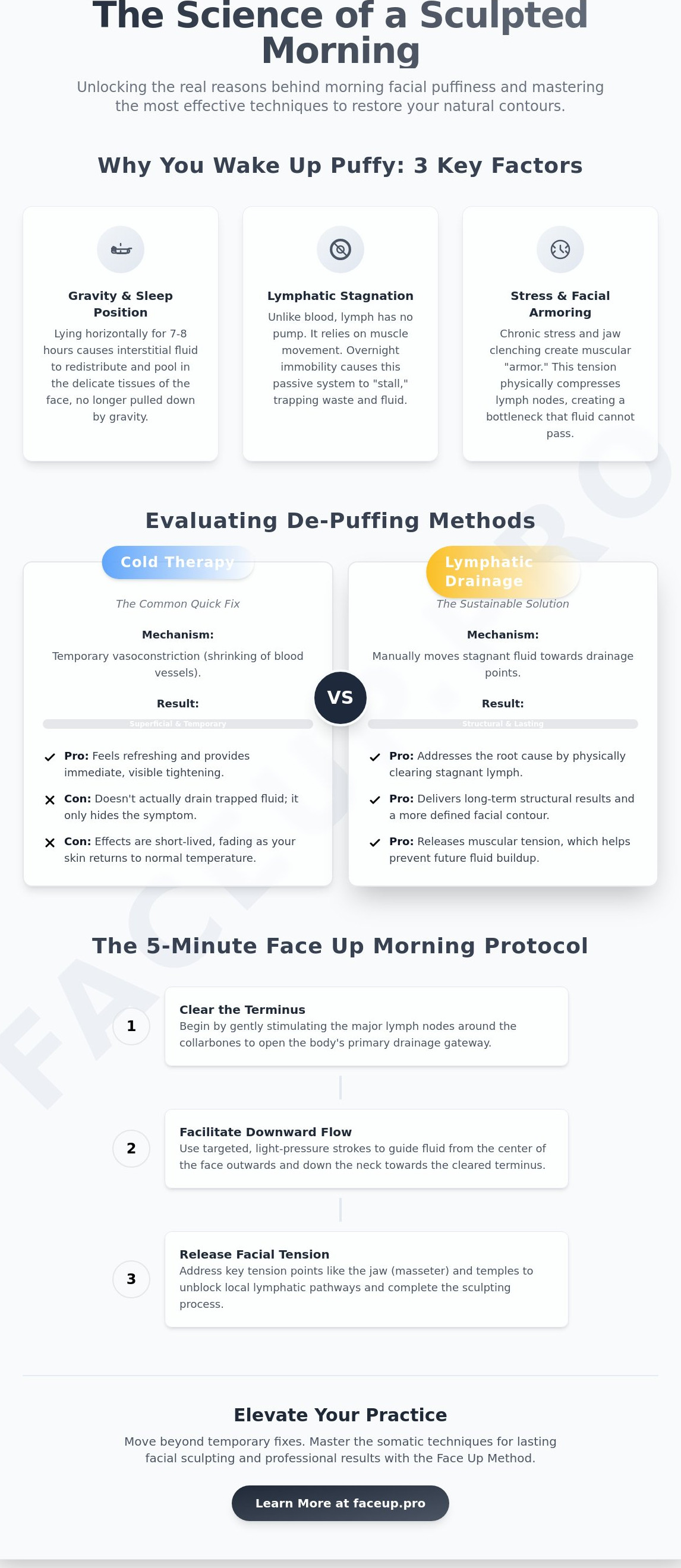
During the day, gravity helps move fluid downward. When you lie down for seven or eight hours, that vertical assistance disappears. Fluid redistributes itself across the horizontal plane of your body, often settling in the delicate tissues around the eyes and jawline. For most, this puffiness fades within an hour of standing up. However, when this swelling persists, it indicates lymphatic stagnation. This isn't just temporary water weight; it's a sign that the "pipes" of your lymphatic system are physically obstructed by tension or lack of movement. Understanding this distinction is the first step toward a more effective morning ritual.
The Biological "Why" of Sleep-Induced Swelling
When Puffiness Indicates Chronic Facial Tension
If you find yourself struggling with facial heaviness every single day, the issue might be structural rather than just situational. Many people carry "muscular armor" in their face and neck. Chronic jaw clenching or teeth grinding creates a physical bottleneck. This tension compresses the parotid and submandibular lymph nodes, which are the primary exit points for facial fluid. When these nodes are restricted by tight muscles, the fluid has nowhere to go. This leads to a heavy, squared-off appearance in the lower face that no amount of cold water can fix. To understand how to break this cycle of tension, you can explore the ultimate guide to TMJ massage therapy to learn about restoring balance to the jaw and opening these vital drainage pathways.
The Somatic Connection: How Stress and Tension Trap Fluid
While gravity and sleep position are the obvious causes of a puffy face in the morning, the internal state of your nervous system often dictates how long that fluid stays trapped. The lymphatic system is highly sensitive to the autonomic nervous system. When you exist in a chronic "fight or flight" (sympathetic) state, your body prioritizes survival over basic housekeeping. This leads to systemic inflammation and a biological reluctance to flush out waste. In this state, your vessels constrict, and fluid becomes stagnant in the interstitial spaces of your face.
This physical stagnation is often a reflection of "facial armoring." We store emotional stress in the muscles of the forehead, eyes, and jaw. Over time, this tension creates a literal shield that compresses the delicate lymphatic channels. The vagus nerve, which is the primary driver of your "rest and digest" response, is intricately linked to the muscles of facial expression. If your vagus nerve is underactive due to stress, your facial muscles remain in a state of high tone. This prevents the natural pumping action required for drainage, making it difficult to understand how to reduce face puffiness in the morning without first addressing the nervous system.
Cortisol, Stress, and the "Puffy" Face
Fascia: The Highway for Lymphatic Flow
Fascia is the continuous web of connective tissue that surrounds every muscle, nerve, and vessel in your face. When you are stressed, this fascia becomes "glued" and dehydrated, losing its elasticity. Think of tight fascia like a kinked garden hose; no matter how much fluid is trying to move through, the physical constriction prevents it from reaching its destination. Somatic bodywork is designed to "unstick" these layers, restoring the sliding surfaces between tissues. If you feel that your facial contours are hidden beneath layers of persistent fluid, a professional Somatic Bodywork Session can help release these deep-seated blockages. Restoring fascial health is a foundational step in mastering how to reduce face puffiness in the morning and achieving long-term structural clarity.
Evaluating Depuffing Methods: Cold Therapy vs. Lymphatic Drainage
When searching for how to reduce face puffiness in the morning, many people reach for the nearest ice roller or a splash of freezing water. While these methods provide an immediate sensation of tightening, they often function as a temporary mask rather than a structural solution. Cold therapy works through vasoconstriction, which involves the narrowing of blood vessels to reduce redness and surface swelling. However, this process does little to address the stagnant interstitial fluid sitting deep within your tissues. To achieve lasting results, you must move beyond surface-level temperature changes and focus on the mechanics of fluid transport.
A more sustainable approach involves Lymphatic drainage massage, which physically encourages the movement of lymph toward the body's natural filtration points. A critical mistake many make is starting their morning ritual by rubbing the face directly. If the "drains" in your neck and clavicle are blocked, any fluid you move from your cheeks will simply have nowhere to go. This creates a bottleneck effect, often resulting in localized pressure. By clearing the neck and terminus first, you create a vacuum effect that allows facial fluid to drain efficiently and naturally.
Why Ice Rollers Aren’t a Permanent Solution
The science of cryotherapy is clear: it reduces blood flow but doesn't move lymph. In some cases, applying extreme cold to the face can actually shock the skin, leading to a defensive inflammatory response known as rebound swelling. This is why your face might look snatched for twenty minutes only to appear even puffier an hour later. There is a profound difference between "cooling" the skin's surface and "sculpting" the underlying musculature and fascia. Real change requires manual manipulation that reaches the deeper layers of the face where fluid stagnation resides.
The Power of Somatic Facial Sculpting
The Face Up Method™ offers a sophisticated alternative to traditional skincare by focusing on the somatic release of tension. This method achieves what many call a "natural facelift" by combining rhythmic drainage with deep tissue work. Integrating a specialized TMJ massage tool into your morning routine allows for a level of precision that manual tapping simply cannot match. These tools are designed to reach the buccal area, or the inner cheek, where deep-seated stagnation often hides. By releasing the internal tension of the masseter and buccinator muscles, you unlock the primary pathways for drainage. This high-standard approach ensures that your efforts to learn how to reduce face puffiness in the morning result in a refined, contoured appearance that lasts throughout the entire day.
Your 5-Minute Face Up Morning Protocol: A Step-by-Step Guide
Establishing a structured morning ritual is the most effective way to address fluid retention at its source. Learning how to reduce face puffiness in the morning requires more than just a quick splash of water; it demands a precise understanding of your body's drainage pathways. By following a professional protocol, you ensure that fluid is not just moved around the face but actually directed out of the tissues and back into the circulatory system. This 5 minute somatic ritual is designed to work with your biology to restore your natural contours and calm your nervous system.
Preparation: Hydration and Breathwork
Success begins before you touch your face. Drink a full glass of room temperature water to support the kidneys in flushing the toxins released during the ritual. Follow this with one minute of diaphragmatic breathing. By expanding your belly as you inhale, you stimulate the cisterna chyli, which is the largest lymphatic vessel in the abdomen. This "deep pump" creates a vacuum effect that pulls fluid from the extremities and the head. This ritual works best when the body is in a parasympathetic state, allowing the lymphatic vessels to relax and flow freely.
- Step 1: Open the Terminus (Clavicle Pumping). Use the pads of your fingers to gently pump the hollow space just above your collarbones ten times. This clears the "terminus," the final drain where lymph enters the bloodstream.
- Step 2: The Neck Sweep. Place your palms behind your ears and sweep downward toward the collarbones. This moves fluid from the jawline down to the heart, clearing the path for facial drainage.
- Step 3: Jaw Release. Use your knuckles or fingers to apply steady pressure to the masseter muscles. Soften the jaw and move in small, slow circles to release the "armoring" that often traps fluid in the lower face.
- Step 4: The Eye Sweep. Using a feather-light touch, sweep from the inner corner of the eyes outward toward the temples. This clears periorbital puffiness without pulling on the delicate skin.
- Step 5: The Forehead Lift. Finish with upward strokes from the eyebrows toward the hairline. This stimulates the frontal lymph nodes and provides an immediate lifting effect to the brow.
Technique Tips for Maximum Drainage
The most common mistake in lymphatic work is using too much pressure. Lymphatic vessels are located just beneath the surface of the skin; heavy pressure can actually collapse these vessels and stop the flow. Aim for a "feather-light" touch that barely moves the skin. Always maintain a directional flow toward the nearest lymph nodes. For those seeking a structured and consistent experience, the Face Up App Subscription provides guided daily rituals that ensure your form remains precise and professional, helping you master how to reduce face puffiness in the morning with confidence.
Elevating Your Practice: From Self-Care to Professional Sculpting
Mastering the personal mechanics of how to reduce face puffiness in the morning often sparks a deeper interest in the science of somatic beauty. When you experience the profound shift from a heavy, stagnant reflection to a contoured and vibrant one, it's natural to want to share that transformation with others. This personal evolution serves as the perfect foundation for a professional career. By transitioning from a self-care enthusiast to a trained practitioner, you can address the root causes of chronic puffiness, TMJ, and facial tension for a global clientele seeking non-invasive solutions.
The Face Up ecosystem is designed to support this professional advancement. Through our specialized training programs, you join a high-standard community of facilitators dedicated to structural facial health. Once certified, practitioners gain access to the Practitioner Directory Listing, connecting them with individuals who are tired of superficial fixes and ready for genuine somatic work. This pathway allows you to turn a daily ritual into a sophisticated professional offering that meets the rising global demand for holistic rejuvenation.
The Benefits of a Professional Somatic Certification
Taking the next step involves a deep dive into the anatomical and emotional layers of the face. Our facial sculpting certification provides a curriculum that goes far beyond standard aesthetician courses. While traditional training often focuses on the skin's surface, somatic training prioritizes the nervous system, fascia, and lymphatic flow. This distinction is vital in a market where consumers increasingly value long-term structural results over temporary masks. You'll learn to identify "facial armoring" and provide the deep release necessary for lasting change.
Integrating Somatic Rituals into a Modern Lifestyle
Your journey doesn't have to be a solitary one. We encourage you to view your morning depuffing routine not as a chore, but as a vital nervous system reset that sets the tone for your entire day. To maintain this momentum, the Face Up App Subscription offers ongoing support with new rituals and expert guidance. Whether you are refining your own technique or building a professional practice, consistency is the key to mastering how to reduce face puffiness in the morning. We invite you to enter our ecosystem and start your journey with a Face Up ritual today.
Reclaiming Your Morning Reflection Through Somatic Mastery
You now have a deeper understanding of why facial heaviness occurs and how to address it through the lens of somatic health. By moving beyond temporary cold therapy and embracing the physiological reality of the lymphatic system, you can effectively manage how to reduce face puffiness in the morning. Remember that your facial contours are a reflection of your internal state. Releasing "facial armoring" and opening the body's natural drainage pathways doesn't just change your appearance; it resets your entire nervous system for a more balanced day ahead.
If you're ready to take this knowledge further, we invite you into our professional ecosystem. Founded by somatic specialist Olga Newman, the Face Up Method™ offers a proprietary approach to facial sculpting that is recognized globally. Whether you seek personal mastery or wish to join our community as a certified provider with access to our Global Practitioner Directory, the path forward is clear. Master the Face Up Method™ and Transform Your Practice today. Your journey toward structural clarity and professional excellence starts with a single, intentional movement.
Frequently Asked Questions
Is it normal for my face to be puffy every single morning?
Mild puffiness is a normal physiological response to gravity and the horizontal redistribution of fluid during sleep. Most people experience some degree of swelling that dissipates shortly after waking. However, if you find that the heaviness is severe or persistent, it's often a sign of stagnant lymph or chronic somatic tension in the jaw and neck that prevents efficient drainage.
How long does it take for morning facial puffiness to go away naturally?
Natural puffiness typically subsides within 30 to 60 minutes after you transition to an upright position. Once you begin moving and breathing deeply, your body's natural lymphatic flow increases. If the swelling lingers for several hours, it indicates that your drainage pathways are likely restricted by muscular tension or lifestyle factors that require more targeted somatic intervention.
Can drinking more water actually reduce facial swelling?
Yes, consistent hydration is a key factor in managing fluid retention. When the body is dehydrated, it enters a "survival mode" and holds onto every drop of water it can, which often settles in the facial tissues. By drinking enough water, you signal to your kidneys that it's safe to flush out excess sodium and metabolic waste, resulting in a clearer complexion.
What is the best sleeping position to prevent a puffy face?
Sleeping on your back with your head slightly elevated is the most effective way to prevent fluid from pooling in your face. This position allows gravity to assist the lymphatic system in moving fluid downward toward the heart. Sleeping on your stomach or side can compress the facial tissues and restrict the lymph nodes, leading to asymmetrical swelling and deeper morning creases.
Does face massage really help with lymphatic drainage?
Targeted face massage is highly effective because the lymphatic system lacks a central pump and relies on external stimulation. Manual manipulation physically moves interstitial fluid toward the lymph nodes for filtration and removal. Using professional techniques is a reliable way to master how to reduce face puffiness in the morning while also releasing the deep somatic tension that causes fluid to trap.
What foods should I avoid at night to prevent morning puffiness?
You should avoid high-sodium meals, processed sugars, and alcohol late in the evening. These substances trigger systemic inflammation and cause the body to retain excess water to maintain its chemical balance. Reducing your intake of these triggers is a practical and proactive step in learning how to reduce face puffiness in the morning before you even reach for a massage tool.
Is there a difference between puffiness and facial fat?
Yes, puffiness and facial fat are biologically distinct. Puffiness is the temporary accumulation of fluid in the interstitial spaces of your tissues, which fluctuates based on hydration, salt intake, and sleep. Facial fat consists of adipose tissue that remains constant regardless of the time of day. While fat requires systemic weight changes, puffiness responds rapidly to lymphatic drainage and somatic release.
Can allergies cause my face to look swollen when I wake up?
Allergies are a very common cause of morning facial swelling. When your body encounters an allergen, it releases histamines that cause blood vessels to become more permeable and leak fluid into the surrounding tissues. This inflammatory response is often most visible in the thin skin around the eyes and can be exacerbated by the lack of movement during the night.


