
Can a treatment designed to lift your face actually cause it to sag? You've likely seen the viral videos of intraoral massage promising a chiseled jawline, but the reality behind the screen isn't always so glamorous. While the results can be transformative, the dangers of buccal massage performed by untrained hands are becoming increasingly clear as regulatory boards begin to issue fines for practitioners operating outside their scope. It's completely natural to feel anxious about potential bruising or nerve sensitivity when you're seeing conflicting DIY advice on your feed. You deserve a sculpting method that respects your anatomy rather than compromising it.
We believe that professional care should be as transparent as it is effective. This guide will help you understand the real risks of improper intraoral massage and show you how to vet practitioners for a safe, somatic experience. You'll learn to distinguish the vital difference between therapeutic tissue release and aggressive, damaging pulling. We'll also provide a clear checklist to help you choose a qualified facilitator with confidence, ensuring your journey toward facial wellness is governed by high standards and anatomical precision.
Key Takeaways
- Understand the physical dangers of buccal massage when performed without anatomical precision, including risks to the delicate mucosal lining and facial nerves.
- Discover why the jaw is a primary center for emotional storage and how aggressive release can lead to nervous system overwhelm.
- Identify critical practitioner red flags, such as the "mouth open" error, to ensure your session remains restorative rather than damaging.
- Learn how professional certification and somatic awareness transform a trending treatment into a safe, therapeutic sculpting method.
Understanding the Risks: Is Buccal Massage Actually Dangerous?
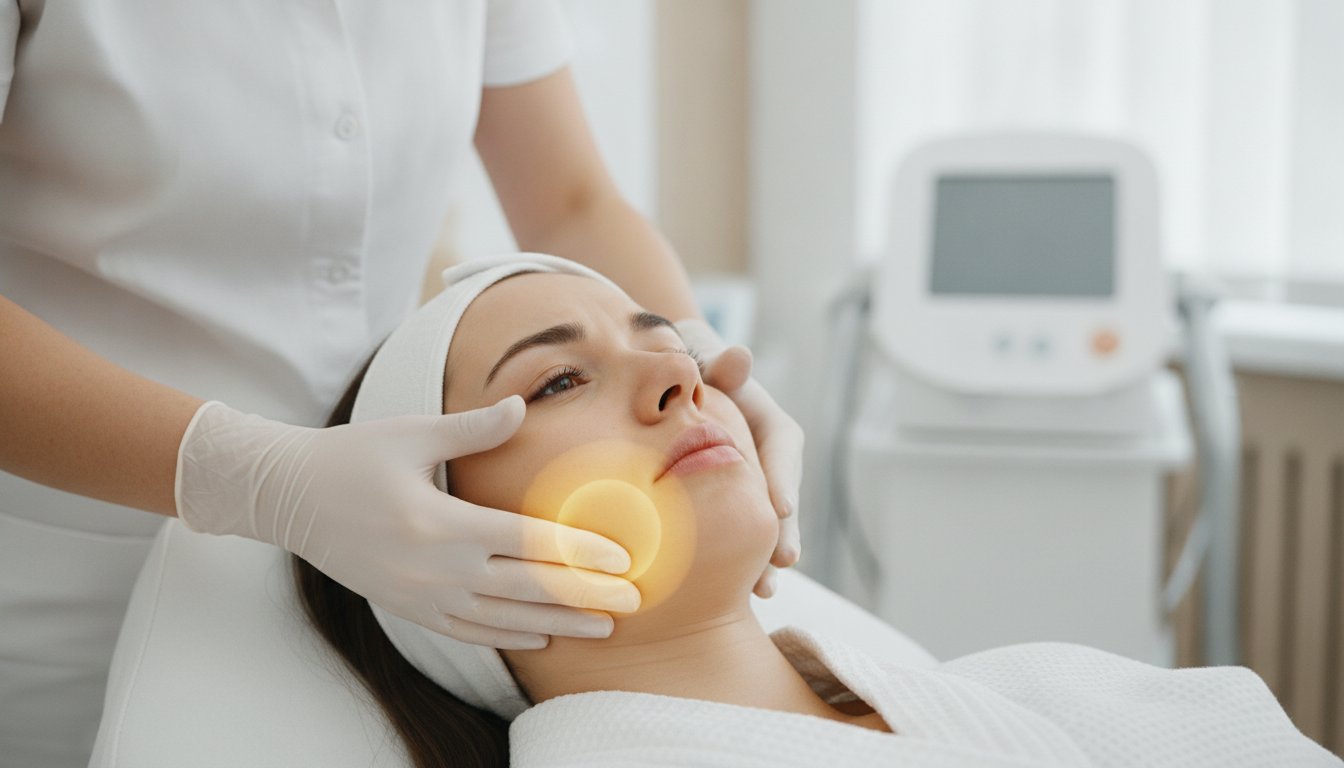
Buccal massage is a highly specialized intraoral technique designed for deep tissue release. Unlike traditional facials that work solely on the surface, this method involves a practitioner placing their gloved fingers inside your mouth to manipulate the muscles from both sides. It's an effective way to access the masseter and buccinator muscles, which are often the primary culprits behind chronic jaw tension and facial puffiness. However, the dangers of buccal massage become a reality when this clinical procedure is treated as a casual beauty trend rather than a branch of professional massage therapy. The "danger" isn't inherent to the technique itself, it's a byproduct of inadequate training and aggressive application.
We approach facial work through the Face Up Method™, a proprietary ecosystem that prioritizes somatic awareness and anatomical safety. By viewing the face as an extension of the nervous system, we move away from the "no pain, no gain" mentality that often leads to injury. True therapeutic release requires a high standard of decorum and precision, ensuring the practitioner works with the body’s natural rhythms instead of forcing them.
The Rise of Viral Facial Sculpting
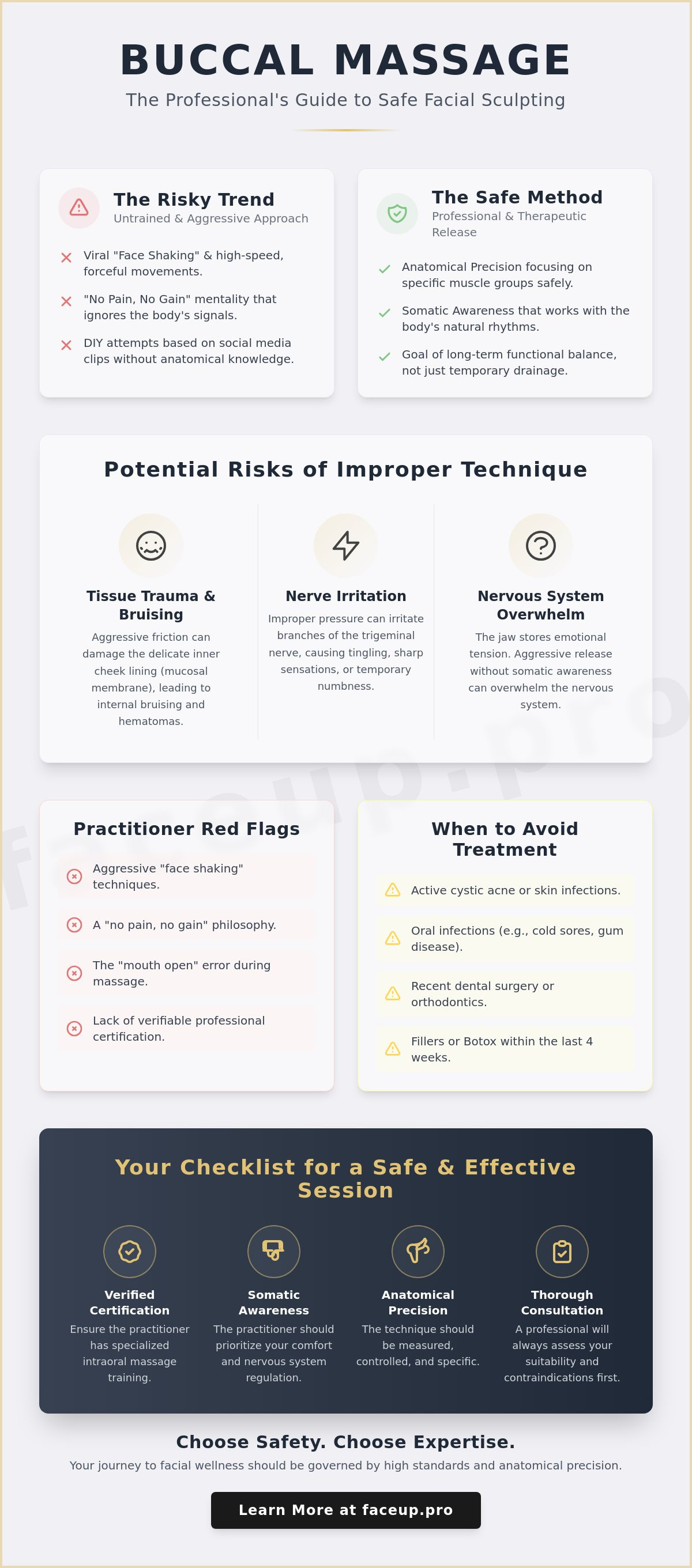
Social media platforms have turned a nuanced clinical practice into a viral spectacle. You've likely seen "face shaking" videos where practitioners use high-speed, aggressive movements to create an immediate lifting effect. This creates a false expectation that force equals results. There's a significant difference between aesthetic contouring, which focuses on temporary drainage, and therapeutic muscular release, which aims for long-term functional balance. Attempting DIY buccal massage at home based on these clips carries the highest risk of injury. Without a professional's understanding of facial nerve paths, you risk causing inflammation or even minor tissue trauma.
Who Should Avoid Buccal Massage?
While intraoral work offers profound benefits, it isn't suitable for everyone at all times. Certain contraindications require you to postpone your session to protect your health and your results. You should avoid this treatment if you have:
- Active cystic acne or skin infections in the lower face area.
- Oral infections, such as cold sores or gum disease.
- Recent dental surgery or ongoing orthodontic adjustments.
- Dermal fillers or Botox administered within the last four weeks, as deep manipulation can cause product migration or interfere with settling.
It's also vital to note that those experiencing severe, acute TMJ inflammation shouldn't jump straight into deep intraoral work. These individuals often require a more measured tmj massage therapy approach that stabilizes the joint before attempting deep tissue release. Safety always begins with an honest assessment of your current physical state.
Physical Risks of Poor Technique: From Bruising to Nerve Sensitivity
The interior of the human cheek is lined with a delicate mucosal membrane. This tissue is designed for protection and lubrication, not for heavy friction or aggressive manipulation. When a practitioner lacks the necessary anatomical precision, the physical dangers of buccal massage manifest as tissue trauma. Excessive pressure applied to the masseter or buccinator muscles doesn't just cause temporary discomfort; it can lead to internal bruising or hematomas that take weeks to resolve. Unlike the large muscle groups of the back, facial muscles are intricate and intertwined with sensitive structures that require a measured, professional touch.
Nerve sensitivity is another significant concern. The trigeminal nerve, which provides sensation to the face, has branches that transition through the very areas targeted during intraoral work. If a practitioner is too aggressive or uses improper finger placement, they risk irritating these nerve pathways. This can result in lingering tingling, sharp "electric" sensations, or even temporary numbness. University of Technology Sydney researchers on buccal massage have highlighted that without standardized clinical evidence, the risk of causing more harm than good is high when technique is compromised.
Protecting the Buccal Fat Pad
The buccal fat pad is a specialized mass of adipose tissue located in the hollow of the cheek. It's a foundational component of facial structure, providing the volume and "bounce" associated with a youthful appearance. Aggressive "crushing" movements or high-velocity "face shaking" seen in viral videos can potentially damage these fat stores. Premature volume loss is a real risk when the focus is solely on aggressive contouring. Our Face Up Method™ approach is specifically designed to preserve this essential volume. We focus on releasing the underlying muscle tension while treating the fat pads with the care they require to maintain facial integrity. Those seeking a balanced approach often start with a professional Face Up Sculpting Treatment to see the difference that precision makes.
Mucosal Tearing and Tissue Inflammation
Safe intraoral work requires high-quality, powder-free gloves and a sophisticated understanding of glide. "Dry" work is a major red flag. Without proper lubrication or correct glove technique, the friction against the mucosal lining creates micro-tears. These tiny abrasions aren't always visible, but they can lead to oral infections or chronic sensitivity. It's vital to distinguish between "good" muscle soreness, which feels like a productive release after a workout, and "bad" inflammatory pain. If you experience sharp stinging, persistent swelling, or heat in the cheeks after a session, the practitioner has likely crossed the line into tissue distress.
The Hidden Danger: Emotional Release and Nervous System Overwhelm
The human jaw acts as a primary repository for emotional stress and suppressed tension. Clenching is an instinctive biological reflex designed to protect us during conflict, but over time, it creates a dense physical armor in the masseter and buccinator muscles. One of the less explored dangers of buccal massage is the risk of "flooding" the nervous system by releasing these deep-seated holding patterns too quickly. If a practitioner isn't trained to navigate these somatic responses, the sudden shift can overwhelm your capacity to process the change, leading to a state of internal dysregulation that feels more like a trauma than a therapy.
Symptoms of somatic overwhelm are often misidentified as simple post-treatment fatigue. You might experience sudden dizziness, an unexpected urge to cry, or a profound sense of exhaustion following a session. These aren't necessarily negative signs, but they indicate that the body is processing more than just a physical adjustment. A practitioner must be skilled in somatic bodywork to hold a safe, professional space for these reactions. We prioritize a measured, invitational pace that respects the capacity of your nervous system, ensuring every release is integrated safely rather than forced upon the body.
The Somatic Connection to Jaw Tension
The risk of aggressive intraoral work is as much psychological as it is physical. When the jaw is forced open or muscles are manipulated with excessive force, the nervous system may trigger a fight-or-flight response. This defensive reaction causes the muscles to tighten further, defeating the purpose of the treatment. The Face Up Method integrates somatic awareness to prevent this cycle of resistance, allowing the practitioner to work with the body's natural rhythms. Somatic facial therapy serves as a bridge between physical sculpting and emotional regulation.
Managing Post-Treatment "Purging"
Following a deep intraoral session, you might undergo a period of physical and emotional detoxification. This "purging" often manifests as mild muscle soreness or a temporary increase in emotional sensitivity as your body finds a new baseline of relaxation. It's vital to remember that "more" is never "better" for intraoral pressure. To maintain your results and support your nervous system between professional visits, you can use a tmj massage tool safely at home. This allows for gentle, consistent maintenance that keeps tension at bay without the risk of overstimulating the delicate structures of the face.
Practitioner Red Flags: How to Identify Improper Training
Identifying a qualified specialist is your most effective defense against the physical and emotional dangers of buccal massage. When you are in the treatment chair, you should feel like an active participant in a safe, governed environment rather than a passive recipient of aggressive force. A session should never feel like a struggle or a test of your pain tolerance. If you notice any of the following red flags, it is your right to pause or stop the treatment immediately:
- The practitioner fails to provide a thorough intake form or ask about your dental history, recent fillers, or TMJ issues.
- They use multiple fingers or both hands inside your mouth simultaneously, which signals a lack of precision and control.
- They insist you keep your mouth wide open during the intraoral portion, which is anatomically counterproductive.
- There is an absence of powder-free glove use or a visible lack of hygiene protocol in the workspace.
- They ignore your verbal or non-verbal cues for less pressure, prioritizing "results" over your comfort.
The "mouth open" error is a particularly common sign of improper training. When your jaw is stretched wide, your facial muscles are already under significant tension. A skilled specialist knows that effective intraoral work requires the jaw to be in a neutral, relaxed, and gently closed position. This allows the practitioner to actually manipulate the tissue and access the deeper layers of the masseter without fighting against your body's natural resistance. Similarly, the "two-handed" error, which involves using excessive fingers inside the mouth, is a hallmark of someone who has not mastered the delicate balance of internal and external feedback.
The Anatomy of a Safe Session
A professional setup is characterized by calm efficiency and transparency. You should be positioned comfortably, and the practitioner should check in on your pressure levels constantly throughout the session. Communication is the hallmark of a high-standard somatic experience. A safe practitioner treats the mouth as a sensitive gateway, ensuring the jaw remains relaxed. This prevents the very tension and potential for nerve irritation discussed in previous sections. If you're looking for a reliable partner in your facial wellness journey, you can browse our Practitioner Directory Listing to find specialists who prioritize these safety standards.
Vetting Your Specialist
Don't hesitate to ask direct questions before booking your appointment. Ask specifically where they received their training and if their facial sculpting certification included somatic training. There is a vast difference between a weekend workshop and a comprehensive method certification that spans several weeks or months. A weekend course rarely provides the depth needed to understand complex facial anatomy or the nuances of nervous system regulation. You deserve a facilitator who has invested in a verified, high-standard education to ensure your face is protected.
Safe Sculpting: Why Professional Certification Matters
Professional certification serves as the primary safeguard against the dangers of buccal massage. As the industry evolves, regulatory bodies are increasingly scrutinizing intraoral techniques to ensure public safety. In April 2026, an esthetician in Florida was issued a $1,000 fine for practicing buccal massage outside their authorized scope, signaling a clear shift toward stricter enforcement. Similarly, the Alabama Board of Medical Examiners recently classified these techniques as medical procedures that require specific delegation and oversight. These developments underscore why a deep, anatomy-first education is no longer optional for practitioners who wish to operate with integrity and stay within legal boundaries.
Face Up Method™ practitioners are trained to do more than simply manipulate tissue. They are taught to read the body’s nervous system, identifying subtle signs of resistance or "flooding" before they manifest as physical distress. This holistic approach ensures that rejuvenation occurs through the intelligent release of chronic tension rather than through aggressive pulling or over-stretching of the skin. When you work with a certified specialist, you're engaging with a professional who understands the sophisticated interplay between facial muscles, the trigeminal nerve, and the lymphatic system. This level of expertise ensures a high standard of care that prioritizes your long-term facial health over fleeting viral results.
The Face Up Standard of Care
Our training methodology focuses on a granular understanding of every muscle, nerve, and fat compartment within the facial structure. We believe a face looks truly lifted and youthful when the underlying muscular tension is resolved, not when the skin has been forcibly adjusted. To support the work done in a professional session, we encourage the use of Face Up App Subscription rituals for safe, gentle maintenance at home. These guided routines empower you to maintain your results without the risks associated with unguided DIY techniques. The goal is a balanced, chiseled appearance achieved through somatic awareness and anatomical respect.
Your Journey to Professional Excellence
For practitioners, adding intraoral work to your service menu requires a commitment to excellence. It demands a significant investment in somatic bodywork to properly manage the emotional releases that often accompany deep jaw work. For clients, our Practitioner Directory Listing serves as a global gateway to trusted providers who have met our rigorous standards. Whether you are an individual seeking a safe sculpting experience or a professional looking to elevate your practice, we invite you to explore our Face Up Method Certification to master safe buccal techniques and join a community dedicated to global standards and professional integrity.
Elevating the Standard of Facial Wellness
Navigating the evolving landscape of facial aesthetics requires a discerning eye, especially when trending treatments involve deep anatomical manipulation. By identifying the dangers of buccal massage when performed without precision, you're now equipped to protect both your facial integrity and your nervous system. True transformation isn't the result of force; it's the outcome of a governed, somatic approach that respects the delicate balance of your muscles and emotions. Prioritizing verified education is the most proactive step you can take toward sustainable, healthy results.
Founded by Olga Newman, a global specialist in facial sculpting, our proprietary somatic-based methodology offers a comprehensive curriculum covering anatomy, technique, and emotional release. We invite you to move beyond viral trends and embrace a professional standard that values safety as much as aesthetics. Join the Face Up Method™ Certification and lead the future of safe facial sculpting. We're ready to facilitate your professional advancement and provide a clear, reliable path forward in this specialized landscape. Your journey toward excellence starts with a commitment to high standards and anatomical respect.
Frequently Asked Questions
Can buccal massage cause the face to sag or lose volume?
Improper technique can lead to premature volume loss if the buccal fat pad is treated with excessive, crushing force. While professional work preserves this vital structure, aggressive movements can disrupt the tissue's integrity. To avoid the dangers of buccal massage, ensure your practitioner uses a light, sculpting touch rather than high-velocity pressure. This preserves your natural facial volume while releasing the underlying muscular tension that causes puffiness.
How can I tell if my practitioner is pressing too hard during a buccal massage?
You should never feel sharp, stinging, or "electric" sensations during your session. A productive release feels like a deep, satisfying stretch; it's similar to the sensation of a deep tissue body massage. If you find yourself holding your breath or tensing your body to withstand the pressure, the practitioner is pushing too hard. A qualified specialist will check in constantly to ensure the intensity remains within your therapeutic window.
Is it safe to have buccal massage if I have Botox or dermal fillers?
You must wait at least four weeks after receiving Botox or dermal fillers before booking an intraoral session. Deep manipulation too soon after these procedures can cause product migration or interfere with how the injectable settles in the tissue. Always disclose your full cosmetic history during the intake process. This transparency allows your practitioner to navigate these areas safely without compromising your aesthetic results or causing inflammation.
Why do I feel emotional or tearful after a deep jaw massage?
Emotional release occurs because the jaw is a primary center for storing stress and suppressed reactions. When deep-seated tension in the masseter is physically released, the nervous system often lets go of the associated emotional energy. It's common to experience sudden crying or a wave of relief during or after a session. This is a normal somatic response, provided your facilitator is trained to hold space for your nervous system's regulation.
What are the immediate red flags I should look for in a buccal massage session?
Immediate red flags include a practitioner who doesn't use gloves or one who asks you to keep your mouth wide open throughout the treatment. An open jaw creates unnecessary tension that makes deep tissue work ineffective and potentially painful. Additionally, if the specialist uses multiple fingers inside the mouth at once, they likely lack the precision required for safe intraoral work. A thorough consultation regarding your dental health is also a non-negotiable standard.
Can I safely perform buccal massage on myself at home?
Performing intraoral massage on yourself without professional training is not recommended due to the risk of nerve irritation and tissue trauma. It's difficult to gauge the correct pressure and angle when working on your own anatomy. Instead of DIY buccal work, we suggest using a dedicated app for surface-level maintenance or a specialized jaw release course. These resources provide a safer, governed environment for managing daily tension without the dangers of buccal massage.
How often can I have a buccal massage without risking tissue damage?
Most individuals benefit from a professional session once every two to four weeks. Facial tissues and the mucosal lining require time to recover and integrate the changes from deep manipulation. Over-treating the area can lead to chronic inflammation or tissue fatigue. Your practitioner will help you establish a rhythmic schedule that supports long-term facial health while allowing for proper somatic integration between your appointments.
Does buccal massage help with TMJ, or can it make it worse?
Correctly applied intraoral techniques are highly effective for relieving TMJ discomfort, but aggressive work can aggravate acute inflammation. If you are in the middle of a severe flare-up, deep tissue manipulation might be too intense for the joint. A specialized approach focuses on stabilizing the jaw before moving into deep release. Always consult with a certified professional who understands the nuances of joint mechanics to ensure the treatment remains restorative.


