

Your face is a living map of every stressor, clenched jaw, and held breath you've ever experienced. While many look toward temporary injectables to mask these signs, the true secret to rejuvenation lies deeper than the surface within your connective tissue. Practicing myofascial release for face and neck allows you to address the root cause of chronic tension rather than just the symptoms. With the global market for these therapies projected to reach $8.3 billion by 2032, more people are choosing somatic techniques to recalibrate the nervous system and restore a natural glow.
Welcome to the Face Up Method™ community. You likely know the frustration of waking up with a tight jaw or noticing that your reflection looks perpetually tired, regardless of how much you sleep. It's common to feel disconnected from your own expressions when muscles are locked in a "stress mask." This guide will show you how releasing these patterns leads to a more symmetrical, lifted appearance and lasting relief from TMJ discomfort. We'll explore the somatic mind-body connection and how our proprietary approach provides a path to holistic beauty.
Key Takeaways
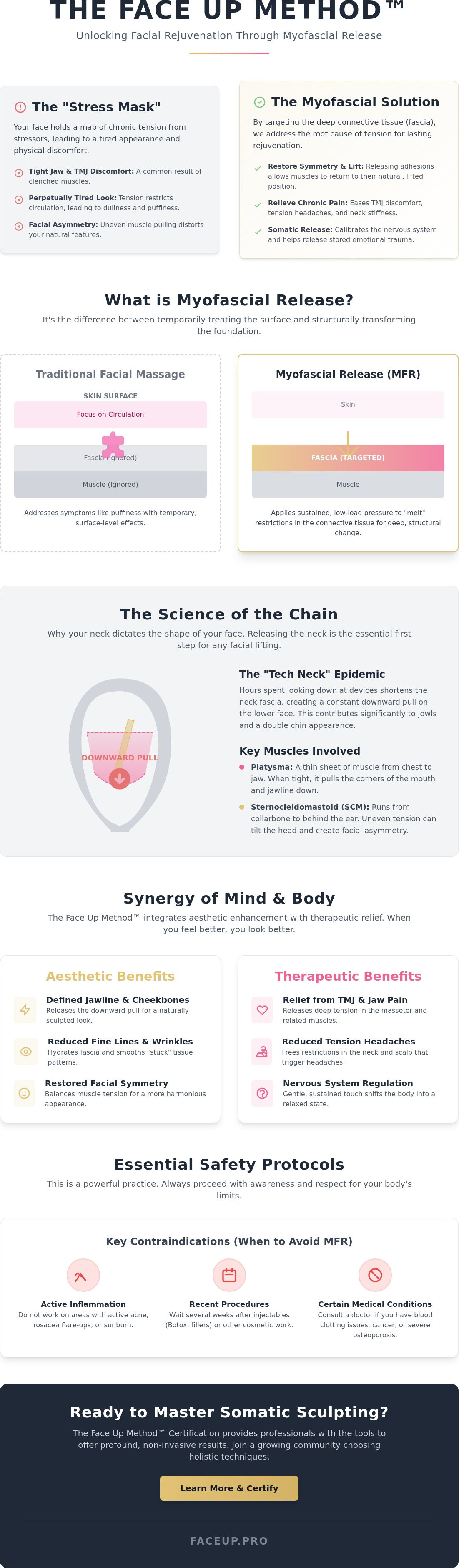
- Understand how myofascial release for face and neck targets the connective tissue to resolve deep-seated tension and restore facial symmetry.
- Learn how the "Tech Neck" epidemic impacts the platysma muscle, creating a downward pull on facial features and contributing to the double chin area.
- Discover the scientific link between the trigeminal nerve and jaw tension, positioning the jaw as a critical gatekeeper for releasing stored emotional trauma.
- Identify essential safety protocols for your practice, including specific contraindications like active inflammation or recent cosmetic enhancements.
- Explore the professional shift toward non-invasive aesthetics and how the Face Up Method™ Certification provides a path to mastering somatic sculpting.
What is Myofascial Release for the Face and Neck?
Understanding the foundation of myofascial release for face and neck begins with recognizing that our skin does not exist in isolation. It is supported by a complex, three-dimensional web of connective tissue known as fascia. While traditional facial massage focuses on the skin's surface to boost circulation, myofascial release (MFR) targets this deeper structural layer to eliminate long-standing restrictions and tension. To understand the clinical roots of this practice, one might look at What is Myofascial Release in a broader therapeutic context. It is a specialized manual therapy that applies sustained, low-load pressure into the connective tissue to restore mobility.
The face and neck require a far more nuanced approach than the rest of the body. You can't use the same aggressive pressure on the delicate muscles of the jaw or the thin tissues of the neck that you would use on a tight hamstring. This work is about "melting" into the tissue rather than forcing it. Facial myofascial release serves as a sophisticated tool for achieving structural lifting while simultaneously facilitating deep regulation of the autonomic nervous system. By engaging with the tissue at this level, you aren't just moving skin; you're communicating with the body to let go of years of accumulated stress.
The Anatomy of Facial Fascia
Fascia acts as the biological "glue" that keeps your muscles, nerves, and skin in their proper place. When this tissue is healthy, it is fluid and elastic. However, repetitive facial expressions, poor posture, and emotional stress cause the fascia to become "stuck" or dehydrated. These adhesions act like a shrink-wrap around the muscles, pulling the skin into folds and manifesting as deep wrinkles, persistent puffiness, or sagging. Releasing the neck is the essential first step for any facial lifting. If the neck tissues are tight, they act like an anchor, pulling the facial features downward regardless of how much work is done on the cheeks or brow.
Aesthetic vs. Therapeutic Benefits
The beauty of the Face Up Method™ lies in the synergy between how you feel and how you look. From an aesthetic perspective, consistent myofascial work results in more defined jawlines, reduced fine lines, and a natural "sculpted" appearance that mimics the effects of more invasive procedures. Therapeutically, the benefits are equally profound. Many individuals find significant relief from chronic TMJ discomfort, tension headaches, and persistent neck stiffness. When you resolve the physical restriction, the aesthetic improvement follows naturally. A relaxed face is a rejuvenated face, and a body free from tension radiates a vitality that topical products simply cannot replicate.
The Science of the Chain: Why Your Neck Dictates Your Face
The face doesn't float in space; it's anchored by the structural integrity of the neck. When we discuss myofascial release for face and neck, we're looking at a mechanical chain where the lower links dictate the position of the upper ones. The platysma muscle, a thin sheet extending from the chest up to the jaw, acts as a primary driver for facial aging. If this muscle becomes chronically tight, it exerts a constant downward pull on the lower face. This tension contributes to the formation of jowls and the loss of a defined jawline, making it impossible to achieve a lifted look without addressing the neck first.
Our modern "Tech Neck" epidemic has accelerated these structural changes. Spending hours looking down at devices creates a persistent shortening of the anterior neck fascia. This compression doesn't just cause discomfort. It physically crowds the submental area, leading to the appearance of a double chin and a "heavy" lower face. Addressing these restrictions through myofascial release for face and neck is essential for anyone seeking long-term rejuvenation. Without releasing the neck, facial treatments often offer only temporary results because the underlying anchor remains tight.
The sternocleidomastoid (SCM) muscle also plays a pivotal role in facial symmetry. This muscle runs from the collarbone to the area behind the ear. If one side is more restricted than the other, it can subtly tilt the head or pull on the facial fascia unevenly. This often results in one eyebrow or one side of the mouth appearing lower than the other. Releasing the SCM helps restore the head's neutral position, which is the first step toward a more symmetrical and balanced facial expression.
The "Pedestal" Effect
Think of the neck as the pedestal that supports the masterpiece of the face. If the pedestal is crooked or under tension, the masterpiece cannot sit correctly. Fascial adhesions in the décolleté and shoulders create a "tethering" effect that pulls on the jawline from below. This is why we always prioritize treating the shoulders and neck before touching the face. By opening the foundation first, we create the necessary space for the facial features to lift naturally. If you're looking to begin this journey, our Face Up Method™ ecosystem offers the specialized tools needed to address these foundational chains.
Lymphatic Drainage and Fascial Health
Tense fascia acts like a kink in a garden hose, blocking the natural flow of lymphatic fluid. This stagnation often manifests as morning puffiness around the eyes and jaw. The neck serves as the primary "clearance" zone for the face. If the neck fascia is restricted, the "drainage pipes" are effectively closed. There's a powerful synergy between tmj massage therapy and lymphatic health. When the jaw and neck are released, the body can finally flush out metabolic waste, resulting in a clearer, more vibrant complexion and a reduction in chronic inflammation.
Somatic Release: Releasing Emotional Trauma Through the Jaw
The jaw serves as the body’s primary emotional gatekeeper. When we experience stress, the masseter muscles are often the first to contract; it's a primal reflex designed to protect the head and neck. This isn't just a physical habit; it's a neurological one. The trigeminal nerve, which controls the muscles of mastication, is directly linked to the brainstem’s arousal centers. This creates a feedback loop where jaw tension signals the brain to remain in a "fight or flight" state, even when the external threat has passed. By the time we realize we're clenching, the nervous system is already on high alert.
Simply telling yourself to relax isn't enough when these patterns are woven into the fascial web. Emotions aren't just thoughts; they're physiological events that leave a physical signature in the connective tissue. Practicing myofascial release for face and neck allows you to bypass the conscious mind and speak directly to the nervous system. The Face Up Method™ integrates specific somatic bodywork sessions to help clients unlearn these deep-seated defensive postures, a process that is also fundamental for students of Vocal Secrets looking to optimize their vocal performance. We move beyond surface-level aesthetics into a space of true emotional equilibrium where the face can finally let go of the "armor" it has been carrying.
The Stress-Fascia Loop
Chronic stress causes the fascia to undergo a physical transformation. Over time, the tissue thickens and loses its hydration, essentially locking the face into a state of perpetual tension. This is what many professionals call the "resting stress face." You might feel well-rested, but your fascia is still telling the story of last year’s burnout. Breaking this loop requires more than a quick massage. It demands conscious myofascial release rituals that invite the tissue to soften and reorganize. By addressing these restrictions, you don't just look more approachable; you actually feel more resilient because you've removed the physical triggers of stress.
Beyond the Physical: The Face Up Approach
True rejuvenation occurs when the nervous system begins to down-regulate. During a somatic facial treatment, we prioritize creating a gateway experience that signals safety to the body. Breathwork is a non-negotiable part of this process. Deep, rhythmic breathing helps oxygenate the tissue and encourages the fascia to release its grip more effectively. This holistic perspective is why somatic facial therapy is the future of wellness. It bridges the gap between clinical results and emotional health, offering a path to beauty that is felt as much as it is seen. If you're ready to explore this deeper connection, our Jaw Release Course provides the foundational steps to reclaim your facial freedom and restore your natural expression.
Practical Steps: How to Start Your Myofascial Ritual
Beginning a myofascial release for face and neck practice is less about the physical manipulation and more about the environment you create. We call this a "gateway experience." It's a deliberate transition from the noise of the day into a state of somatic presence. Before you begin, dim the lights and take three deep breaths to signal safety to your nervous system. You should also check for contraindications. Avoid myofascial work if you have active acne, significant skin inflammation, or have received dermal fillers within the last four weeks. Pressure on fresh fillers can cause migration or interfere with the settling process. Safety is the foundation of any sustainable rejuvenation practice.
Consistency always outperforms intensity in fascial work. While it's tempting to spend an hour deep-cleaning your tension once a month, the fascia responds far better to five minutes of daily attention. This frequent "hydration" of the tissue prevents the return of the stress-fascia loop discussed earlier. Using the correct tmj massage tool is equally vital. The right tool provides the necessary grip to engage the fascia without dragging or damaging the delicate surface of the skin. Proper technique ensures you are moving the tissue layers rather than just sliding over them, which is critical for long-term health.
Step-by-Step Home Release Technique
- Step 1: Opening the Terminals. Start at the collarbone and the base of the neck. Use gentle, sweeping motions to encourage lymphatic drainage and clear the "pedestal" for facial work.
- Step 2: Skin Rolling. Lightly pinch the skin between your thumb and fingers, rolling it across the jawline and cheeks. If you feel "stuck" areas or a lack of slide, you've identified a fascial adhesion.
- Step 3: Sustained Masseter Pressure. Find the thick muscle of your jaw. Apply steady, non-aggressive pressure and hold for at least 90 to 120 seconds. This duration is necessary for the tissue to undergo a physical release.
Integrating the Face Up App
Managing your home practice becomes much simpler with professional guidance. The Face Up App Subscription provides structured, guided rituals that prevent the common mistake of over-working delicate facial tissue while performing myofascial release for face and neck. You can customize your sessions based on your specific goals, whether you're focusing on a "Jaw Release" to combat clenching or a "Lifting" sequence for aesthetic refinement. The app also allows you to track subtle shifts in your facial "vibe" and overall tension levels over time. It's a tool designed to turn a simple routine into a sophisticated, somatic journey. For those ready to deepen their practice, exploring our Face Up Method™ ecosystem is the next logical step toward professional-grade results at home.
Professional Mastery: The Face Up Method™ Certification
What makes our facial sculpting certification unique is its comprehensive approach to the fascial system. We don't stop at the surface. The curriculum integrates advanced techniques like buccal massage, which works the muscles from inside the oral cavity, with deep somatic bodywork. This combination ensures that you aren't just moving skin; you're releasing the deep-seated "stress masks" that clients carry for years. It is a proprietary methodology designed for those who want to lead the industry in holistic, results-driven care.
Who is this Certification For?
This program is designed for dedicated professionals who seek to elevate their practice beyond transactional services. It's an ideal fit for:
- Estheticians: Those who want to offer high-value, unique treatments that differentiate their menu from standard spas.
- Massage Therapists: Professionals looking to specialize in the intricate anatomy of the face and neck to solve chronic pain and tension issues.
- Holistic Health Coaches: Practitioners seeking a physical modality to support emotional release and nervous system regulation for their clients.
The Path to Becoming a Face Up Provider
Entering our ecosystem is a guided and professional journey. In 2026, we're offering both flexible online modules and intensive in-person training sessions to accommodate a global audience of professionals. These sessions provide the hands-on mentorship necessary to master the nuance of myofascial release for face and neck. Once certified, you gain a Practitioner Directory Listing, connecting you with a global audience of clients who are actively seeking the Face Up Method™ experience. This is your gateway to a more fulfilling and specialized career path. If you're ready to redefine your professional standing, Enrol in the Face Up Method™ Certification today and start your journey toward somatic mastery.
Step Into Your Most Radiant Expression
Reclaiming your facial freedom requires a shift from superficial fixes to deep structural and somatic awareness. By addressing the pedestal of the neck and the emotional storage within the jaw, you unlock a level of rejuvenation that temporary treatments simply can't reach. Mastering myofascial release for face and neck is the definitive path toward a lifted appearance and a regulated nervous system. It's about more than aesthetics; it's about restoring the natural flow of your own vitality.
Our proprietary Somatic Sculpting Method has empowered over 5,000 students worldwide to transform their approach to holistic beauty. When you join our ecosystem, you gain access to a global directory of certified practitioners dedicated to high-standard, non-invasive care. Whether you're a professional seeking certification or an individual beginning a daily ritual, the tools for lasting change are within your reach. Explore the Face Up Method™ and start your journey today. Your face is a reflection of your inner health; take this opportunity to soften the stress of the past and reveal your most vibrant self.
Frequently Asked Questions
Is myofascial release for the face painful?
Myofascial release for the face and neck should never be painful; instead, it should feel like a slow, melting sensation within the tissue. If you experience sharp pain, it's a sign that you're applying too much pressure or moving too quickly for the fascia to respond. The goal is to invite the tissue to soften through sustained, gentle contact rather than forcing it through aggressive manipulation.
How often should I perform myofascial release on my neck?
Consistency is more important than duration, so we recommend a brief five-minute daily ritual rather than a single long session once a week. This regular attention helps prevent the "Tech Neck" patterns from re-establishing themselves in your connective tissue. Short, daily sessions keep the fascia hydrated and elastic, which is essential for maintaining the structural support of your facial features.
Can myofascial release really replace Botox?
While myofascial release for face and neck doesn't paralyze muscles like Botox, it offers a sustainable natural alternative by releasing the chronic tension that creates deep expression lines. By softening the "stress mask" at a structural level, you can achieve a smoother, more relaxed appearance without losing your ability to move your face. It addresses the root cause of aging rather than just masking the symptoms.
What is the difference between Gua Sha and myofascial release?
The primary difference lies in the depth and the target of the technique. Gua Sha is traditionally a surface-level practice focused on boosting circulation and moving lymphatic fluid through the skin. Myofascial release is a deeper, slower modality that targets the structural connective tissue web to eliminate long-standing physical restrictions and somatic tension. Both are valuable, but they serve different physiological purposes.
Can I do myofascial release if I have dermal fillers?
You should wait at least four weeks after receiving dermal fillers before practicing any deep myofascial work in the treated area. Applying sustained pressure too soon can cause the filler to migrate or interfere with how it settles into the tissue. It's always best to consult with your practitioner to ensure the product has fully integrated before you begin a somatic sculpting routine.
How long does it take to see results from facial myofascial release?
Most individuals experience an immediate sense of lightness and "openness" after just one session. However, cumulative aesthetic improvements, such as a more defined jawline and reduced puffiness, typically become visible after four to six weeks of consistent practice. While you might feel an immediate "lift" after one session, significant changes from myofascial release for face and neck usually require steady commitment.
Why does my jaw feel sore after a release session?
Soreness in the jaw after a session often indicates a significant somatic release of long-held tension or the movement of metabolic waste from the muscles. This is a common response when the masseter muscles, which are often chronically clenched, finally begin to soften. Ensure you stay well-hydrated after your practice to help your body process these changes and support the hydration of the fascial layers.
What is the best tool for facial myofascial work?
Your own hands are the most sensitive instruments for detecting fascial adhesions, but a specialized TMJ massage tool is often the best option for deeper work. The right tool provides the necessary grip to engage the fascia without sliding over or dragging the skin's surface. Using a dedicated tool allows for more precise pressure on the jaw and neck muscles, ensuring a more effective and comfortable release.


